


<h1><strong>Wholesale Kurti for Resellers in 2026 – Buy Trending Kurtis at Wholesale Prices</strong></h1>
<p>Building a profitable ethnic wear reselling business starts with products that customers can buy regularly and retailers can restock confidently. Kurtis continue to fit that requirement because they work across daily wear, office wear, festive shopping, boutique fashion and online selling. For resellers planning their 2026 inventory, sourcing fresh designs at practical wholesale rates can create room for healthier margins while keeping the collection attractive to different customer groups.</p>
<h2><strong>Introduction</strong></h2>
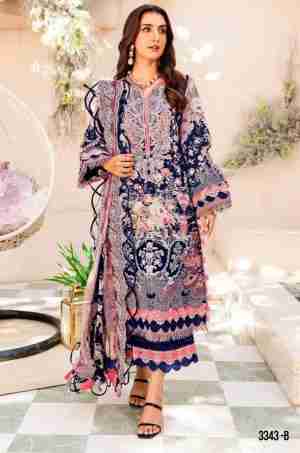
<p>The demand for <strong>wholesale kurti for resellers</strong> continues to create opportunities for Home-Based Sellers, Shop Owners, Boutique Owners, Showroom Owners, Resellers and Wholesale Buyers across India and international ethnic wear markets. Kurtis are relatively easy to display, promote and combine into collections covering multiple customer budgets.</p>
<p>For a reseller, however, buying attractive products is only one part of the business. Profitability depends on sourcing at the right <strong>price</strong>, selecting designs that match customer demand, maintaining sufficient variety and avoiding excessive investment in slow-moving stock.</p>
<p>Surat remains an important sourcing destination because of its extensive textile ecosystem. The <strong>surat textile market</strong>, Ring Road and Sahara Darwaza areas connect retailers with wholesalers, traders, fabric businesses and <strong>manufacturing</strong> networks dealing in multiple ethnic wear categories.</p>
<p>Digital wholesale sourcing is making these collections accessible to buyers beyond Surat as well. Through <strong>kapdawholesale.com</strong>, professional buyers can explore wholesale-oriented ethnic wear collections and select products according to their business model, target customers and purchasing budget.</p>
<h2><strong>Why Kurtis Are a Strong Product Category for Resellers in 2026</strong></h2>
<p>Kurtis have broad customer appeal because they can be styled for everyday use, work, college, casual outings, festivals and family occasions. Unlike products that depend heavily on a single season, the kurti category can generate demand throughout much of the year when retailers maintain the right assortment.</p>
<h3><strong>Multiple Price Segments Create More Selling Opportunities</strong></h3>
<p>One advantage of buying <strong>kurtis wholesale</strong> is the ability to build stock across different price ranges. A reseller can maintain affordable printed kurtis for regular sales, mid-range embroidered styles for customers seeking better detailing and premium designs for boutique or festive demand.</p>
<p>This makes the category suitable for businesses of different sizes. Home-Based Sellers can begin with controlled quantities, while established Showroom Owners and Wholesale Buyers can maintain larger assortments covering several fabrics, styles and price points.</p>
<h3><strong>Kurtis Are Suitable for Offline and Online Reselling</strong></h3>
<p>Resellers increasingly combine traditional selling with WhatsApp, Instagram, Facebook and other digital channels. Kurtis work particularly well in this environment because customers can quickly understand the design, colour, silhouette and overall look from clear product photographs.</p>
<p>For online sellers, a fresh <strong>wholesale kurti collection</strong> provides regular content to share with customers. Instead of promoting the same inventory repeatedly, sellers can introduce new prints, patterns, colours and styles as fresh collections arrive.</p>
<h3><strong>Repeat Demand Can Support Regular Inventory Rotation</strong></h3>
<p>Customers often own multiple kurtis for different occasions. This gives retailers opportunities for repeat transactions when they continue offering new designs rather than depending on a fixed collection.</p>
<p>A reseller who develops a reputation for fresh arrivals and dependable quality can gradually build repeat customers. This makes supplier selection particularly important because regular sourcing becomes part of the long-term sales strategy.</p>
<h2><strong>Trending Wholesale Kurti Categories Resellers Can Stock</strong></h2>
<p>A profitable kurti business should not depend entirely on one design type. Different customers have different preferences, and a balanced collection gives the reseller more opportunities to convert enquiries into sales.</p>
<h3><strong>Printed Kurtis for Regular Sales</strong></h3>
<p><strong>Printed kurti wholesale</strong> collections remain practical for everyday retail because they can offer visual variety at accessible buying ranges. Floral prints, traditional motifs, geometric patterns and contemporary designs can help retailers serve customers across multiple age groups.</p>
<p>For Home-Based Sellers, printed kurtis can be useful starter products because they are easy to present digitally and can be selected across different price segments. Retailers should still evaluate fabric quality, colour combinations and finishing before increasing order quantities.</p>
<h3><strong>Cotton Kurtis for Everyday Customers</strong></h3>
<p><strong>Cotton kurti wholesale</strong> sourcing can support retailers serving customers who prioritise comfort and practical daily wear. Lightweight fabrics and wearable designs are particularly relevant for Indian weather conditions and can remain commercially useful across extended selling periods.</p>
<p>Shop Owners can combine simpler cotton styles with selected premium prints to provide customers with more choice without moving entirely into festive pricing.</p>
<h3><strong>Embroidered Kurtis for Boutique and Festive Demand</strong></h3>
<p><strong>Embroidered kurtis wholesale</strong> can help retailers build a higher-value section within their inventory. Neckline work, floral embroidery, border detailing and coordinated design elements can create stronger visual appeal for festive occasions and customers looking for something more distinctive.</p>
<p>Boutique Owners should select embroidery according to their target audience. Light detailing can appeal to customers wanting versatile outfits, while richer work can be reserved for festive and occasion-based selling.</p>
<h3><strong>Designer Kurtis for Premium Retail Positioning</strong></h3>
<p><strong>Designer kurti wholesale</strong> collections can provide boutiques and showrooms with merchandise that feels more curated than basic mass-market stock. Interesting cuts, distinctive prints, premium fabrics and refined detailing can justify stronger retail positioning when product quality matches the presentation.</p>
<p>Resellers should evaluate expected customer demand before investing heavily in premium inventory. A smaller curated selection can often be more commercially sensible than purchasing large quantities simply because a catalogue appears fashionable.</p>
<h2><strong>How to Choose Wholesale Kurtis for Better Reselling Margins</strong></h2>
<p>Good purchasing is not about finding the cheapest catalogue. The right <strong>wholesale kurti for resellers</strong> should provide enough room between buying cost and realistic retail value while maintaining the product quality customers expect.</p>
<h3><strong>Calculate the Expected Resale Price Before Buying</strong></h3>
<p>Before placing an order, retailers should estimate the realistic selling price within their own customer market. The wholesale cost should then be evaluated against expected margin, applicable expenses and the speed at which the product is likely to sell.</p>
<p>A low wholesale <strong>price</strong> does not automatically mean better profit. If a design receives little customer interest, the retailer's money remains locked in inventory. A slightly higher-priced collection that sells faster can produce better overall business results.</p>
<h3><strong>Buy According to Your Customer Profile</strong></h3>
<p>A reseller serving college students may require different designs from a boutique specialising in premium ethnic fashion. Similarly, customers purchasing everyday office wear have different priorities from those shopping for festive outfits.</p>
<p>Retailers should therefore identify their strongest customer segment before purchasing. Once that segment is clear, selecting fabrics, designs and price ranges becomes more focused.</p>
<h3><strong>Test New Collections Before Increasing Quantity</strong></h3>
<p>When a design direction is new to your business, begin with manageable quantities wherever applicable. Observe enquiries, customer reactions and actual sales before committing more working capital.</p>
<p>Once particular styles become proven sellers, repeat orders can be increased. This demand-based approach is especially useful for Home-Based Sellers and growing Resellers who need to manage inventory carefully.</p>
<h2><strong>Why Surat Is a Major Wholesale Kurti Sourcing Destination</strong></h2>
<p>Surat has developed one of India's significant textile trading and production ecosystems. Buyers visiting the city can explore fabric, sarees, dress materials, kurtis, kurti sets and numerous other ethnic wear categories through interconnected wholesale and manufacturing networks.</p>
<p>The commercial belt around <strong>ring road</strong> is particularly well known among textile buyers. The broader <strong>sahara darwaza</strong> area also connects with Surat's textile trading ecosystem, giving professional buyers access to multiple suppliers and product segments.</p>
<h3><strong>Surat Textile Market Offers Multiple Buying Ranges</strong></h3>
<p>The scale of the <strong>surat textile market</strong> gives buyers opportunities to source according to different customer budgets. Retailers can explore affordable daily-wear kurtis, mid-range designs and premium boutique collections rather than limiting themselves to a single category.</p>
<p>This variety can be useful for Resellers because their customers may not all purchase within the same price range. A mixed inventory allows sellers to respond to more enquiries without compromising their primary market positioning.</p>
<h3><strong>Manufacturing and Wholesale Networks Support Fresh Collections</strong></h3>
<p>Surat's wider <strong>manufacturing</strong> ecosystem supports regular development of textile and fashion products. For retailers, access to an active sourcing market can make it easier to refresh inventory as colours, prints, cuts and seasonal preferences change.</p>
<p>In 2026, frequent product rotation is becoming increasingly relevant because customers encounter new fashion options constantly through social media and online marketplaces. Retailers who continue showing fresh merchandise can create more reasons for customers to return.</p>
<h2><strong>Wholesale Kurti Buying Strategy for Home-Based Sellers</strong></h2>
<p>A home-based kurti business can begin without carrying the inventory depth of a large showroom. The priority should be selecting products that match a clearly defined customer base and using available capital efficiently.</p>
<h3><strong>Start with a Balanced Mix</strong></h3>
<p>Instead of purchasing many pieces of one design direction, new sellers can create a controlled assortment across prints, colours and price ranges. This helps identify what customers actually prefer.</p>
<p>For example, one group of customers may respond strongly to cotton prints while another prefers embroidered kurtis. Real sales data can then guide the next wholesale purchase.</p>
<h3><strong>Use Catalogue Selling to Reach More Customers</strong></h3>
<p>Digital catalogues can help Home-Based Sellers promote products through their personal customer networks. Clear product presentation, regular new arrivals and straightforward pricing can make the buying process easier for customers.</p>
<p>Through <strong>kapdawholesale.com</strong>, buyers can explore wholesale-oriented ethnic wear products suitable for building or expanding their reselling inventory.</p>
<h2><strong>Wholesale Kurti Strategy for Boutiques and Retail Shops</strong></h2>
<p>Boutiques generally need a more curated collection than volume-driven reselling businesses. Customers may visit a boutique expecting distinctive products, better presentation and styles that are not identical to everything available in the local market.</p>
<h3><strong>Combine Fast Sellers with Boutique Designs</strong></h3>
<p>A practical approach is to maintain proven everyday styles while introducing selected premium pieces. Regular products help generate consistent sales, while designer merchandise gives the boutique a stronger identity and can support higher-value transactions.</p>
<h3><strong>Create Price Segments Inside the Store</strong></h3>
<p>Instead of forcing every customer into one range, retailers can maintain entry-level, mid-range and premium sections. This provides more opportunities to close sales when customers have different budgets.</p>
<p>The merchandising can also become clearer: daily wear in one segment, fashionable prints in another and premium embroidered or designer kurtis for customers seeking a more elevated look.</p>
<h2><strong>Kurti Wholesale Opportunities for International Buyers</strong></h2>
<p>Indian ethnic wear has retail demand beyond the domestic market. Businesses sourcing for <strong>Nepal</strong>, <strong>Australia</strong> and <strong>Canada</strong> can build kurti assortments according to their local Indian and South Asian customer communities.</p>
<p>International buyers should evaluate the complete commercial cost rather than focusing only on the product rate. Order quantity, destination requirements, shipping and expected selling price can all affect the profitability of an <strong>export</strong> purchase.</p>
<h3><strong>Choose Products According to Destination Demand</strong></h3>
<p>Product selection for an overseas market should reflect local customer preferences. Climate, festivals, customer age groups and retail positioning can influence which fabrics and designs perform better.</p>
<p>For example, lightweight regular-wear products may support year-round sales, while premium embroidered kurtis can be purchased more selectively for festive periods and special occasions.</p>
<h3><strong>Wholesale and Export Experience Matters</strong></h3>
<p>Vastralife has been associated with textile <strong>wholesale and export since 2017</strong>, with industry experience in sourcing ethnic wear for professional buyers. For retailers and Resellers, established experience can be useful when looking for varied collections, premium product quality and sourcing support across different business requirements.</p>
<h2><strong>Preparing Your Kurti Inventory for Seasonal Demand</strong></h2>
<p>Retailers can improve purchasing decisions by planning inventory around the selling calendar. Daily-wear products may generate consistent business throughout the year, while festive and premium styles can receive additional demand around celebrations, weddings and seasonal shopping periods.</p>
<p>A good 2026 inventory plan can therefore combine evergreen products with selected trend-led merchandise. This approach helps maintain regular sales while still giving customers something new to discover.</p>
<h3><strong>Keep Regular-Wear Stock Available</strong></h3>
<p>Printed and comfortable kurtis can provide a dependable foundation for the collection. These products are useful for customers purchasing for work, casual outings and routine wear.</p>
<h3><strong>Add Festive Collections Before Peak Demand</strong></h3>
<p>Festive purchasing should ideally begin before the peak customer rush. Retailers can use the additional preparation time to promote new arrivals, contact repeat customers and organise their physical or digital catalogue presentation.</p>
<h2><strong>How Resellers Can Build Repeat Customers with Fresh Kurti Collections</strong></h2>
<p>Repeat customers can significantly improve the economics of a reselling business because sellers do not need to start from zero for every transaction. One effective way to encourage repeat engagement is to maintain a regular flow of fresh products.</p>
<p>Buyers searching for <strong>wholesale kurti for resellers</strong> should therefore consider whether their sourcing strategy gives them access to enough new designs throughout the year. A reliable supply of fresh merchandise can become an important marketing advantage.</p>
<h3><strong>Share New Arrivals Consistently</strong></h3>
<p>Instead of overwhelming customers with hundreds of products at once, sellers can introduce selected new arrivals regularly. This creates repeated opportunities for engagement and makes each new collection easier to notice.</p>
<h3><strong>Track Which Designs Generate Actual Orders</strong></h3>
<p>Likes and enquiries are useful signals, but actual sales provide stronger purchasing information. Retailers can track which fabrics, colours, styles and price ranges generate completed orders and use those insights when planning their next wholesale purchase.</p>
<h2><strong>Online Wholesale Kurti Sourcing Through Kapdawholesale.com</strong></h2>
<p>Online sourcing can reduce dependence on frequent physical market visits and gives buyers outside Surat easier access to wholesale collections. This is particularly useful for Home-Based Sellers, regional Shop Owners and international buyers who need a convenient way to explore merchandise.</p>
<p><strong>kapdawholesale.com</strong> provides a wholesale-focused route for buyers looking to source ethnic wear for resale. Retailers can evaluate available collections according to their customer segment, budget and inventory strategy rather than purchasing randomly.</p>
<p>In the next stage of building a profitable kurti business, buyers can compare related categories, select commercially suitable collections and develop an inventory mix that balances new trends with reliable sellers.</p>
<h2><strong>How to Select the Right Kurti Price Range for Reselling</strong></h2>
<p>One of the most important decisions for any reseller is choosing a buying range that matches the spending capacity of actual customers. A profitable kurti business does not necessarily require the cheapest products. The objective is to find merchandise where the wholesale <strong>price</strong>, product quality, design appeal and expected retail value work together.</p>
<p>Home-Based Sellers can begin with affordable and mid-range products that are easier to rotate, while Boutique Owners may combine these with selected premium styles. Showroom Owners and Wholesale Buyers can maintain multiple price segments to serve customers with different budgets.</p>
<h3><strong>Affordable Kurtis for Fast-Moving Sales</strong></h3>
<p>Affordable kurtis can become an important volume category for sellers targeting regular customers. Printed designs, comfortable fabrics and practical silhouettes can work well for everyday purchases when the product maintains acceptable quality and finishing.</p>
<p>Resellers should compare several designs within the same buying range rather than selecting products purely because they have the lowest rate. An attractive design at a slightly higher wholesale price may sell considerably faster and generate a better return on working capital.</p>
<h3><strong>Mid-Range Kurtis for Better Retail Value</strong></h3>
<p>Mid-range merchandise gives retailers opportunities to offer better fabrics, stronger prints, embroidery or more detailed styling while keeping the final selling price accessible to a broad customer base.</p>
<p>For Boutique Owners and Shop Owners, this can become a valuable segment because it bridges the gap between basic daily wear and premium ethnic fashion. Buyers can maintain multiple colours and designs to create enough choice without investing heavily in high-end stock.</p>
<h3><strong>Premium Kurtis for Boutique and Showroom Customers</strong></h3>
<p>Premium kurtis should provide visible additional value. Better fabrics, designer cuts, detailed embroidery, distinctive prints and refined finishing can support a higher retail position when the collection matches customer expectations.</p>
<p>Rather than purchasing premium products in excessive quantities, retailers can curate selected designs and increase future orders according to actual sales. This helps maintain exclusivity while protecting working capital.</p>
<img src="https://kapdawholesale.com/images/product/2026/05/ganpati-noor-e-jahan-vol-1-kurti-suppliers-in-india-2026-05-22_14_56_33.jpeg" />
<h2><strong>Trending Kurti Styles Resellers Can Add in 2026</strong></h2>
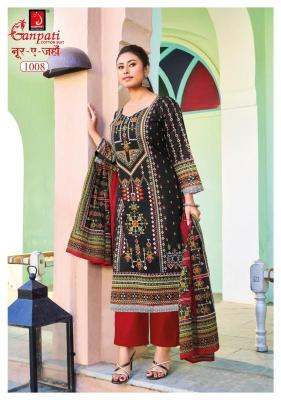
<p>Customers increasingly expect variety when shopping for ethnic wear. This makes a mixed inventory more commercially useful than purchasing large quantities of one style. The strongest <strong>wholesale kurti for resellers</strong> strategy can combine dependable daily-wear products with trend-led and festive designs.</p>
<h3><strong>Printed Straight Kurtis</strong></h3>
<p>Straight kurtis remain practical for regular retail because they are familiar, versatile and easy for customers to style. Floral, geometric and traditional print directions can help retailers create variety across different age groups.</p>
<p>Buyers sourcing <a href="https://www.kapdawholesale.com/printed-kurti">printed kurtis</a> can select products according to fabric, colour combinations and their target retail range. These designs can be particularly suitable for online Resellers because attractive prints are easy to showcase through digital catalogues.</p>
<h3><strong>Cotton and Comfort-Focused Collections</strong></h3>
<p>Comfort remains an important buying factor, especially for customers looking for daily wear, office wear and casual ethnic clothing. Cotton and cotton-style collections can help retailers maintain products that are useful beyond a specific festival or wedding season.</p>
<p>Retailers looking to diversify into related unstitched ethnic wear can also consider <a href="https://www.kapdawholesale.com/cotton-dress-material">cotton dress material</a> collections when customers request additional everyday options alongside kurtis.</p>
<h3><strong>Embroidered and Festive Kurtis</strong></h3>
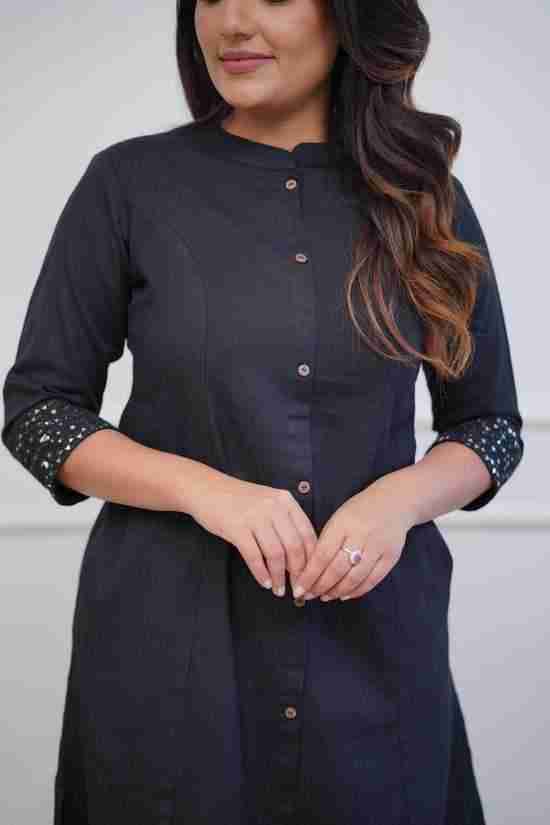
<p>Festive kurtis allow retailers to move into stronger retail price points without changing their core category. Embroidered necklines, floral motifs, decorative borders and refined detailing can create occasion-ready merchandise for festivals, celebrations and family functions.</p>
<p>A good inventory mix can include subtle embroidery for versatile use and selected heavier designs for customers specifically shopping for festive wear.</p>
<h3><strong>Designer and Boutique Kurtis</strong></h3>
<p>Designer collections can help Boutique Owners distinguish their inventory from ordinary market stock. Interesting silhouettes, premium fabrics and distinctive detailing can provide stronger perceived value and create opportunities for higher-margin selling.</p>
<p>The key is selection. Retailers should choose products that fit their own customer profile instead of buying every trend that enters the wholesale market.</p>
<h2><strong>Bulk Kurti Buying Strategy for Wholesale Buyers</strong></h2>
<p>Bulk buying can improve sourcing efficiency, but purchasing more units only makes sense when there is sufficient downstream demand. Wholesale Buyers should analyse their retailer network, previous sales and expected seasonal requirements before committing to larger quantities.</p>
<h3><strong>Use Sales Data Before Increasing Quantity</strong></h3>
<p>Actual sales provide valuable information about which colours, fabrics, sizes and price segments perform best. Buyers can use these patterns to make repeat purchasing decisions instead of depending entirely on assumptions.</p>
<p>If a particular printed collection sells consistently, increasing its quantity may be commercially sensible. If a premium design receives attention but few completed orders, the next purchase can remain more controlled.</p>
<h3><strong>Maintain Variety Within Bulk Orders</strong></h3>
<p>Large orders do not need to mean large quantities of one identical design. A diversified order can include regular wear, prints, embroidery and selected premium styles, depending on available catalogue terms.</p>
<p>This allows distributors and larger retailers to serve multiple customer groups while reducing excessive dependence on a single fashion direction.</p>
<h2><strong>Wholesale Kurti Opportunities for Nepal, Australia and Canada</strong></h2>
<p>Indian ethnic wear can create business opportunities for retailers serving customers in <strong>Nepal</strong>, <strong>Australia</strong> and <strong>Canada</strong>. Each destination has its own customer mix and retail environment, so international buyers should select products according to local demand rather than simply copying an Indian store assortment.</p>
<h3><strong>Kurti Sourcing for Nepal</strong></h3>
<p>Nepal's proximity to India and familiarity with Indian ethnic fashion can make kurtis relevant for boutiques and resellers serving local customers. Buyers can consider daily-wear prints, fashionable mid-range products and festive collections according to their individual market.</p>
<h3><strong>Indian Ethnic Wear for Australia</strong></h3>
<p>Retailers serving Indian and South Asian communities in Australia can create collections around versatile ethnic wear, festive demand and occasion-based purchases. Product selection should account for local seasons, customer preferences and expected retail positioning.</p>
<h3><strong>Wholesale Kurti Export for Canada</strong></h3>
<p>Canada also has a substantial market for Indian ethnic fashion within South Asian communities. Boutique and online businesses can source different kurti segments depending on their audience, from practical everyday styles to designer and festive merchandise.</p>
<p>For international buyers, the complete <strong>export</strong> cost should be considered before placing an order. Product price, quantity, logistics and expected resale value all influence the final commercial outcome.</p>
<h2><strong>Vastralife Wholesale and Export Experience Since 2017</strong></h2>
<p>Experience matters when retailers are looking for a long-term sourcing relationship rather than a one-time purchase. Vastralife has worked in textile <strong>wholesale and export since 2017</strong>, developing industry experience across ethnic wear sourcing and professional buyer requirements.</p>
<p>For Resellers, Boutique Owners, Shop Owners and Wholesale Buyers, this experience supports an understanding of practical sourcing needs such as product variety, competitive rates, changing fashion demand and premium product quality.</p>
<h3><strong>Premium Product Quality for Repeat Customers</strong></h3>
<p>A reseller's reputation depends partly on the products supplied to customers. If quality is inconsistent, the reseller can lose repeat business even when marketing and customer service are strong.</p>
<p>Choosing products with suitable fabric, finishing and presentation therefore helps protect the retailer's own reputation. Premium quality should be evaluated within each price segment rather than assuming that quality is relevant only to expensive merchandise.</p>
<h3><strong>Industry Expertise for Changing Fashion Demand</strong></h3>
<p>Fashion demand can change rapidly. A design that performs strongly during one period may gradually be replaced by new colours, prints and silhouettes. Industry experience can help buyers remain connected with fresh collections rather than relying entirely on old stock patterns.</p>
<h2><strong>How to Improve Kurti Reselling Profit in 2026</strong></h2>
<p>Profit improvement begins before the product is sold. Better sourcing, controlled inventory and careful pricing can improve business performance without forcing retailers to increase their selling rates excessively.</p>
<h3><strong>Know Your Complete Buying Cost</strong></h3>
<p>Calculate the actual cost associated with sourcing merchandise rather than looking only at the catalogue rate. Understanding the complete buying cost allows sellers to set realistic margins and avoid underpricing their products.</p>
<h3><strong>Rotate Stock Instead of Accumulating It</strong></h3>
<p>Inventory that remains unsold for long periods locks working capital. Resellers should monitor slower designs and adjust future purchasing rather than repeatedly buying similar products that customers are not selecting.</p>
<h3><strong>Build Repeat Sales Instead of Depending Only on New Customers</strong></h3>
<p>Regular new collections can encourage existing customers to return. Sellers can maintain contact with previous buyers through new-arrival updates, festival collections and selected recommendations based on their earlier purchasing preferences.</p>
<p>This can make the <strong>wholesale kurti for resellers</strong> business more sustainable because each fresh collection has an existing audience that can be approached immediately.</p>
<h2><strong>Why Kapdawholesale.com Can Support Wholesale Kurti Sourcing</strong></h2>
<p><strong>kapdawholesale.com</strong> gives professional buyers an online route to explore wholesale-focused ethnic wear collections. This can be particularly useful for buyers who cannot visit Surat's Ring Road or Sahara Darwaza textile areas every time they need fresh inventory.</p>
<p>Home-Based Sellers can explore products for smaller growing businesses, while Boutique Owners and Shop Owners can search for collections suited to their customer profile. Showroom Owners and Wholesale Buyers can evaluate broader sourcing opportunities according to their inventory requirements.</p>
<p>For buyers in India and overseas markets, <strong>kapdawholesale.com</strong> can become part of a sourcing process that combines fresh collection discovery with more organised wholesale purchasing.</p>
<h2><strong>Internal Linking Section</strong></h2>
<p>Retailers building an ethnic wear business can use <strong>kapdawholesale.com</strong> to explore complementary product categories according to customer demand. A kurti-focused reseller may begin with printed and daily-wear products and gradually expand into related ethnic wear once regular customers start requesting more variety.</p>
<p>The goal should be relevant expansion rather than adding unrelated products. If customers frequently ask for comfortable daily wear, related cotton collections may be suitable. If festive demand becomes stronger, the retailer can consider premium and occasion-oriented ethnic wear.</p>
<p>Connecting related product categories in this way can increase cross-selling opportunities while keeping the overall inventory relevant to the same customer base.</p>
<h2><strong>Customer FAQs</strong></h2>
<h3><strong>1. Where can I buy wholesale kurtis for reselling in 2026?</strong></h3>
<p>Resellers can source kurtis through established textile wholesale markets in Surat and wholesale-focused online platforms such as kapdawholesale.com. Compare available designs, quality, price ranges and applicable ordering terms before purchasing.</p>
<h3><strong>2. Which kurtis are best for Home-Based Sellers?</strong></h3>
<p>Home-Based Sellers can begin with visually attractive printed, cotton and comfortable daily-wear kurtis across practical price ranges. A controlled assortment makes it easier to test customer preferences before increasing quantities.</p>
<h3><strong>3. Is Surat a good place for wholesale kurti buying?</strong></h3>
<p>Yes. The <strong>surat textile market</strong> ecosystem includes extensive wholesale, trading and manufacturing activity. Ring Road and Sahara Darwaza are well-known textile commercial areas where professional buyers source different ethnic wear categories.</p>
<h3><strong>4. Can Boutique Owners buy designer kurtis wholesale?</strong></h3>
<p>Yes. Boutique Owners can source designer and premium kurti collections according to available wholesale terms. Selecting distinctive fabrics, cuts, prints and embroidery can help boutiques create a stronger product identity.</p>
<h3><strong>5. Can Resellers buy kurtis for online selling?</strong></h3>
<p>Yes. Kurtis are suitable for online reselling through WhatsApp, Instagram, Facebook and other digital channels. Clear product presentation and regular new arrivals can help sellers maintain customer engagement.</p>
<h3><strong>6. How should I decide the selling price of wholesale kurtis?</strong></h3>
<p>Consider your complete buying cost, target customer, local competition, product quality and desired margin. The final retail price should remain commercially sustainable while matching the value customers see in the product.</p>
<h3><strong>7. Can international buyers source kurtis from India?</strong></h3>
<p>Yes. International Boutique Owners, Resellers and Wholesale Buyers can source Indian ethnic wear for export according to applicable supplier and shipping terms. Buyers should confirm product details, quantities and logistics before placing orders.</p>
<h3><strong>8. Which kurti categories should a reseller stock?</strong></h3>
<p>A balanced inventory can include printed kurtis, cotton styles, daily-wear products, embroidered kurtis, festive designs and selected designer pieces. The final mix should match actual customer demand.</p>
<h3><strong>9. Should new resellers buy large quantities immediately?</strong></h3>
<p>New sellers can benefit from starting with manageable inventory and observing actual customer response. Once certain styles become proven sellers, larger repeat purchases can be considered according to available wholesale terms.</p>
<h3><strong>10. What should Wholesale Buyers check before placing a bulk kurti order?</strong></h3>
<p>Review product specifications, designs, sizes, wholesale price, quantities, ordering terms and expected resale demand. Export buyers should additionally evaluate logistics and destination-market requirements.</p>
<h2><strong>Buy Wholesale Kurtis and Grow Your Reselling Business</strong></h2>
<p>If you are looking for <strong>wholesale kurti for resellers</strong> in 2026, build your inventory around products that combine current styling, practical wholesale rates and quality suited to your customers. Whether you operate from home, run a boutique, own a retail shop or purchase in larger wholesale quantities, disciplined sourcing can help improve stock rotation and profitability.</p>
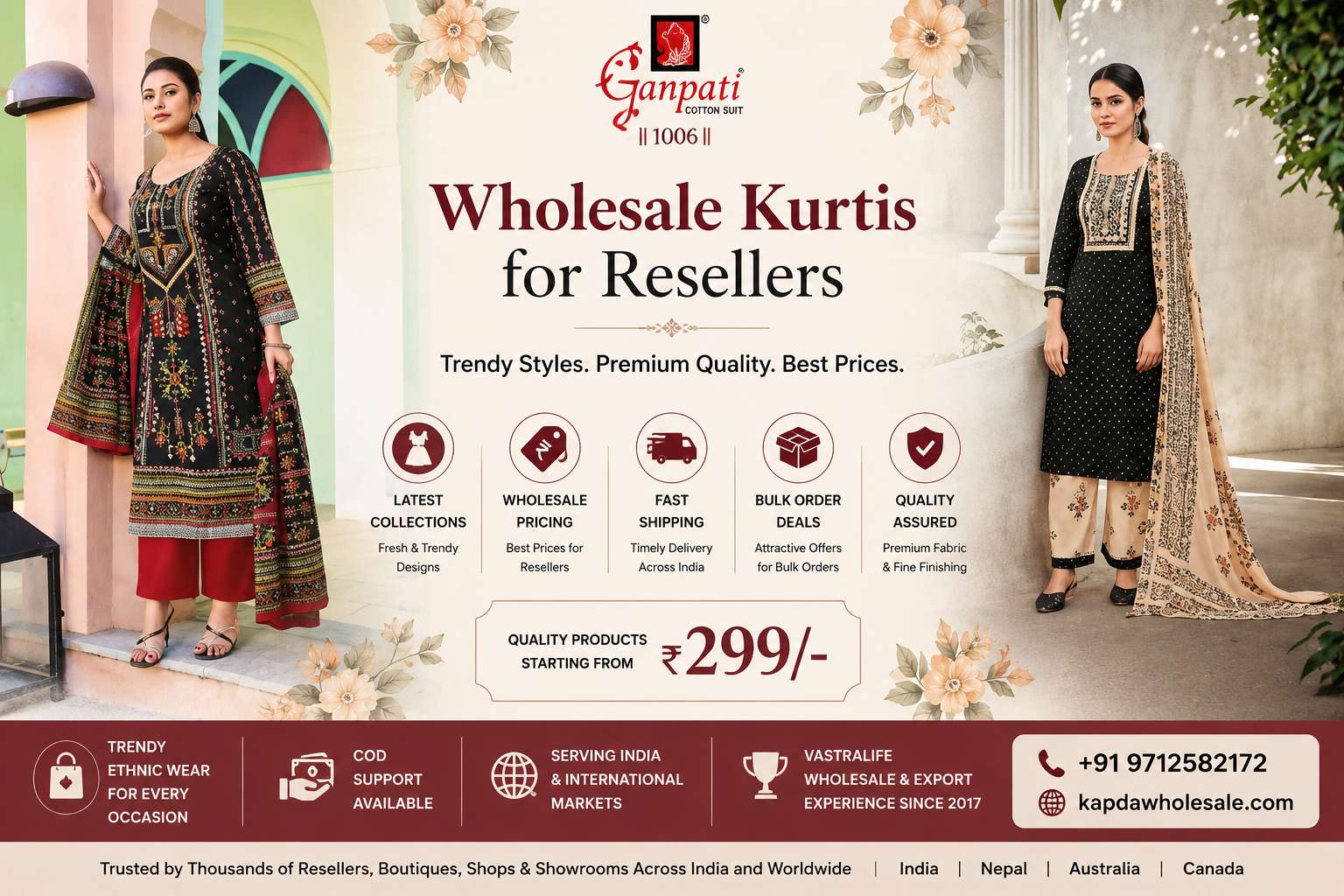
<ul> <li><strong>Latest Collections</strong> – Explore fresh kurti and ethnic wear designs for regular stock updates.</li> <li><strong>Wholesale Pricing</strong> – Source collections at business-focused wholesale rates.</li> <li><strong>Trendy Ethnic Wear</strong> – Add market-relevant Indian styles to your inventory.</li> <li><strong>Fast Shipping</strong> – Get wholesale orders processed and dispatched efficiently.</li> <li><strong>COD Support</strong> – Available according to applicable order terms.</li> <li><strong>Bulk Order Deals</strong> – Enquire about options for larger wholesale requirements.</li> <li><strong>Quality Products Starting From ₹299</strong> – Explore value-focused options across available collections.</li> </ul>
<p><strong>Contact Number:</strong> +91 9712582172</p>
<p><strong>Website:</strong> kapdawholesale.com</p>
<p>Explore fresh collections, compare the right wholesale price range for your customers and build an ethnic wear inventory designed around real resale demand. With thoughtful product selection and regular stock rotation, Resellers, Boutique Owners and Wholesale Buyers can create stronger selling opportunities throughout 2026.</p>