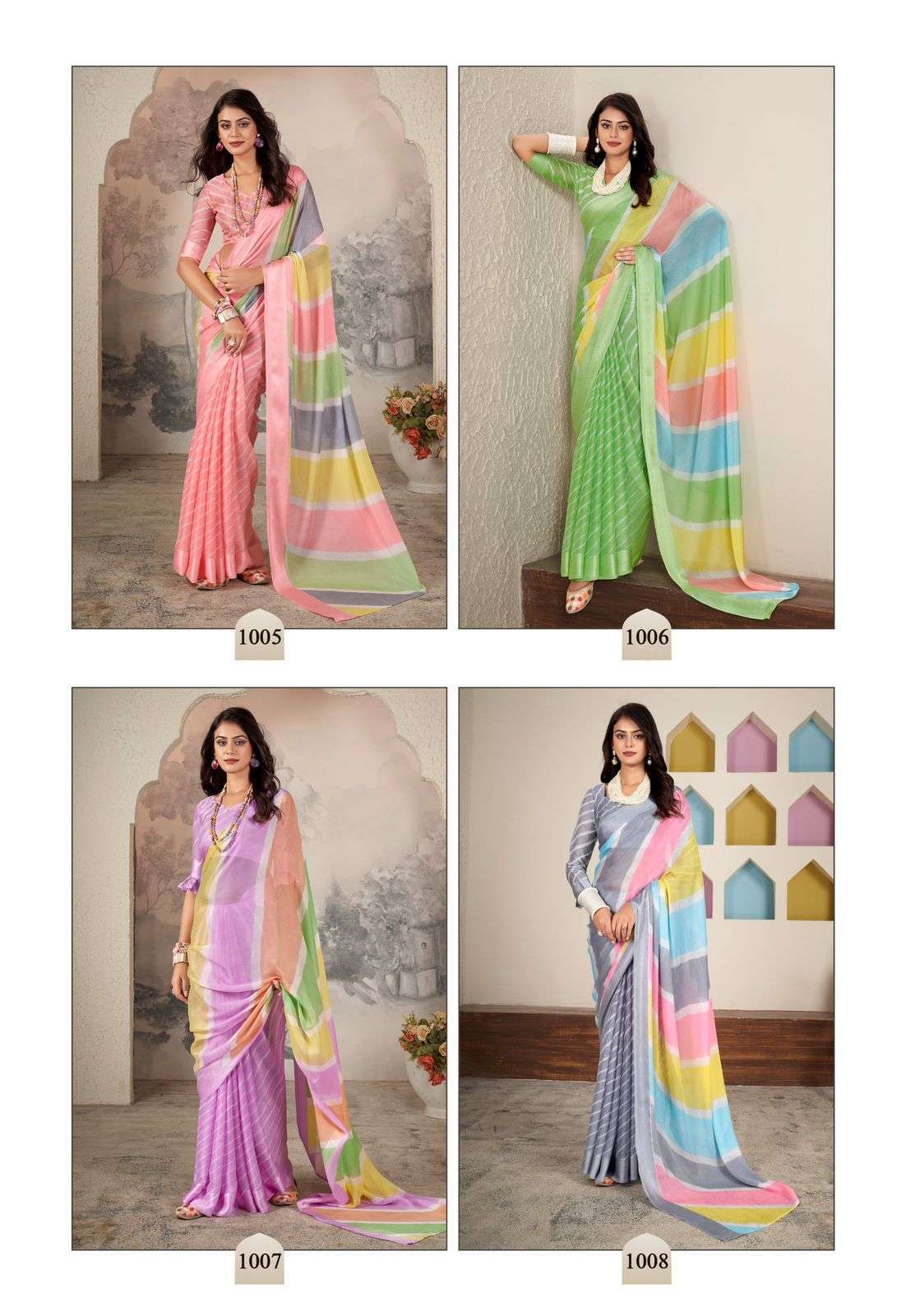



<h1><strong>Top Selling Saree Categories in India 2026 – Wholesale Sarees for Retailers & Resellers</strong></h1> <p>Sarees remain one of the strongest product categories for women's ethnic wear businesses because retailers can sell them across daily wear, festive, wedding, office and occasion-based segments. For shop owners, boutiques, home-based sellers and wholesale buyers, the right saree inventory is not about stocking one design in large quantity. A stronger buying strategy combines affordable fast-moving sarees with premium, festive and trend-focused collections that can serve different customer budgets throughout the year.</p> <h2><strong>Introduction</strong></h2> <p>Wholesale saree buyers entering the <strong>2026</strong> selling season need collections that can generate regular retail enquiries rather than inventory that looks attractive but remains unsold. The Indian saree market offers enormous variety, including cotton sarees, silk sarees, printed sarees, georgette sarees, chiffon sarees, organza sarees, festive sarees, designer sarees, wedding sarees and ready-to-wear styles.</p> <p>For businesses searching for the <strong>top selling saree categories in India</strong>, the practical objective is to purchase categories suited to their own customers. A home-based reseller may require affordable catalogues with easy-to-sell designs, while a premium boutique may prefer limited but richer collections. Showroom owners can maintain several price levels so that customers have choices across everyday, festive and occasion wear.</p> <p>Kapdawholesale.com serves buyers looking for sarees for resale, bulk purchasing and business inventory. Surat's established textile ecosystem, including the <strong>surat textile market</strong>, Ring Road and Sahara Darwaza belt, makes the city an important sourcing point for saree trading, distribution and <strong>manufacturing</strong>.</p> <h2><strong>Buy Top Selling Saree Categories in India for Your Business</strong></h2> <p>Retailers should build saree inventory according to customer use rather than purchasing only by appearance. A balanced store may need everyday cotton sarees, lightweight printed styles, festive sarees, premium silk-look collections and selected designer pieces. This gives customers multiple reasons to purchase from the same seller.</p> <p>The <strong>top selling saree categories in India</strong> can vary according to city, season, customer age group and price segment. However, commercially useful wholesale categories generally combine easy draping, attractive colours, wearable fabrics and a purchase price that leaves reasonable scope for resale.</p> <h3><strong>1. Cotton Sarees Wholesale</strong></h3> <p><strong>Cotton sarees wholesale</strong> are a valuable category for retailers seeking products with year-round selling potential. Cotton-based sarees can work for office wear, daily wear, casual occasions, summer collections and customers who prefer breathable fabrics.</p> <p>Wholesale buyers can stock printed cotton sarees, woven-look patterns, traditional designs, contemporary prints and elegant border styles. A varied cotton assortment allows retailers to serve customers looking for practical sarees as well as shoppers who want understated ethnic styling.</p> <p>For home-based sellers, cotton sarees can be particularly useful because they can be marketed throughout much of the year rather than being dependent on one festival. Shop owners can also combine affordable options with more premium cotton designs to cover multiple retail price points.</p> <h3><strong>2. Silk Sarees Wholesale</strong></h3> <p><strong>Silk sarees wholesale</strong> remain an important purchase category for boutiques and showrooms targeting weddings, festivals, family functions and traditional occasions. Retailers can build a collection using different textures, woven effects, borders and colour combinations rather than depending on a single silk style.</p> <p>Deep maroon, red, bottle green, royal blue, purple and mustard can create a traditional festive presentation, while pastel shades, beige, peach, lavender and softer metallic tones can appeal to customers seeking a contemporary premium appearance.</p> <p>When comparing wholesale silk saree price ranges, buyers should check fabric composition, border work, pallu design, finishing and blouse piece details. Two sarees at different wholesale prices may serve completely different retail customer segments.</p> <h3><strong>3. Printed Sarees for Fast-Moving Retail Stock</strong></h3> <p><strong>Printed sarees wholesale</strong> can help retailers maintain fresh inventory without relying entirely on heavily embellished merchandise. Floral prints, geometric patterns, abstract motifs, traditional-inspired prints and contemporary colour combinations can serve different age groups and selling occasions.</p> <p>Printed sarees are also useful for digital resellers because an attractive pattern can be immediately visible in catalogue photographs. Sellers can showcase new arrivals through WhatsApp, Instagram, Facebook and other social selling channels while keeping multiple designs available for customers.</p> <h3><strong>4. Designer Sarees Wholesale</strong></h3> <p>Boutiques and premium stores can use <strong>designer sarees wholesale</strong> to create a stronger occasion-wear section. These products may include fashionable borders, embroidery, sequins, distinctive blouse concepts, modern drapes, decorative detailing and statement colour combinations.</p> <p>Designer merchandise does not need to represent the entire inventory. Retailers can use selected premium sarees as attention-grabbing products while maintaining more affordable categories for regular volume sales.</p> <h2><strong>Wholesale Saree Price Strategy for Retailers in 2026</strong></h2> <p>Wholesale buying should begin with the expected retail customer. Instead of asking only for the lowest <strong>price</strong>, buyers can identify the retail range that performs best in their market and purchase backwards from that target.</p> <p>A reseller selling primarily through WhatsApp may require affordable sarees that can move quickly. A boutique in a premium location may be able to stock higher-value silk and designer collections. Larger showrooms can maintain entry, mid-range and premium sections simultaneously.</p> <p>Kapdawholesale.com provides a sourcing route for buyers looking for <strong>sarees wholesale online</strong>, bulk saree collections and business-oriented ethnic wear inventory. Product availability and exact pricing can vary by design and collection, so buyers planning volume orders should confirm current stock before finalizing purchases.</p> <h3><strong>Buying Sarees for Better Resale Margins</strong></h3> <p>A profitable wholesale purchase involves more than the difference between buying and selling price. Retailers should consider freight, packaging, advertising costs, payment charges and potential unsold stock. This makes inventory turnover as important as the percentage margin on an individual saree.</p> <p>For example, a moderately priced design that sells repeatedly can contribute more to overall business than an expensive piece offering a high theoretical margin but moving slowly. Retailers can therefore maintain a combination of fast-moving stock and selected high-margin premium products.</p> <h3><strong>Bulk Saree Orders for Showrooms</strong></h3> <p>Showroom owners and larger retailers placing <strong>bulk saree orders</strong> can divide purchases across multiple categories instead of investing heavily in one catalogue. Cotton, printed, festive, silk-look and designer collections can work together to create a broader store presentation.</p> <p>Businesses can also track sales category-wise. If cotton sarees generate regular repeat orders while a particular festive design moves slowly, the next purchase can be adjusted accordingly. This keeps buying decisions connected to actual customer behaviour.</p> <img src="https://kapdawholesale.com/images/product/2026/06/sr-nera-cotton-wholesale-saree-manufacturers-2026-06-09_16_42_33.jpeg"/> <h2><strong>5. Festive Sarees Wholesale for Seasonal Demand</strong></h2> <p><strong>Festive sarees wholesale</strong> become especially important when retailers prepare for Diwali, Navratri, Dussehra, Raksha Bandhan, Eid, regional festivals and the wedding season. Customers shopping during these periods often look for richer colours, attractive borders and more decorative presentation than they would choose for everyday wear.</p> <p>Retailers can build festive collections across multiple price points. Affordable festive sarees can support volume sales, mid-range products can serve regular boutique customers, and premium statement sarees can target weddings and special occasions.</p> <p>Festive inventory should ideally arrive early enough for photography, cataloguing, store display and promotion. Purchasing too close to a major festival can reduce the available retail selling period.</p> <h3><strong>6. Georgette Sarees Wholesale</strong></h3> <p><strong>Georgette sarees wholesale</strong> can be attractive to buyers looking for lightweight drapes suitable for parties, celebrations and fashionable ethnic wear. Printed georgette sarees can serve an accessible price segment, while embroidered or embellished options can be positioned for more premium customers.</p> <p>Because lightweight sarees are often easy to style, they can also work well for younger customers and online fashion buyers. Retailers can select floral prints, solid colours, decorative borders and occasion-focused styles depending on their target market.</p> <h3><strong>7. Organza Sarees Wholesale</strong></h3> <p><strong>Organza sarees wholesale</strong> can provide boutiques with a visually distinctive category. Floral patterns, delicate embroidery, elegant borders and pastel shades can create a premium appearance suitable for parties, functions and festive occasions.</p> <p>Organza collections are particularly suitable for retailers whose customers actively follow fashion-led ethnic wear. Since fabric appearance and drape are important to this category, high-quality product images and videos can support online selling.</p> <h3><strong>8. Chiffon Sarees for Lightweight Collections</strong></h3> <p>Chiffon-style sarees provide another lightweight option for stores seeking comfortable and easy-to-style merchandise. Wholesale buyers can mix plain styles, prints, borders and embellished designs depending on the intended retail price.</p> <p>These sarees can complement cotton and georgette collections by giving customers additional fabric choices without requiring retailers to move entirely into heavy occasion wear.</p> <h2><strong>Surat Saree Wholesale Market for Retail and Resale Buying</strong></h2> <p>Surat plays a major role in India's textile supply chain and remains an important destination for retailers searching for <strong>wholesale sarees in Surat</strong>. The concentration of textile businesses around Ring Road, Sahara Darwaza and the wider Surat textile market gives professional buyers access to numerous saree and ethnic wear categories.</p> <p>For businesses located outside Surat, online wholesale buying can reduce repeated travel. Retailers can browse product selections remotely and plan inventory according to customer demand, budget and seasonal requirements.</p> <p>Vastralife brings wholesale and <strong>export experience since 2017</strong>, along with industry expertise in women's ethnic wear sourcing. For professional buyers, consistent product quality, responsive communication and access to fresh collections can be just as important as the initial wholesale price.</p> <h3><strong>Saree Manufacturing and Wholesale Supply from Surat</strong></h3> <p>Surat's textile ecosystem connects different stages of fabric processing, design, <strong>manufacturing</strong>, trading and distribution. This enables frequent collection updates, which can be valuable for retailers competing in fast-changing fashion markets.</p> <p>Buyers searching for saree manufacturers, wholesale saree suppliers, saree distributors or online saree wholesalers often have the same final objective: obtaining commercially suitable products for resale at a workable cost.</p> <p>Kapdawholesale.com is positioned for business buyers who want to explore wholesale merchandise from this sourcing ecosystem and build inventory for boutiques, shops, showrooms and resale businesses.</p> <h2><strong>9. Wedding Sarees Wholesale for Premium Retail Customers</strong></h2> <p>Wedding-related purchases can create opportunities for higher-value sales. <strong>Wedding sarees wholesale</strong> may include rich silk-inspired fabrics, zari-style borders, embroidery, embellishments and statement colour combinations suitable for brides, relatives and wedding guests.</p> <p>Retailers can create a dedicated wedding section rather than mixing premium merchandise randomly with everyday products. This makes it easier for customers to compare designs within their intended occasion and budget.</p> <p>Showroom buyers can also purchase complementary festive and family-function sarees alongside wedding collections, helping customers shop for several events from the same store.</p> <h3><strong>10. Party Wear Sarees Wholesale</strong></h3> <p><strong>Party wear sarees wholesale</strong> can bridge the gap between regular sarees and heavy wedding collections. Sequins, embroidery, elegant borders, fashionable blouses and modern fabrics can make these sarees suitable for receptions, engagement functions, dinners and celebrations.</p> <p>For boutiques, party wear can be an effective category for customers who want a premium appearance without purchasing a very heavy traditional saree.</p> <h2><strong>Saree Wholesale for International Buyers</strong></h2> <p>Indian sarees also have resale potential in international markets where South Asian communities purchase ethnic clothing for weddings, festivals, religious events and cultural celebrations. For this article, three relevant target markets are <strong>USA, Nepal and New Zealand</strong>.</p> <p>Wholesale buyers planning <strong>saree export from India</strong> should select merchandise according to the preferences and price expectations of customers in their destination market. International buyers should also provide enough lead time for order processing, shipping and applicable destination procedures.</p> <h3><strong>Wholesale Sarees for USA Retailers</strong></h3> <p>Ethnic wear boutiques and online sellers serving South Asian communities in the USA can create collections around wedding seasons, Diwali and community celebrations. A combination of designer, festive, silk-look and lightweight sarees can cover different customer budgets.</p> <h3><strong>Wholesale Sarees for Nepal</strong></h3> <p>Nepal offers a market for Indian ethnic fashion across regular retail and festive periods. Retailers can source sarees according to local seasonal demand, celebrations and customer preferences while allowing sufficient time for cross-border delivery.</p> <h3><strong>Wholesale Sarees for New Zealand</strong></h3> <p>Retailers serving Indian and South Asian communities in New Zealand can build targeted saree inventories for festivals, weddings and cultural events. Carefully selected collections can help smaller boutiques offer variety without carrying unnecessarily deep stock in every design.</p> <p>For wholesale buyers, understanding the <strong>top selling saree categories in India</strong> also provides a useful foundation for international inventory planning because many Indian ethnic fashion trends influence overseas South Asian retail demand.</p>
<p>For businesses that want to expand beyond their local customer base, the next step is choosing categories that can be reordered consistently. Retailers should keep sales records by fabric, design, price range and occasion. This makes future purchasing more accurate and helps reduce money blocked in slow-moving inventory.</p> <h2><strong>How to Build a Profitable Saree Wholesale Inventory</strong></h2> <p>A strong saree business does not require every available variety. It requires the right combination of products for the customers actually buying from the store. Boutique owners, resellers and showroom buyers can divide their purchasing budget between regular sellers, seasonal collections and premium products.</p> <p>For example, cotton and printed sarees can form the repeat-selling foundation of the inventory. Georgette and chiffon styles can serve customers looking for lightweight fashion, while silk, designer, festive and wedding sarees can strengthen the occasion-wear section.</p> <p>Buyers can explore <a href="https://www.kapdawholesale.com/cotton-saree">cotton sarees wholesale</a> when building a daily-wear and regular retail section. Retailers who also sell complementary ethnic products can explore <a href="https://www.kapdawholesale.com/cotton-dress-material">cotton dress material</a> to widen their product mix without moving away from the core women's ethnic wear customer.</p> <h3><strong>Start with Multiple Price Points</strong></h3> <p>Retail customers rarely have identical budgets. One buyer may want an economical everyday saree, while another may be shopping for a wedding or festival and be comfortable with a higher price. Maintaining multiple wholesale price segments can therefore improve the probability of converting enquiries into orders.</p> <p>Home-based sellers can begin with smaller mixed selections and increase quantities after identifying their fastest-moving categories. Established shops and showrooms can carry deeper inventory in proven designs while continuously testing fresh arrivals.</p> <h3><strong>Use Colour Variety Strategically</strong></h3> <p>Colour is one of the strongest visual factors in saree selling. Wholesale buyers should avoid purchasing an entire collection in very similar shades unless historical sales justify it. A stronger selection can combine traditional colours such as red, maroon, green and royal blue with contemporary shades such as lavender, peach, teal, wine, beige and pastels.</p> <p>During festive and wedding periods, brighter and richer shades can be balanced with sophisticated neutral or pastel options. This allows the same store to appeal to customers with very different styling preferences.</p> <h3><strong>Buy New Arrivals Regularly</strong></h3> <p>Customers following a boutique through WhatsApp, Instagram or other digital channels often respond to freshness. Instead of purchasing very large quantities of one catalogue, some resellers prefer introducing new collections regularly.</p> <p>This approach can create repeat engagement because customers have a reason to check the seller's latest stock. Kapdawholesale.com can support buyers searching for fresh wholesale saree collections for their retail and resale businesses.</p> <img src="https://kapdawholesale.com/images/product/2026/06/vastrangan-kritika-saree-dealers-in-hyderabad-2026-06-08_17_05_10.jpeg" /> <h2><strong>Best Saree Categories for Different Types of Wholesale Buyers</strong></h2> <p>The same purchasing strategy will not work equally well for every seller. The <strong>top selling saree categories in India</strong> should be selected according to selling channel, customer profile, order size and expected retail price.</p> <h3><strong>For Boutique Owners</strong></h3> <p>Boutique owners can focus on distinctive products that create a curated presentation. Designer sarees, organza sarees, premium printed styles, festive sarees and selected silk collections can help create an assortment that looks different from mass-market stock.</p> <p>Rather than carrying every available design, boutiques can purchase carefully selected combinations of colours, patterns and fabrics. Freshness and presentation can be especially important when customers visit specifically to discover something different.</p> <h3><strong>For Home-Based Resellers</strong></h3> <p>Home-based sellers generally benefit from products that are easy to display digitally and suitable for a wider customer base. Printed sarees, cotton sarees, georgette sarees and affordable festive styles can provide useful starting categories.</p> <p>Resellers can share clear product photographs, fabric details, available colours and selling prices through WhatsApp or social media. Fast-moving designs can then be reordered instead of investing heavily before customer demand is established.</p> <h3><strong>For Shop Owners</strong></h3> <p>Retail shops serving walk-in customers can maintain a broader mix. Daily-wear cotton and printed sarees can generate regular enquiries, while party wear, festive and silk collections can address occasion-based demand.</p> <p>Shop owners should also review which price points convert most frequently. If customers repeatedly request products within a particular range, future wholesale purchases can give greater weight to that segment.</p> <h3><strong>For Showroom Owners</strong></h3> <p>Large showrooms usually need enough assortment to serve different customer profiles under one roof. They can maintain dedicated sections for daily wear, office wear, festive sarees, wedding sarees, designer collections and premium products.</p> <p>Bulk buyers can negotiate purchasing according to quantity and catalogue while maintaining a diversified inventory. New arrivals can be displayed prominently to create interest among repeat customers.</p> <h3><strong>For Wholesale Buyers and Distributors</strong></h3> <p>Wholesale buyers supplying other retailers should prioritize products with repeat-order potential. Their inventory decisions may depend on regional preferences, retailer demand, price competitiveness and availability of fresh designs.</p> <p>Distributors can also keep a combination of proven fast-moving categories and newer fashion-led products. This allows downstream retailers to replenish dependable sellers while testing emerging trends.</p> <h2><strong>Wholesale Saree Buying Trends for 2026</strong></h2> <p>For <strong>2026</strong>, retailers can benefit from maintaining a balance between traditional Indian styling and contemporary presentation. Customers may buy traditional sarees for weddings and festivals while preferring lighter, simpler products for office, casual and social occasions.</p> <p>This creates room for multiple categories within the same wholesale order. Cotton, printed, silk-look, organza, georgette, designer and festive sarees can address different customer intentions rather than competing directly with one another.</p> <h3><strong>Lightweight Sarees for Regular Selling</strong></h3> <p>Lightweight fabrics can appeal to customers who prioritize comfort and manageable draping. Printed georgette, chiffon-style and soft cotton sarees can therefore form part of a retailer's regular assortment.</p> <h3><strong>Premium Sarees for Occasion Buying</strong></h3> <p>Festivals, engagements, weddings and family celebrations create demand for products with richer visual appeal. Embroidery, zari-inspired borders, decorative pallus, premium blouse designs and embellished detailing can increase the perceived occasion value of a saree.</p> <h3><strong>Digital-Friendly Collections for Online Resellers</strong></h3> <p>Online selling makes product presentation increasingly important. Sarees with clearly visible prints, attractive colour contrast and detailed catalogue photography can be easier to present through mobile screens.</p> <p>Resellers should still verify product specifications rather than judging exclusively from photographs. Fabric details, blouse piece information, work, length and care requirements can help customers make more informed purchasing decisions.</p> <h2><strong>Why Source Sarees from Surat?</strong></h2> <p>Surat has developed a large textile ecosystem connecting fabric suppliers, processors, designers, manufacturers, traders and wholesale distributors. For buyers searching for a <strong>saree wholesale market in Surat</strong>, areas around Ring Road and Sahara Darwaza are widely associated with textile commerce.</p> <p>This ecosystem allows wholesale businesses to source multiple ethnic wear categories and respond to changing retail demand. Buyers located elsewhere in India or overseas can increasingly access Surat-origin collections without depending exclusively on physical market visits.</p> <p>Vastralife's wholesale and export experience since 2017 adds practical industry understanding to sourcing for retailers, resellers and professional wholesale buyers. The focus remains on commercially relevant collections, premium product quality and dependable business support rather than simply adding more designs to a catalogue.</p> <h2><strong>Internal Linking Section: Explore Related Wholesale Categories</strong></h2> <p>Retailers building a complete women's ethnic wear business should think beyond a single product. A customer purchasing a cotton saree today may return for dress material, festive wear or another ethnic category later. Creating complementary inventory can increase repeat business without changing the store's core audience.</p> <p>When selecting stock, compare current availability, design mix, fabric, minimum order requirement and wholesale price. A carefully planned assortment is generally more useful than purchasing unrelated products simply because they are inexpensive.</p> <p>Kapdawholesale.com gives business buyers an online route to explore wholesale ethnic wear collections while planning purchases according to their customer base and resale model.</p> <h2><strong>Customer FAQs</strong></h2> <h3><strong>1. Which are the top selling saree categories in India for wholesale buyers?</strong></h3> <p>Popular wholesale segments include cotton sarees, printed sarees, silk and silk-look sarees, georgette sarees, chiffon sarees, organza sarees, designer sarees, festive sarees, party wear and wedding collections. The strongest category for an individual retailer depends on local demand, customer budget and season.</p> <h3><strong>2. Where can retailers buy wholesale sarees from Surat?</strong></h3> <p>Surat has a large textile trading ecosystem around areas including Ring Road, Sahara Darwaza and other textile-market clusters. Buyers who do not want to travel repeatedly can also source collections online through wholesale platforms such as Kapdawholesale.com.</p> <h3><strong>3. Which sarees are suitable for home-based reselling?</strong></h3> <p>Home-based sellers can consider cotton, printed, georgette and affordable festive sarees because these categories can address a broad customer base. The ideal starting inventory depends on the seller's audience and expected retail price range.</p> <h3><strong>4. Can wholesale sarees be ordered for export?</strong></h3> <p>Export buyers can source Indian ethnic wear for international resale, subject to product availability, order requirements, shipping arrangements and destination-country procedures. Buyers from markets such as the USA, Nepal and New Zealand should confirm current logistics and order details before purchasing.</p> <h3><strong>5. What should I check before placing a bulk saree order?</strong></h3> <p>Check fabric specifications, available designs, colours, blouse details, work or embellishment, wholesale price, minimum order quantity, stock availability, dispatch terms and shipping charges. For larger orders, confirming these details before payment helps avoid misunderstandings.</p> <h3><strong>6. How should a new saree reseller select inventory?</strong></h3> <p>Start with a mixed selection instead of putting the entire budget into one design. Track customer enquiries and completed sales, identify the categories and price ranges receiving repeat demand, and increase purchasing in those areas over time.</p> <h3><strong>7. Are festive sarees suitable for year-round selling?</strong></h3> <p>Some occasion-wear designs can sell throughout the year for weddings and family functions, while strongly festival-specific collections may experience seasonal demand. Retailers can combine festive stock with regular cotton, printed and lightweight sarees to maintain a more balanced inventory.</p> <h3><strong>8. What wholesale saree price range should retailers choose?</strong></h3> <p>There is no single ideal range because customer budgets differ by location and selling channel. Retailers should calculate the desired resale price, operating costs and target margin, then choose wholesale merchandise that fits that business model.</p> <h2><strong>Order Wholesale Sarees for Your Retail or Reselling Business</strong></h2> <p>If you are a boutique owner, shop owner, showroom buyer, home-based seller, reseller or wholesale buyer looking to refresh your ethnic wear inventory, explore business-ready collections through Kapdawholesale.com.</p> <p>Get access to <strong>Latest Collections</strong>, competitive <strong>Wholesale Pricing</strong>, <strong>Trendy Ethnic Wear</strong>, <strong>Fast Shipping</strong>, <strong>COD Support</strong> on eligible orders, <strong>Bulk Order Deals</strong> and <strong>Quality Products Starting From ₹299</strong>. Product prices, availability, MOQ, COD eligibility and shipping terms should be confirmed for the specific collection at the time of ordering.</p> <p>Whether you are purchasing cotton sarees for regular retail, designer sarees for a boutique, festive merchandise for seasonal demand or mixed collections for wholesale distribution, selecting products according to actual customer demand can help create a healthier inventory cycle.</p> <p><strong>Contact:</strong> +91 9712582172</p> <p><strong>Website:</strong> kapdawholesale.com</p> <p>Explore fresh collections, compare wholesale options and build your next saree inventory with products selected for retail, resale and bulk business requirements.</p>