
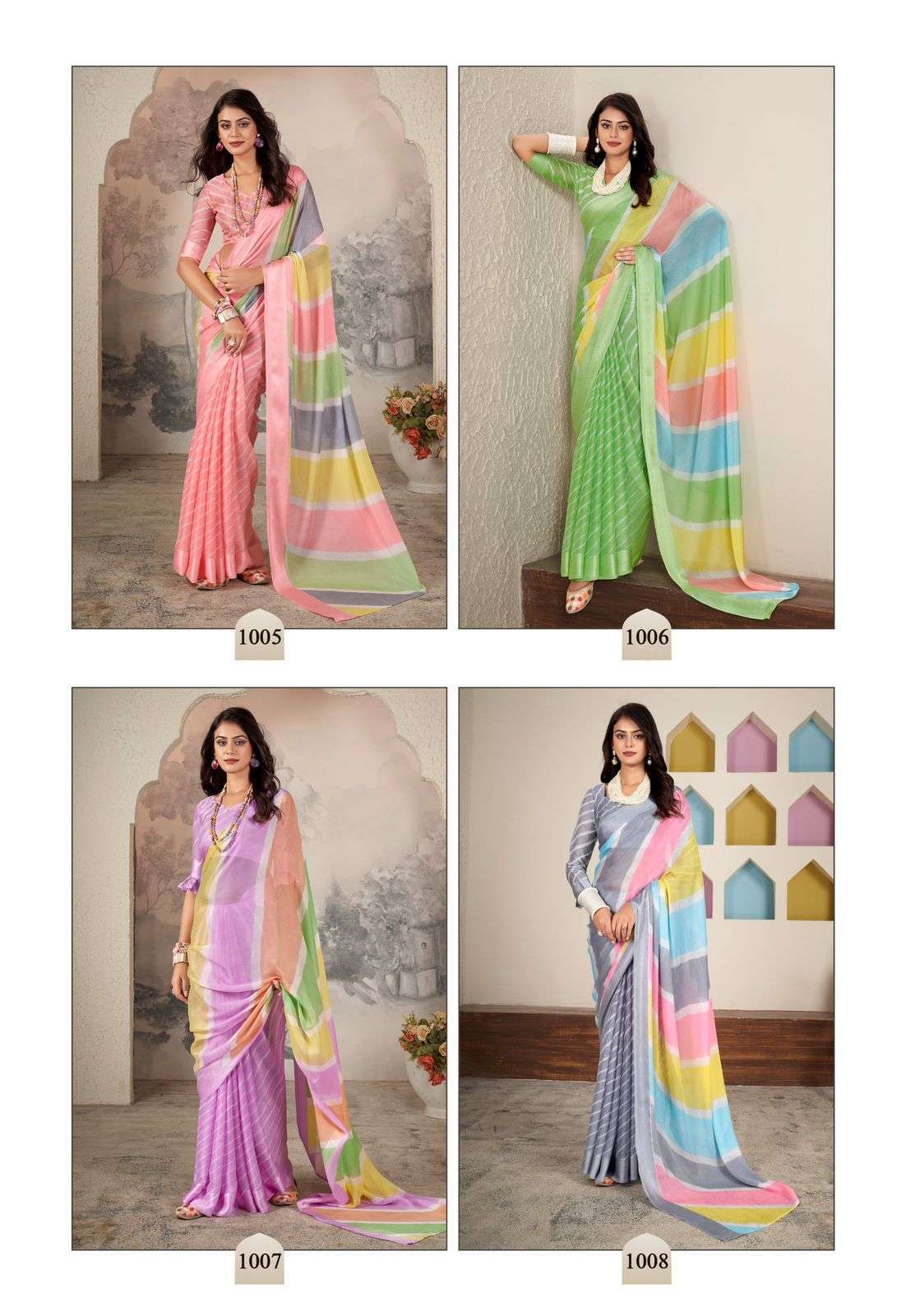



<h1><strong>Profitable Saree Business Ideas for Women in 2026 – Start & Grow Your Wholesale Reselling Business</strong></h1> <p>Starting a saree business can be an attractive opportunity for women who want to build an independent retail, boutique or home-based reselling venture around one of India's most established ethnic wear categories. With online selling, WhatsApp catalogues, social media and access to Surat wholesale suppliers, a seller can begin with a focused collection and expand according to actual customer orders instead of immediately investing in a large showroom.</p> <h2><strong>Introduction</strong></h2> <p>The saree market serves many different buying occasions, including daily wear, office wear, weddings, festivals, gifting and family functions. This gives sellers the flexibility to choose a specific customer segment instead of trying to stock every variety available in the market.</p> <p>For women researching <strong>profitable saree business ideas for women</strong>, the most practical starting point is to decide how products will be sold. A home-based seller may operate mainly through WhatsApp and Instagram, while another entrepreneur may open a boutique, sell through an existing clothing store or develop a larger wholesale distribution business.</p> <p>In <strong>2026</strong>, digital product discovery makes it possible to show hundreds of designs without depending only on physical walk-in traffic. At the same time, product quality, competitive wholesale price, reliable sourcing and customer service remain important for repeat orders.</p> <p>Surat plays an important role in India's textile trade, with established wholesale and <strong>manufacturing</strong> activity around textile-market areas such as <strong>Ring Road</strong> and <strong>Sahara Darwaza</strong>. Buyers looking for sarees for resale can use this sourcing ecosystem to access different fabrics, price ranges and design categories.</p> <h2><strong>1. Start a Home-Based Saree Reselling Business</strong></h2> <p>A home-based saree business is one of the most accessible models for sellers who want to begin without immediately taking on the fixed expenses of a physical shop. Products can be marketed to personal contacts, local customers, WhatsApp groups, Instagram followers and repeat buyers.</p> <h3><strong>Buy a Focused Wholesale Collection</strong></h3> <p>Instead of purchasing a very large number of random designs, start with a planned assortment. Cotton sarees, printed sarees, soft silk sarees, georgette sarees, festive sarees and selected designer sarees can cover several customer requirements.</p> <p>New sellers can test a smaller range first and track which colours, fabrics and price segments generate actual orders. When one category performs consistently, additional capital can be directed toward that segment.</p> <h3><strong>Sell Through WhatsApp</strong></h3> <p>WhatsApp can work particularly well for sellers who already have a local customer network. Product photographs can be organized with design numbers, fabric information, available colours and retail price so customers can enquire without needing to visit a store.</p> <p>Regular new arrivals can also encourage repeat enquiries. Instead of sending an excessive number of unrelated products every day, sellers can create focused drops such as "New Cotton Sarees", "Wedding Collection", "Festive Collection" or "Under ₹999 Retail Picks".</p> <h3><strong>Use Instagram to Reach New Customers</strong></h3> <p>Instagram can help a home-based business reach buyers beyond personal contacts. Reels showing drape, border details, pallu, blouse piece and fabric movement can communicate more about the product than a single catalogue photograph.</p> <p>A consistent posting schedule, clear ordering process and genuine product details can gradually turn a small reseller page into a recognizable saree business.</p> <h2><strong>2. Build a Saree Boutique with Premium Collections</strong></h2> <p>A boutique model can target customers who value selection and presentation rather than choosing purely on the lowest price. Boutique owners can create a distinctive assortment by combining traditional Indian textiles with contemporary colours and styling.</p> <p>Premium tissue silk, organza, designer silk, Patola-inspired patterns, festive sarees and wedding collections can be presented as curated ranges. This approach allows the business to focus on perceived value, presentation and service.</p> <h3><strong>Choose a Clear Boutique Position</strong></h3> <p>A boutique can specialize in a particular segment, such as premium festive sarees, wedding collections, affordable designer sarees or contemporary ethnic wear. A clear identity makes marketing easier because customers understand what they can expect from the store.</p> <p>For example, a seller focusing on wedding and festive customers can stock richer borders, zari work, woven patterns, decorative pallus and premium colour combinations. A boutique serving working women may prioritize lightweight fabrics and elegant designs that can be worn comfortably for longer periods.</p> <h3><strong>Maintain Freshness Instead of Excess Inventory</strong></h3> <p>A common inventory challenge is investing too much capital in one catalogue before knowing how customers will respond. Boutique owners can purchase fresh designs more regularly while keeping deeper quantities only in proven sellers.</p> <p>This creates a rotating display and gives existing customers a reason to return for new arrivals.</p> <h2><strong>3. Start an Online Saree Business Without a Traditional Showroom</strong></h2> <p>One of the strongest <strong>profitable saree business ideas for women</strong> is combining wholesale sourcing with online customer acquisition. A seller can operate through Instagram, Facebook, WhatsApp Business or an independent e-commerce website while maintaining inventory according to the scale of the business.</p> <h3><strong>Create Collections Around Customer Intent</strong></h3> <p>Customers often search according to an occasion or need rather than a technical fabric description. Online sellers can therefore organize products into categories such as:</p> <ul> <li>Daily Wear Sarees</li> <li>Office Wear Sarees</li> <li>Wedding Sarees</li> <li>Festival Sarees</li> <li>Designer Sarees</li> <li>Party Wear Sarees</li> <li>Silk Sarees</li> <li>Cotton Sarees</li> <li>Budget Sarees</li> <li>Premium Sarees</li> </ul> <p>This makes the catalogue easier to browse and creates multiple transactional entry points for customers who already know what type of product they want to purchase.</p> <h3><strong>Present Every Product Professionally</strong></h3> <p>Online buyers cannot physically touch the fabric before ordering, so product information matters. Include the saree fabric, approximate colour, work or weave, blouse-piece information, available variants, price and shipping conditions wherever applicable.</p> <p>Professional product presentation can also reduce repetitive customer questions and make the business appear more organized.</p> <img src="https://kapdawholesale.com/images/product/2026/06/vastrangan-tissue-silk-latest-sarees-wholesale-in-hyderabad-2026-06-08_17_06_46.jpeg"/> <h2><strong>4. Sell Silk and Festive Sarees for Higher-Value Orders</strong></h2> <p>Festivals, weddings, engagements and family functions create opportunities for sellers to offer products above everyday-wear price levels. A well-selected <strong>silk saree wholesale</strong> assortment can include traditional-looking designs alongside lighter contemporary options.</p> <p>Retailers can source tissue silk, soft silk, woven sarees, zari-border sarees, Patola-inspired sarees and other occasion-oriented styles according to their customer base. Rather than treating all premium products as one category, sellers can create different price levels so customers have options.</p> <h3><strong>Create Festival-Specific Product Drops</strong></h3> <p>Inventory can be planned ahead of major shopping periods. A retailer may introduce separate collections around Navratri, Diwali, Durga Puja, wedding season and other regional occasions depending on the customers being targeted.</p> <p>Planning wholesale purchases before demand peaks also gives sellers more time for product photography, catalogue creation and marketing.</p> <h3><strong>Offer Complete Styling Suggestions</strong></h3> <p>Premium sarees can be marketed with styling ideas for jewellery, blouse colours and occasion suitability. These additions do not need to complicate the sale; their purpose is to help the customer imagine the finished look.</p> <h2><strong>5. Open a Local Saree Shop or Multi-Category Ethnic Wear Store</strong></h2> <p>Women who already have access to a suitable retail location can build a saree-focused store or combine sarees with other women's ethnic wear. Physical retail allows customers to see fabric, compare colours and make purchase decisions in person.</p> <p>A local shop can carry daily-wear products at accessible prices while reserving dedicated sections for premium, wedding and festive merchandise. This combination can support regular footfall while maintaining opportunities for higher-value sales.</p> <h3><strong>Plan Inventory by Price Segment</strong></h3> <p>A practical store should not depend on a single price point. Buyers may enter with very different budgets, so the assortment can include economy, mid-range and premium sections.</p> <p>Wholesale purchasing decisions should consider the final retail price, expected margin, local competition and the amount of working capital available. Sellers should also calculate packaging, delivery, payment charges, advertising and other operating costs rather than treating the difference between purchase and sale price as pure profit.</p> <h3><strong>Use Offline and Online Selling Together</strong></h3> <p>A physical shop can also use WhatsApp and Instagram to generate repeat orders. Existing customers can receive new-arrival updates and reserve products before visiting the store. This gives a traditional retail business a digital sales channel without abandoning its physical customer base.</p> <h2><strong>6. Buy Direct from Surat Wholesale Markets for Resale</strong></h2> <p>Surat is widely associated with India's synthetic and ethnic textile trade. The <strong>Surat textile market</strong> ecosystem around Ring Road, Sahara Darwaza and adjoining textile areas gives professional buyers access to manufacturers, wholesalers and distributors across numerous women's clothing categories.</p> <p>For resellers outside Surat, online wholesale sourcing can reduce the need for frequent physical market visits. Kapdawholesale.com allows business buyers to explore collections online and shortlist merchandise according to their retail requirements.</p> <h3><strong>Compare Products, Not Only the Lowest Price</strong></h3> <p>A low wholesale price can appear attractive, but successful reselling also depends on whether the product is actually suitable for the target customer. Fabric, finishing, design, colour combination, presentation and consistency can affect the final retail response.</p> <p>A product purchased slightly cheaper but left unsold can block more working capital than a better-selected design purchased at an appropriate wholesale rate.</p> <h3><strong>Work with an Experienced Wholesale Network</strong></h3> <p>Vastralife brings wholesale and <strong>export experience since 2017</strong>, along with industry knowledge developed around women's ethnic wear sourcing. For retailers and resellers, experience can be valuable when selecting commercially relevant collections and maintaining premium product quality across different price segments.</p> <p>Kapdawholesale.com can serve buyers searching for fresh saree inventory while building their own retail, boutique, home-reselling or wholesale business.</p> <h2><strong>7. Build a Saree Reselling Business for International Customers</strong></h2> <p>Indian ethnic wear also has a customer base outside India. Sellers planning international expansion can target markets with Indian and South Asian communities and evaluate <strong>saree export</strong> opportunities according to shipping cost, order size and destination-country requirements.</p> <p>For example, retailers and distributors serving customers in <strong>USA</strong>, <strong>Australia</strong> and <strong>Nepal</strong> may source Indian sarees according to their local audience and seasonal demand. International wholesale buyers should confirm shipping, customs, taxes and applicable import requirements before finalizing orders.</p> <h3><strong>Focus on Products That Travel Well</strong></h3> <p>International sellers can consider package weight, fabric handling and product value while planning inventory. Lightweight sarees may help keep shipment weight manageable, while premium occasion products can support higher order values where the customer market justifies them.</p> <p>Product descriptions should be particularly clear for export orders because customers and overseas resellers may not have the opportunity to inspect merchandise physically before dispatch.</p> <h3><strong>Build Repeat Wholesale Orders</strong></h3> <p>A sustainable export business is not only about securing one large order. Repeat purchasing can become more valuable over time. Accurate product information, consistent communication, suitable quality and dependable dispatch practices can support longer business relationships.</p> <p>For women building an international ethnic wear business, starting with a defined customer market and gradually increasing inventory can be more manageable than trying to enter multiple countries simultaneously.</p>
<h2><strong>8. Add Patola and Traditional Sarees to Increase Collection Variety</strong></h2> <p>Traditional patterns can give a saree business a stronger festive and cultural product mix. Patola-inspired designs, woven motifs, rich borders and heritage-style colour combinations can work well for retailers who want merchandise suitable for weddings, festivals, gifting and family occasions.</p> <p>For a seller building <strong>profitable saree business ideas for women</strong> into a long-term business, the goal should not be to depend on one style alone. A combination of regular sellers and distinctive traditional collections can help the catalogue serve different customer preferences.</p> <h3><strong>Create a Separate Traditional Collection</strong></h3> <p>Instead of mixing every design together, sellers can create dedicated categories such as Patola Style, Traditional Sarees, Wedding Sarees, Festive Sarees and Premium Sarees. Clear categories make it easier for customers to find products according to their purchase intention.</p> <p>This approach can be especially useful for WhatsApp and social media selling. A customer interested in traditional designs can receive a focused catalogue rather than browsing dozens of unrelated products.</p> <h3><strong>Choose Designs with Strong Visual Appeal</strong></h3> <p>Traditional sarees often depend heavily on colour combinations, borders, motifs and pallu design. Retailers should therefore consider how clearly these elements appear in catalogue photographs and videos. Strong visual presentation can improve customer interest when products are being sold online.</p> <img src="https://kapdawholesale.com/images/product/2026/06/vastrangan-yogita-patola-indian-saree-wholesale-suppliers-2026-06-03_16_14_47.jpeg" /> <h2><strong>9. Create a Low-Investment Saree Business Model</strong></h2> <p>A new business does not necessarily need hundreds of pieces in inventory. Women who want to enter saree reselling with controlled working capital can begin with selected wholesale collections, promote them to a defined customer group and expand stock according to completed sales.</p> <p>The key is disciplined purchasing. Instead of buying simply because a catalogue looks attractive, ask whether the design matches the customers you are targeting, whether the expected retail price is suitable and whether similar products have previously generated enquiries.</p> <h3><strong>Start Small and Reinvest from Sales</strong></h3> <p>One approach is to establish an initial purchasing budget and avoid exceeding it until the first inventory cycle has produced useful sales data. Revenue and profit from successful products can then be reinvested into new stock.</p> <p>This method helps a seller understand actual customer behaviour before making larger commitments. Over time, the business can increase inventory in proven categories and reduce purchasing in slower segments.</p> <h3><strong>Track Every Product</strong></h3> <p>Maintain a simple record of purchase price, selling price, design number, customer order, delivery cost and final margin. Even a small home-based business benefits from knowing which products actually generate profit.</p> <p>Inventory records can also reveal whether a particular colour, fabric or price range repeatedly sells faster than others. That information should influence the next wholesale purchase.</p> <h2><strong>10. Build a Saree Business Through Pre-Order Selling</strong></h2> <p>Pre-order selling can be useful for resellers who want to test demand before maintaining deeper inventory. Sellers can showcase available wholesale designs, collect confirmed customer orders and purchase according to current availability and supplier terms.</p> <p>However, customers should receive accurate information about expected dispatch, availability and payment conditions. Wholesale stock can move quickly, so a design shown today may not necessarily remain available indefinitely.</p> <h3><strong>Use Pre-Orders for Premium Products</strong></h3> <p>Higher-value sarees can require more working capital. Instead of stocking every premium design, sellers can maintain selected physical samples while promoting additional products for confirmed orders.</p> <p>This can create a wider apparent assortment while allowing capital to remain available for products that already have demonstrated demand.</p> <h3><strong>Keep Ready Stock of Fast Sellers</strong></h3> <p>Pre-order selling should not necessarily replace ready inventory completely. If a design or category consistently generates orders, maintaining stock can allow faster customer delivery. A hybrid approach can therefore combine ready-stock bestsellers with additional order-based selections.</p> <h2><strong>11. Combine Sarees with Other Ethnic Wear Categories</strong></h2> <p>Once a saree business develops a stable customer base, complementary women's ethnic wear can create additional selling opportunities. Customers purchasing sarees may also be interested in suits, kurtis, dress materials and festive clothing.</p> <p>Retailers expanding their range can explore <a href="https://www.kapdawholesale.com/silk-saree">silk saree</a> collections for premium occasion-based demand. Businesses looking to widen their ethnic wear assortment can also consider <a href="https://www.kapdawholesale.com/pakistani-suits">Pakistani suits</a> for customers interested in coordinated suit collections.</p> <h3><strong>Expand According to Existing Customer Demand</strong></h3> <p>Do not add categories simply because they are available. Customer enquiries can guide expansion. If saree buyers regularly ask for suits or other ethnic wear, that is a stronger reason to introduce the category than following a trend without evidence from the store's audience.</p> <p>This strategy can help a home seller gradually become a multi-category reseller, or help a boutique develop into a more complete ethnic fashion destination.</p> <h2><strong>12. Use Festival and Wedding Seasons to Increase Order Value</strong></h2> <p>Seasonal purchasing can be important in Indian ethnic wear. Customers frequently buy new clothing for weddings, festivals and family functions, giving saree sellers opportunities to introduce targeted collections during high-intent shopping periods.</p> <p>Retailers should ideally plan wholesale purchasing before the selling season begins. Waiting until customer demand has already peaked may leave less time for stock selection, photography, marketing and delivery.</p> <h3><strong>Prepare Your Festive Catalogue Early</strong></h3> <p>Create a calendar of relevant festivals and wedding periods for your target market. Wholesale purchasing can then be planned backwards from the intended retail launch date.</p> <p>For example, festive inventory can include bright colours, decorative borders, woven designs and richer fabrics, while wedding collections may contain premium silk, traditional motifs and statement sarees.</p> <h3><strong>Create Bundle and Group Offers</strong></h3> <p>Retailers can test multi-piece offers for customers purchasing for family functions, gifting or group requirements. Wholesale buyers and resellers can similarly enquire about <strong>bulk order deals</strong> when purchasing larger quantities.</p> <p>Any discount should be calculated against the actual margin rather than offered automatically. The purpose of a bundle is to improve the overall order value while keeping the transaction commercially sensible.</p> <h2><strong>13. Build a Saree Wholesale Business for Other Resellers</strong></h2> <p>Women who develop experience in retail sourcing can eventually move beyond direct-to-consumer selling and supply merchandise to other resellers, boutiques and shop owners. This changes the business model because the customer becomes another business rather than the final wearer.</p> <p>A wholesale buyer generally pays close attention to repeat availability, purchase price, catalogue variety, minimum order quantity and delivery reliability. Margins per piece may differ from direct retail, but larger and repeat orders can create a different growth opportunity.</p> <h3><strong>Create Reseller-Friendly Catalogues</strong></h3> <p>Keep product information organized with design number, fabric, available colours, wholesale terms and order requirements. Avoid cluttering catalogue photographs with unnecessary information that makes the product difficult to see.</p> <p>Fast communication can also matter because resellers may be waiting for confirmation before taking an order from their own customer.</p> <h3><strong>Separate Retail and Wholesale Pricing</strong></h3> <p>If a business serves both end customers and resellers, maintain a clear pricing structure. Wholesale pricing should be connected to quantity and business terms rather than being offered indiscriminately to every retail customer.</p> <p>This protects the reseller network and makes the business relationship easier to understand.</p> <h2><strong>14. How to Price Sarees for a Sustainable Business</strong></h2> <p>Profitability is not determined only by the difference between wholesale and retail price. Sellers should consider packaging, payment charges, advertising, returns or claims where applicable, local delivery, courier cost, staff expense, rent and other operating costs.</p> <p>For example, purchasing a product at ₹700 and selling it at ₹900 does not automatically mean ₹200 profit. If customer acquisition, packing and delivery cost ₹120, the real contribution is substantially different.</p> <h3><strong>Use Different Margins for Different Categories</strong></h3> <p>Fast-moving budget merchandise may work with a different margin structure than a distinctive premium saree. Boutique-exclusive or curated products can sometimes support greater value addition through presentation and service, while highly competitive regular products may require tighter pricing.</p> <p>Instead of applying one percentage to everything, calculate the selling price according to product cost, market positioning and operating expense.</p> <h3><strong>Protect Your Working Capital</strong></h3> <p>Inventory that remains unsold for months has a financial cost even if it eventually sells without a direct loss. Regular stock review can identify products that need stronger promotion, bundling or a controlled clearance strategy.</p> <p>For many <strong>profitable saree business ideas for women</strong>, efficient stock rotation can be just as important as achieving a high margin on individual pieces.</p> <h2><strong>15. Why Wholesale Sourcing Matters for Business Growth</strong></h2> <p>A dependable sourcing process helps sellers maintain product variety without spending excessive time searching across disconnected suppliers. Kapdawholesale.com is designed for business buyers looking for wholesale clothing collections that can be evaluated for retail, reselling and bulk purchasing requirements.</p> <p>Access to Surat's textile ecosystem can also help businesses explore fresh designs across different price points. The manufacturing and trading network around the <strong>Surat textile market</strong>, Ring Road and Sahara Darwaza remains relevant for buyers sourcing women's ethnic wear.</p> <p>With Vastralife's wholesale and export experience since 2017, industry knowledge can be applied to identifying commercially relevant collections while maintaining attention to product quality. Buyers should still confirm the current product specifications, stock, MOQ, price and delivery terms for the particular collection they intend to order.</p> <h2><strong>Internal Linking Section: Expand Your Saree and Ethnic Wear Business</strong></h2> <p>A saree business can begin with one focused customer segment and gradually expand as sales data becomes available. Daily wear, silk, traditional, festive and premium sarees can serve different buying occasions, while complementary ethnic wear can provide additional opportunities once customer demand supports expansion.</p> <p>Kapdawholesale.com can be used to explore wholesale collections for home-based reselling, boutiques, retail stores, showrooms and professional wholesale purchasing. The strongest assortment is generally not the one with the largest number of products, but the one that matches the customers a seller can realistically reach and convert.</p> <p>For buyers planning larger quantities or export orders, confirm current availability, packing, shipping and destination requirements before committing to a purchase.</p> <h2><strong>Customer FAQs</strong></h2> <h3><strong>1. Can I start a saree business from home?</strong></h3> <p>Yes. A home-based seller can source wholesale sarees and sell through WhatsApp, Instagram, local contacts and repeat customers. Starting with a controlled inventory and increasing stock according to actual sales can reduce the amount of capital committed initially.</p> <h3><strong>2. Which sarees should a new reseller buy first?</strong></h3> <p>The selection should depend on the intended customer base. Cotton and printed sarees can address regular-wear demand, while silk, designer and festive sarees can serve occasion-based customers. Testing multiple price points can help identify which segment performs best.</p> <h3><strong>3. How much investment is required to start a saree business?</strong></h3> <p>There is no universal starting amount because investment depends on product price, quantity, business model and whether the seller operates from home or a physical store. Buyers should establish a working-capital budget and confirm the current MOQ and wholesale price of the collections they intend to purchase.</p> <h3><strong>4. Where can I buy sarees wholesale for reselling?</strong></h3> <p>Surat is a major textile sourcing centre, and buyers can source through manufacturers, wholesalers and online wholesale channels. Kapdawholesale.com provides an online option for business buyers exploring collections for resale and bulk purchasing.</p> <h3><strong>5. Can I sell sarees through WhatsApp and Instagram?</strong></h3> <p>Yes. Both channels can be used for catalogue-based selling. Clear photographs, product specifications, pricing, ordering instructions and consistent customer communication can make the buying process easier.</p> <h3><strong>6. Is a saree business suitable for international customers?</strong></h3> <p>Indian sarees can be supplied to overseas retail and wholesale customers subject to applicable shipping, customs and import requirements. Sellers planning export orders should calculate logistics and confirm destination-specific requirements before quoting the final landed cost.</p> <h3><strong>7. How can I increase repeat customers in a saree business?</strong></h3> <p>Regular new arrivals, accurate product descriptions, consistent quality, clear communication and dependable order handling can encourage customers to return. Tracking previous purchases also helps sellers recommend products closer to each customer's preferences.</p> <h3><strong>8. Should I open a showroom or start from home?</strong></h3> <p>The choice depends on capital, customer reach and business scale. Starting from home can keep fixed costs lower, while a showroom provides physical product experience and walk-in visibility. Some sellers begin online or from home and move into retail premises after developing consistent demand.</p> <h2><strong>Start Your Saree Reselling or Wholesale Business with Kapdawholesale.com</strong></h2> <p>If you are ready to turn one of these <strong>profitable saree business ideas for women</strong> into a working business, begin by selecting products for a clearly defined customer group rather than purchasing random inventory. Test demand, track sales, reinvest carefully and expand into new categories when the numbers support the decision.</p> <p>Explore <strong>Latest Collections</strong>, competitive <strong>Wholesale Pricing</strong>, <strong>Trendy Ethnic Wear</strong>, <strong>Fast Shipping</strong>, eligible <strong>COD Support</strong>, <strong>Bulk Order Deals</strong> and <strong>Quality Products Starting From ₹299</strong>. Prices, stock, minimum order requirements, COD eligibility and shipping conditions can vary by product and should be confirmed when ordering.</p> <p>Whether you are a <strong>Home-Based Seller</strong>, Shop Owner, Boutique Owner, Showroom Owner, Reseller or Wholesale Buyer, you can build your inventory according to your customer segment and business budget.</p> <p><strong>Contact Number:</strong> +91 9712582172</p> <p><strong>Website:</strong> kapdawholesale.com</p> <p>Start with a focused collection, understand what your customers actually purchase and build the business step by step with fresh wholesale ethnic wear sourced for resale, retail and bulk requirements.</p>