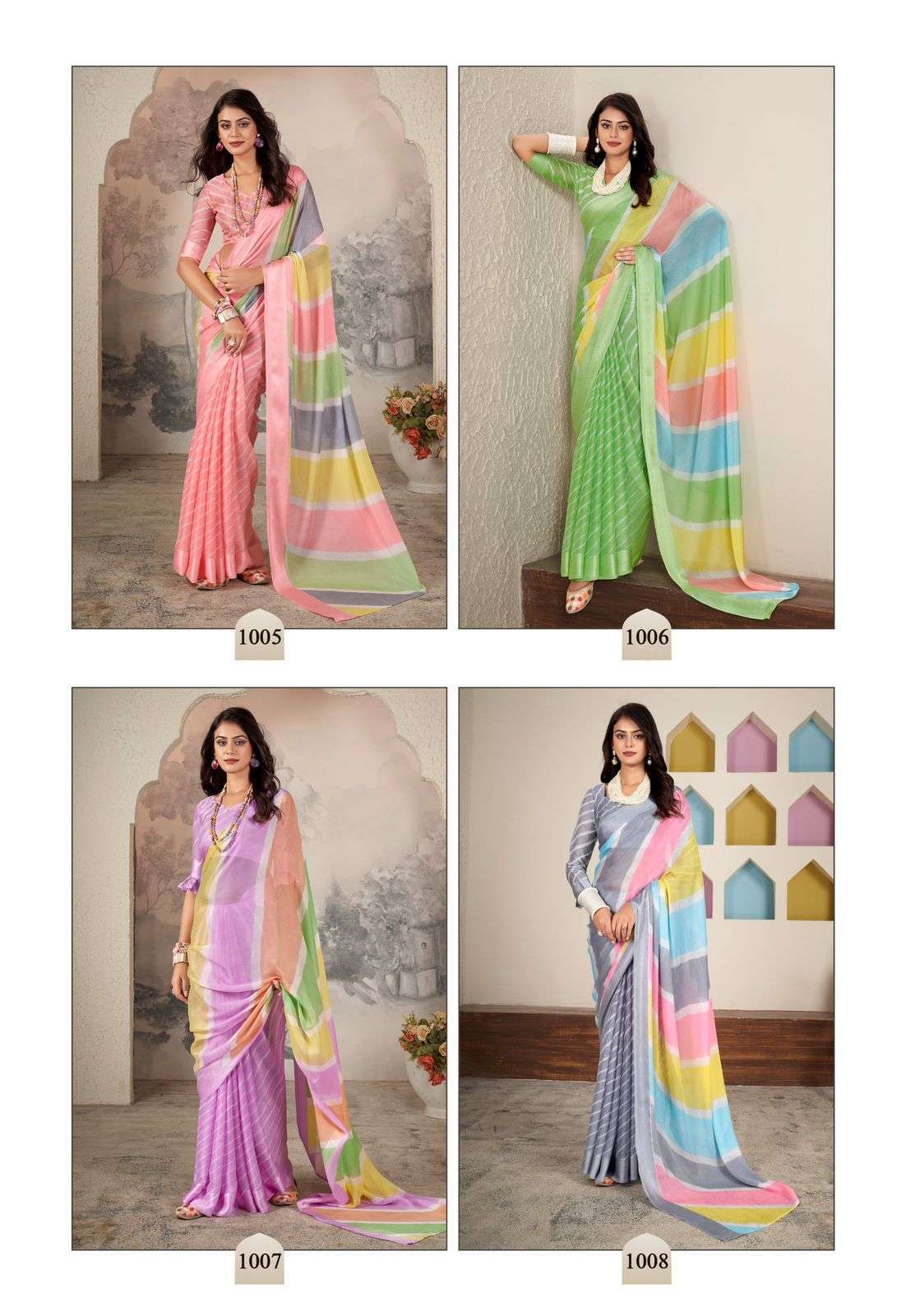



<h1><strong>Low MOQ Wholesale Saree Supplier in Surat for Resellers & Boutiques 2026</strong></h1> <p>Buying sarees wholesale no longer has to mean investing heavily in hundreds of pieces from a single catalogue. Boutique owners, online resellers, home-based sellers and growing retail stores increasingly prefer smaller, carefully selected orders that allow them to offer more designs while keeping their working capital flexible. For buyers looking to purchase fresh ethnic collections directly from Surat, low minimum-order options can make wholesale sourcing considerably more practical.</p> <h2><strong>Introduction</strong></h2> <p>Surat has developed into one of India's important textile sourcing centres, with buyers visiting and ordering remotely for sarees, suits, kurtis, gowns, dress materials, lehengas and other women's ethnic wear. The trading areas around <strong>Ring Road</strong>, <strong>Sahara Darwaza</strong> and the wider <strong>Surat textile market</strong> connect retailers with manufacturers, wholesalers, distributors and suppliers serving different price segments.</p> <p>For smaller businesses, however, traditional bulk purchasing can create a challenge. A home-based seller may want ten attractive designs rather than dozens of pieces of one style. A boutique may prefer testing a new saree collection before increasing its quantity. Even an established showroom may want to introduce multiple trends without putting too much capital into an untested catalogue.</p> <p>This is where a <strong>low MOQ wholesale saree supplier</strong> can become useful. MOQ, or minimum order quantity, defines the minimum quantity or order condition required for a wholesale purchase. Lower MOQ sourcing gives retailers an opportunity to enter the market with a more controlled investment while still accessing wholesale collections.</p> <p>Through kapdawholesale.com, buyers can explore changing wholesale fashion collections and plan purchases according to their business size, target customer and available budget. Instead of treating wholesale buying purely as a volume game, retailers can focus on variety, stock rotation and products that match real customer demand.</p> <h2><strong>Why Low MOQ Saree Buying Works for Small Businesses</strong></h2> <p>The biggest advantage of low MOQ purchasing is flexibility. Fashion demand can change quickly, and customers regularly see new colours, fabrics, prints and styling ideas through social media. Keeping every rupee locked into a few large catalogues can make it difficult for a retailer to respond when another style begins selling faster.</p> <h3><strong>Lower Initial Stock Investment</strong></h3> <p>For a new reseller, the first objective is usually to understand what customers will actually purchase. Ordering smaller wholesale quantities allows the seller to test products without making an unnecessarily large initial commitment.</p> <p>Suppose a reseller has a fixed buying budget. Rather than investing the entire amount in one saree design, the seller may be able to divide the budget across different collections, depending on supplier MOQ and catalogue conditions. This provides more customer choice and generates useful sales data for future purchases.</p> <h3><strong>More Designs with Controlled Inventory</strong></h3> <p>Variety is particularly important for boutiques and social-media sellers. Customers browsing WhatsApp catalogues, Instagram posts or physical displays often want options. Different buyers may prefer printed sarees, festive designs, traditional patterns, lightweight fabrics or premium occasion wear.</p> <p>A <strong>small quantity saree wholesale</strong> purchasing strategy can help retailers create a broader assortment without carrying excessive inventory in every design.</p> <h3><strong>Faster Testing of New Collections</strong></h3> <p>A design can look impressive in a catalogue and still perform differently once presented to actual customers. Low MOQ ordering allows a retailer to test the response first. If a collection sells quickly and stock remains available, the retailer can consider placing another order.</p> <p>This approach can be especially useful in <strong>2026</strong>, when trends can move rapidly across online platforms. Testing before scaling gives sellers more control over inventory risk.</p> <h2><strong>Who Should Buy Sarees in Low Wholesale Quantities?</strong></h2> <p>Low MOQ sourcing is not limited to beginners. Different types of fashion businesses can use smaller orders for different commercial reasons.</p> <h3><strong>Home-Based Sellers</strong></h3> <p>Home-based businesses often operate with limited storage and working capital. They may sell primarily through personal networks, WhatsApp, Facebook or Instagram. Smaller wholesale orders can allow these sellers to introduce fresh stock more regularly instead of keeping a large amount of old inventory at home.</p> <h3><strong>Boutique Owners</strong></h3> <p>Boutiques typically benefit from differentiation. Carrying many identical pieces can work against the sense of exclusivity that boutique customers often expect. Buying controlled quantities across several designs can help maintain a more curated collection.</p> <h3><strong>Resellers and Online Sellers</strong></h3> <p>Online sellers need fresh visual content as well as products. Regular new arrivals create more opportunities for product posts, reels, status updates and customer broadcasts. A <strong>wholesale saree supplier in Surat</strong> offering workable order quantities can help these sellers refresh their online catalogue without continuously increasing inventory exposure.</p> <h3><strong>Retail Shops and Showrooms</strong></h3> <p>Larger retailers can also use low MOQ orders when testing a new category, fabric, design trend or price range. Once the retailer identifies a successful product, subsequent buying decisions can be based on actual sales rather than assumptions.</p> <h2><strong>What to Check Before Choosing a Low MOQ Wholesale Saree Supplier</strong></h2> <p>MOQ alone should never determine the supplier you select. A very low minimum order has little commercial value if the merchandise does not meet customer expectations or if the final cost leaves insufficient room for resale.</p> <p>Buyers should compare product quality, design variety, wholesale <strong>price</strong>, order conditions, availability, dispatch process and supplier communication before committing funds.</p> <h3><strong>Check Fabric and Product Quality</strong></h3> <p>Product photographs can help with initial selection, but retailers should pay attention to available fabric and product specifications. Saree quality influences customer satisfaction, repeat business and the retailer's reputation.</p> <p>For boutiques positioned in a premium segment, finishing and presentation can be as important as the design itself. For value-focused resellers, the challenge is finding products that provide a commercially workable combination of appearance, quality and price.</p> <h3><strong>Confirm the Actual MOQ</strong></h3> <p>MOQ can be structured in different ways. Some products may be available catalogue-wise, while others may have a minimum number of pieces or another ordering condition. Do not assume that every product from the same supplier follows identical rules.</p> <p>Before payment, confirm the current MOQ for the specific product you want to purchase. Fast-moving stock and availability can change, so confirmation at the time of ordering is important.</p> <h3><strong>Compare the Landed Cost, Not Just Product Price</strong></h3> <p>A retailer should calculate more than the quoted wholesale rate. Depending on the order, applicable costs can include transportation, packaging, taxes and other delivery-related expenses.</p> <p>The amount you ultimately spend to bring the merchandise into your business is more useful for pricing decisions than the supplier's basic product rate alone.</p> <img src="https://kapdawholesale.com/images/product/2026/01/ethnic-gown-set-satin-gown-manufacturers-in-mumbai-2026-01-21_14_00_52.jpeg"/> <h2><strong>How to Build a Profitable Low MOQ Wholesale Order</strong></h2> <p>Low MOQ purchasing works best when it is part of a planned inventory strategy. Buying random products simply because they are available in smaller quantities can still lead to unsold stock.</p> <p>Start by defining your target customer. Consider age group, typical spending range, preferred fabrics, colour preferences, local festivals and the occasions for which customers normally purchase sarees.</p> <h3><strong>Choose Multiple Price Points</strong></h3> <p>A practical wholesale order can include products across more than one selling-price segment. Affordable designs can support regular purchases, while selected premium pieces can serve customers shopping for festivals, weddings and special occasions.</p> <p>Retailers should calculate their desired selling price before placing the wholesale order. Working backwards from the expected retail price can help identify the maximum landed cost that still makes sense for the business.</p> <h3><strong>Mix Evergreen and Trending Sarees</strong></h3> <p>Not every product in your inventory needs to follow a short-lived trend. Combining dependable ethnic styles with selected new-fashion products can create a more balanced assortment.</p> <p>Depending on your market, categories may include printed sarees, festive sarees, silk-look designs, traditional sarees, designer sarees, party-wear sarees and lightweight everyday collections. The objective is to create enough variety without losing focus on what your customers actually buy.</p> <h3><strong>Keep Working Capital Available for Reorders</strong></h3> <p>One advantage of purchasing smaller quantities is that some capital can remain available for future opportunities. If a particular collection begins selling quickly, the retailer may be able to reorder or move into a related fast-selling design instead of waiting for older bulk inventory to clear.</p> <p>This is an important reason why many businesses searching for a <strong>low MOQ wholesale saree supplier</strong> are focused on inventory turnover rather than simply obtaining the lowest possible per-piece rate.</p> <h2><strong>Buying Wholesale Sarees Online from Surat</strong></h2> <p>Retailers no longer need to travel to Surat for every stock purchase. Online wholesale sourcing allows businesses in different cities to review products, shortlist collections and arrange orders remotely.</p> <p>kapdawholesale.com provides a digital route for buyers searching for wholesale ethnic fashion from Surat. This can be especially practical for repeat buyers, home sellers and boutiques that need regular stock updates without the expense and time of frequent sourcing trips.</p> <h3><strong>Benefits for Buyers Outside Gujarat</strong></h3> <p>A boutique in another state may spend significantly on travel, accommodation and local transportation during a physical sourcing trip. Online buying can reduce the need for repeated travel, particularly after the buyer becomes comfortable with the purchasing process.</p> <p>Physical market visits still have value when a retailer wants to explore suppliers, understand fabrics personally or study the broader <strong>Surat textile market</strong>. However, remote ordering can make routine restocking considerably more convenient.</p> <h3><strong>Benefits for International Buyers</strong></h3> <p>Indian ethnic wear also has demand among overseas boutiques and resellers. Buyers in markets such as <strong>Nepal, Australia and Malaysia</strong> can evaluate Indian collections for local customers, diaspora communities, festive demand and special occasions.</p> <p>For international <strong>export</strong> orders, buyers should calculate freight, customs, import requirements and destination charges in addition to the merchandise price. A low MOQ can be useful for testing demand in another country, although shipping economics should also be considered before finalising very small consignments.</p> <h2><strong>Why Surat Remains Important for Wholesale Ethnic Wear</strong></h2> <p>Surat's strength comes from its large textile ecosystem. Fabric supply, processing, trading, garment production, wholesale distribution and related services operate within a highly active commercial network.</p> <p>Areas around Ring Road and Sahara Darwaza are familiar to textile buyers because they connect with numerous markets and businesses serving India's apparel trade. The broader <strong>manufacturing</strong> ecosystem also supports frequent product launches across different ethnic-wear categories.</p> <p>Vastralife brings wholesale and export experience since 2017, together with industry knowledge developed through serving fashion buyers across different markets. The focus on product variety and premium product quality is particularly relevant for retailers who need merchandise capable of supporting repeat customer relationships.</p> <p>For businesses using kapdawholesale.com, the goal should not simply be to find more products. It should be to identify commercially suitable collections that match customer demand, buying budget and expected retail positioning.</p>
<h2><strong>Low MOQ Saree Buying for Different Retail Business Models</strong></h2> <p>The same wholesale buying strategy does not suit every retailer. A home-based seller may need only enough stock to create variety for WhatsApp customers, while a boutique may require carefully coordinated collections across several price points. A showroom may use smaller orders specifically to test a new trend before committing to larger quantities.</p> <p>This is why choosing a <strong>low MOQ wholesale saree supplier</strong> should be based on how your business actually sells. The objective is not simply to buy fewer pieces. The objective is to purchase the right quantity, sell it within a reasonable period and reinvest the money into fresh stock.</p> <h3><strong>For Home-Based Sellers</strong></h3> <p>Home-based sellers can focus on variety, easy-to-sell designs and manageable investment. Instead of keeping large quantities of identical products, they can build a rotating catalogue of sarees suitable for daily wear, festivals, gifting and occasional wear.</p> <p>Regularly showing new arrivals through WhatsApp Status, customer groups, Instagram and Facebook can help maintain buyer interest. When one style receives repeated paid orders, that sales response can guide the next purchase.</p> <h3><strong>For Boutique Owners</strong></h3> <p>Boutiques can use smaller wholesale quantities to create a more curated appearance. Rather than competing purely on price, boutique owners can combine distinctive sarees with matching accessories, blouses or complementary ethnic-wear products to increase the overall transaction value.</p> <p>A boutique should also track which colours, fabrics and price ranges generate repeat purchases. Over time, this information can make each wholesale buying cycle more precise.</p> <h3><strong>For Shop and Showroom Owners</strong></h3> <p>Physical stores often need a wider assortment because customers expect to compare several options before making a purchase. Low MOQ sourcing can help a retailer introduce multiple new collections without buying excessive quantities of each one.</p> <p>Showroom owners can then increase quantities in proven categories. This creates a practical balance between experimentation and bulk buying.</p> <h2><strong>How to Compare Wholesale Saree Prices Before Ordering</strong></h2> <p>Comparing wholesale prices requires more than checking which supplier quotes the lowest number. Fabric quality, weaving or printing, embellishment, finishing, packaging, catalogue quantity and supplier reliability all influence the actual commercial value of a saree.</p> <p>A ₹100 difference in buying price may be insignificant if the better product can command a meaningfully higher retail price or sell faster. On the other hand, paying extra for details that your customer does not value can unnecessarily reduce your margin.</p> <h3><strong>Calculate Your Target Retail Price First</strong></h3> <p>Before placing an order, decide the approximate retail segment you want to target. If your customers usually purchase within a particular budget, your buying cost needs to leave enough room for business expenses and profit.</p> <p>For example, calculate the product cost together with applicable freight, packaging and other purchase-related expenses. This produces a more realistic landed cost. From there, you can determine whether the expected selling price makes commercial sense.</p> <h3><strong>Do Not Sacrifice Quality for the Lowest Rate</strong></h3> <p>Extremely low buying rates can look attractive when a reseller is starting out, but poor-quality merchandise can create customer complaints and damage repeat business. A successful wholesale purchase needs the right relationship between <strong>price, quality and customer demand</strong>.</p> <p>For long-term retail growth, repeat customers are often more valuable than the saving achieved on a single purchase. Product selection should therefore consider fabric feel, finishing, colour presentation and overall value.</p> <img src="https://kapdawholesale.com/images/product/2026/02/sayuri-aaradhana-gown-kurti-retailers-in-bangalore-2026-02-02_14_07_20.jpeg" /> <h2><strong>Expand Your Ethnic Wear Range Beyond Sarees</strong></h2> <p>Once a retailer has developed a stable customer base for sarees, related ethnic-wear categories can create additional selling opportunities. The right expansion depends on what existing customers are already requesting.</p> <p>Retailers exploring women's occasion wear can review a <a href="https://www.kapdawholesale.com/gowns-wholesaler-in-surat">gowns wholesaler in Surat</a> collection when customers are looking for festive, party and function-ready designs.</p> <p>Businesses serving customers who prefer unstitched and everyday ethnic fashion can also consider <a href="https://www.kapdawholesale.com/cotton-dress-material">cotton dress material</a> as a complementary category alongside their saree inventory.</p> <p>The key is controlled expansion. Adding too many unrelated categories at once can spread working capital thinly. Add products that naturally fit the same customer profile and measure their sales before expanding further.</p> <h2><strong>How Low MOQ Helps Improve Inventory Turnover</strong></h2> <p>Inventory turnover is one of the most important considerations for a fashion retailer. Merchandise sitting unsold for months occupies storage space and, more importantly, keeps business capital locked in old stock.</p> <p>A <strong>small quantity saree wholesale</strong> strategy can reduce this problem by allowing businesses to purchase controlled quantities and replenish successful products more frequently.</p> <h3><strong>Fresh Stock Creates More Selling Opportunities</strong></h3> <p>Customers who follow a boutique or reseller regularly may stop paying attention if they repeatedly see the same products. Fresh arrivals provide new reasons to communicate with customers.</p> <p>A retailer can announce new collections through WhatsApp broadcasts, Instagram reels, product videos and customer groups. New stock also gives sales teams a reason to reconnect with previous customers.</p> <h3><strong>Reinvest in What Actually Sells</strong></h3> <p>Instead of predicting demand several months in advance, smaller buying cycles allow retailers to use recent sales data. If lightweight printed sarees are moving faster than premium festive sarees, the next purchasing cycle can allocate more money to the faster category.</p> <p>This approach does not eliminate inventory risk, but it can make stock decisions more responsive to actual customer behaviour.</p> <h2><strong>Wholesale Saree Sourcing Checklist for 2026</strong></h2> <p>Before confirming a wholesale order, retailers should use a simple purchasing checklist. It can prevent misunderstandings and make repeat ordering easier.</p> <ul> <li>Confirm the current product and catalogue availability.</li> <li>Check the minimum order quantity for the selected collection.</li> <li>Verify the wholesale price before payment.</li> <li>Understand what is included in the catalogue or set.</li> <li>Check available colours, designs and product specifications.</li> <li>Confirm applicable payment terms.</li> <li>Ask about expected dispatch arrangements.</li> <li>Calculate transportation and final landed cost.</li> <li>Understand the supplier's applicable return or claim conditions.</li> <li>Keep invoices and order records properly organised.</li> <li>Track which products sell after receiving the stock.</li> <li>Use actual sales performance to plan the next order.</li> </ul> <p>This process becomes particularly valuable when a business begins ordering frequently. A documented system reduces dependence on memory and helps owners compare one purchasing cycle with another.</p> <h2><strong>Low MOQ Sarees for Export Buyers</strong></h2> <p>Low-quantity sourcing can also be attractive to international retailers testing Indian ethnic fashion in their local market. However, overseas buyers need to consider logistics more carefully because freight and import-related expenses can have a larger impact on smaller shipments.</p> <p>A boutique in Nepal may have different customer preferences and delivery economics from a retailer in Australia or Malaysia. Buyers should therefore select collections based on the destination market rather than assuming the same products will perform equally everywhere.</p> <h3><strong>Test the Market Before Scaling</strong></h3> <p>An overseas reseller entering a new category can use a controlled first purchase to understand local response. This can be especially useful for festive sarees, traditional Indian designs and occasion wear where demand may vary by community and season.</p> <p>After the first sales cycle, buyers can identify which fabrics, colours and price bands deserve larger quantities.</p> <h3><strong>Calculate International Landed Cost Carefully</strong></h3> <p>For an <strong>export</strong> order, the Indian wholesale rate should not be treated as the final cost. Freight, customs, import duties where applicable, local handling and destination delivery can affect the eventual cost per piece.</p> <p>International buyers should calculate these expenses before deciding their retail selling price. A slightly larger commercially sensible shipment may sometimes improve freight efficiency, but buyers should never increase quantities simply for shipping economics if there is insufficient customer demand.</p> <h2><strong>Why Variety Matters More Than Excessive Stock</strong></h2> <p>Fashion customers often want choice. One shopper may prefer understated everyday sarees, while another may be searching for a wedding or festival product. A retailer carrying several relevant segments can serve more buying occasions.</p> <p>However, variety should remain organised. Randomly buying every attractive catalogue can create fragmented inventory. A stronger approach is to create defined product groups such as everyday, festive, wedding, traditional and premium sarees.</p> <p>Within each group, retailers can monitor sales and gradually build depth in successful products. This turns low MOQ sourcing into a structured inventory strategy rather than simply small-scale purchasing.</p> <h2><strong>When Should You Move from Low MOQ to Bulk Orders?</strong></h2> <p>Low MOQ is valuable for testing and maintaining variety, but bulk purchasing can become appropriate when the retailer has reliable sales data for a particular category.</p> <h3><strong>Increase Quantity When Demand Is Proven</strong></h3> <p>If a product or category repeatedly sells out, receives consistent paid orders and generates an acceptable margin, increasing the buying quantity may make commercial sense. Before doing so, consider whether demand is likely to continue or is linked to a short festival or temporary trend.</p> <h3><strong>Use Sales Data Rather Than Guesswork</strong></h3> <p>Keep simple records showing purchase quantity, purchase cost, selling price, number of pieces sold and the time required to sell them. Even a basic spreadsheet can reveal which collections deserve more investment.</p> <p>A <strong>low MOQ wholesale saree supplier</strong> can therefore support both early-stage and established businesses. Small orders can be used for testing, while proven products can potentially move into larger purchasing cycles according to availability and supplier conditions.</p> <h2><strong>Internal Linking Section: Build a Complete Wholesale Collection</strong></h2> <p>Retailers sourcing through kapdawholesale.com can build their buying plan around customer demand rather than relying on a single category. Sarees may remain the primary product, while selected gowns, dress materials and other ethnic-wear collections can create additional sales opportunities.</p> <p>Before adding any category, consider three questions: Do existing customers ask for it? Can you achieve a workable resale margin? Can you purchase it without affecting the cash required for your proven fast-moving products?</p> <p>This customer-led approach helps shop owners, boutique owners, home-based sellers and resellers create a more commercially focused inventory.</p> <h2><strong>Customer FAQs</strong></h2> <h3><strong>1. What does low MOQ mean in saree wholesale?</strong></h3> <p>Low MOQ means a relatively smaller minimum order quantity compared with traditional high-volume wholesale purchasing. The exact MOQ can vary according to product, catalogue and supplier, so buyers should confirm current conditions before ordering.</p> <h3><strong>2. Can I buy wholesale sarees in small quantities from Surat?</strong></h3> <p>Yes, some wholesale products are available with smaller order requirements. However, minimum quantities vary. Check the specific product's current MOQ, stock availability and ordering terms before payment.</p> <h3><strong>3. Is low MOQ suitable for home-based resellers?</strong></h3> <p>It can be particularly useful for home-based sellers because they often have limited storage and working capital. Smaller orders allow them to test designs and introduce fresh stock while controlling inventory exposure.</p> <h3><strong>4. Can boutique owners purchase low MOQ sarees?</strong></h3> <p>Yes. Boutique owners can use smaller wholesale orders to create greater design variety, test new collections and avoid putting too much capital into a single unproven style.</p> <h3><strong>5. Does low MOQ always mean a higher wholesale price?</strong></h3> <p>Not necessarily, although quantity can influence pricing in wholesale trade. Buyers should compare the specific product price and applicable order conditions rather than assuming all low MOQ products follow the same pricing structure.</p> <h3><strong>6. Which sarees should a new reseller buy first?</strong></h3> <p>Start with products suited to your actual customer base and expected retail price. A balanced selection of wearable designs and selected festive products can be more practical than buying a large quantity based only on a current trend.</p> <h3><strong>7. Can international buyers order wholesale sarees from Surat?</strong></h3> <p>International sourcing is possible, subject to supplier, shipping and destination requirements. Overseas buyers should calculate freight, customs and other applicable import expenses before confirming the commercial viability of an order.</p> <h3><strong>8. How can I reduce the risk of unsold saree inventory?</strong></h3> <p>Start with controlled quantities, track actual sales, avoid overbuying untested trends and reorder products that demonstrate consistent demand. Maintaining a mix of evergreen and seasonal designs can also help diversify inventory.</p> <h3><strong>9. Why is Surat popular for wholesale textile sourcing?</strong></h3> <p>Surat has a large textile ecosystem covering fabric, processing, manufacturing, trading and wholesale distribution. Areas around Ring Road, Sahara Darwaza and other textile markets connect buyers with a broad range of women's ethnic-wear products.</p> <h3><strong>10. Where can I explore wholesale ethnic collections online?</strong></h3> <p>Buyers can explore changing wholesale fashion collections through kapdawholesale.com and shortlist products according to their customer segment, budget and business requirements.</p> <h2><strong>Order Your Next Wholesale Collection with kapdawholesale.com</strong></h2> <p>If you are a home-based seller, boutique owner, shop owner, showroom owner, reseller or wholesale buyer looking to build a fresh ethnic-wear inventory, kapdawholesale.com offers a convenient way to explore collections for your next buying cycle.</p> <p>Discover <strong>Latest Collections</strong>, competitive <strong>Wholesale Pricing</strong>, <strong>Trendy Ethnic Wear</strong>, <strong>Fast Shipping</strong>, <strong>COD Support</strong>, <strong>Bulk Order Deals</strong> and <strong>Quality Products Starting From ₹299</strong>.</p> <p>Backed by Vastralife's wholesale and export experience since 2017, industry expertise and focus on premium product quality, the sourcing approach is designed around the needs of businesses that want fresh collections and practical wholesale buying options.</p> <p><strong>Contact Number:</strong> +91 9712582172<br> <strong>Website:</strong> kapdawholesale.com</p> <p>For retailers planning their inventory in 2026, the most effective wholesale strategy is not necessarily to purchase the maximum quantity available. It is to buy products that fit your customers, keep inventory moving and reinvest in collections that generate real sales. Working with the right <strong>low MOQ wholesale saree supplier</strong> can give growing businesses the flexibility to test, learn and scale their strongest categories with greater control.</p>