


Linen Saree Wholesale Market for Retailers in 2026 – Surat Bulk Buying & Best Price
Linen sarees have become a practical inventory choice for ethnic wear businesses that want to balance elegant styling, comfortable drape and strong resale potential. Retailers sourcing from Surat can choose from plain linen looks, woven borders, printed patterns, festive designs and linen silk combinations across different buying budgets. Selecting the right supplier, catalogue mix and quantity can help businesses create a collection that attracts both regular saree buyers and customers looking for contemporary traditional wear.
Introduction
The Linen Saree Wholesale Market for Retailers is gaining attention in 2026 as Shop Owners, Boutique Owners, Showroom Owners, Home-Based Sellers and Resellers look for sarees that can be positioned across everyday, office, festive and occasion-wear segments. Linen-inspired sarees offer a sophisticated appearance without depending entirely on heavy embellishment, making them a versatile category for different customer profiles.
For a wholesale buyer, however, choosing linen sarees is not simply about finding an attractive design. Fabric quality, weaving, colour combination, border finishing, blouse piece, catalogue quantity, supplier reliability and wholesale price should all be evaluated before placing a bulk order.
Surat provides access to a large textile trading ecosystem. Businesses sourcing through the surat textile market, particularly the wholesale zones around ring road and sahara darwaza, can find sarees across multiple fabrics, designs and price categories. The connection between textile processing, trading, manufacturing and logistics also supports regular movement of new collections.
Online sourcing has expanded this opportunity beyond buyers who can physically visit Surat. Through kapdawholesale.com, retailers can explore wholesale ethnic wear collections remotely and select products according to their market, budget and inventory strategy.
Why Linen Sarees Are a Strong Wholesale Category in 2026
A successful retail saree collection should include products for more than one occasion. Linen sarees can help sellers create this flexibility because different designs can be positioned for office wear, casual gatherings, festive occasions, gifting and semi-formal events.
For retailers, linen sarees wholesale purchasing also creates opportunities to maintain different price segments. A store can stock simpler designs for customers looking for affordable elegance while maintaining richer linen silk or woven-border options for customers willing to spend more.
Suitable for Everyday and Occasion-Based Selling
One advantage of linen-style sarees is their ability to work across several customer requirements. Subtle colours and cleaner designs can attract office-going and everyday saree buyers. More decorative borders, contrasting pallus and richer combinations can be promoted for festivals and social occasions.
This allows retailers to sell the category throughout the year rather than depending entirely on a short festive season. A balanced linen saree wholesale collection can therefore contribute to more consistent inventory movement.
Strong Visual Appeal for Online Resellers
Modern saree selling increasingly happens through WhatsApp, Instagram, Facebook and online stores. Linen sarees with distinctive borders, woven effects and elegant colour combinations can photograph well, helping Resellers and Home-Based Sellers create attractive digital catalogues.
For online selling, clear images of the body, pallu, border and blouse piece are particularly important. Customers who cannot physically touch the saree depend heavily on accurate photographs and product descriptions before making a purchase decision.
Linen Saree Wholesale Price in Surat
The linen saree wholesale price can vary considerably according to fabric composition, weaving, printing, border design, blouse details, finishing and catalogue quantity. Buyers should therefore avoid expecting every linen saree to fall into one fixed rate range.
Linen blends, linen silk designs, printed linen sarees and woven-border products may each have different cost structures. Decorative work and premium finishing can further influence the final wholesale rate.
What Determines the Wholesale Price?
Fabric is one of the primary factors. The type of yarn, blend and weaving technique can influence both appearance and cost. A simple saree with minimal detailing may naturally have a different price from a premium linen silk saree featuring an elaborate border and pallu.
Catalogue quantity also matters. Some linen saree wholesalers in Surat supply complete catalogue sets, while selected pieces may be available depending on the collection. Buyers purchasing larger quantities can discuss applicable bulk terms with the supplier.
Calculate Landed Cost Instead of Only Product Rate
Retailers should calculate the complete cost of getting the saree into their inventory. Product price, GST where applicable, packing and transportation should be included. For an international export order, freight and destination-related expenses also need to be considered.
This landed cost should then be compared with the realistic selling price in the retailer's market. A collection should leave sufficient room for business expenses and profit rather than merely appearing inexpensive at the purchasing stage.
Types of Linen Sarees Retailers Can Buy Wholesale
Wholesale buyers can build a stronger assortment by combining multiple linen saree styles instead of purchasing only one type. Variety helps customers compare products and allows the seller to target different budgets.
Linen Silk Sarees
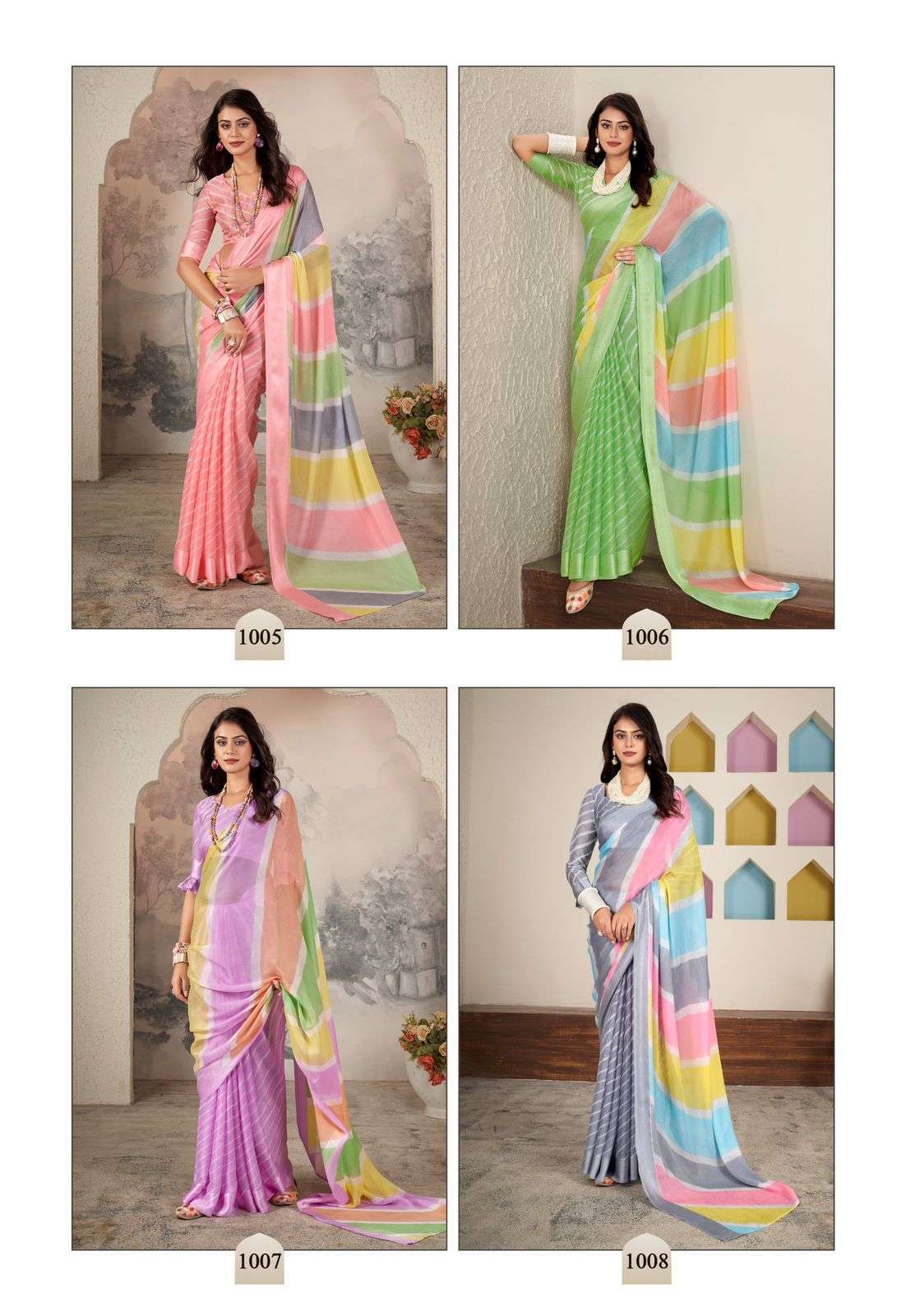
Linen silk sarees wholesale can be attractive for customers who want the structured elegance associated with linen combined with a richer festive appearance. Depending on the collection, these sarees may feature woven borders, contrasting pallus or decorative motifs.
Boutique Owners and Showroom Owners can position these products as elevated options within their saree department. They can also be promoted during wedding and festive buying periods.
Printed Linen Sarees
Printed designs can provide a lighter, contemporary look suitable for regular and semi-formal use. Floral prints, geometric patterns, traditional motifs and modern colour combinations can help retailers appeal to different age groups.
Home-Based Sellers can particularly benefit from visually distinctive printed collections because attractive patterns can perform well in social media photographs and WhatsApp catalogues.
Woven Border Linen Sarees
A contrasting or woven border can add definition to an otherwise simple saree. Retailers can use these designs to serve customers who prefer traditional styling without excessive embroidery or heavy work.
Such sarees can be combined with contrasting blouse pieces to increase visual impact. When selecting wholesale stock, buyers should check the border finishing and overall colour coordination carefully.
Festive Linen Sarees
Festive collections may feature richer colour combinations, metallic effects, decorative motifs or more elaborate pallus. These designs can be purchased before important seasonal selling periods and promoted as lightweight alternatives to heavier traditional sarees.
Retailers should plan festive purchases early enough to allow time for transportation, photography, marketing and customer selling before demand reaches its peak.
How Retailers Should Select Linen Sarees for Bulk Buying
Wholesale buying becomes more effective when stock is selected according to customer demand rather than personal preference. A retailer should know the approximate customer budget, preferred colours and occasions for which sarees are most frequently purchased.
When sourcing from the Linen Saree Wholesale Market for Retailers, businesses should create an assortment instead of purchasing too many pieces with nearly identical styling.
Choose a Balanced Colour Mix
Neutral and pastel shades can appeal to customers seeking sophisticated everyday or office wear, while stronger colours can work for festive and traditional occasions. Maintaining both categories gives sales staff more alternatives to present.
Retailers with previous sales records should use that information when ordering. If certain shades repeatedly sell faster, their quantity can be increased while still retaining enough variety to keep the collection fresh.
Inspect Border, Pallu and Blouse Combination
The complete saree presentation matters. Customers frequently evaluate how the border contrasts with the body and whether the pallu creates enough visual impact. A complementary blouse piece can further improve perceived value.
Wholesale buyers purchasing online should therefore review detailed images or product videos wherever available. Clear information helps reduce uncertainty when ordering larger quantities.
Confirm MOQ and Catalogue Quantity
Minimum order quantity varies by supplier and collection. Some catalogues may require complete-set purchasing, whereas selected pieces may be available for other designs.
Home-Based Sellers and new Resellers can begin with manageable quantities to test demand. Established retailers with stronger sales history may be comfortable purchasing larger assortments of proven styles.
https://kapdawholesale.com/images/product/2026/06/vastrangan-box-office-kolkata-wholesale-saree-suppliers-2026-06-17_17_29_55.jpeg"/>
Buying Linen Sarees from Surat Textile Market
The surat textile market remains an important sourcing destination for saree businesses because of the concentration of textile traders, wholesalers, distributors and production-linked suppliers. Buyers can compare multiple collections while sourcing complementary ethnic wear categories from the same city.
The wholesale textile areas around ring road are well known among buyers visiting Surat, while sahara darwaza is another important reference point within the broader textile trading belt. These markets are connected to transportation networks that move textile goods to buyers throughout India and to international destinations.
Access to a Large Product Range
One benefit of Surat sourcing is the ability to compare products across different segments. A retailer searching for linen saree wholesale Surat collections can also explore silk sarees, designer sarees, printed sarees and other women's ethnic wear categories.
This enables Shop Owners and Showroom Owners to build mixed inventory while maintaining relationships with suppliers operating within the same textile ecosystem.
Connection Between Manufacturing and Wholesale Trading
Surat's textile industry includes businesses involved in fabric production, processing, printing, embroidery, manufacturing, wholesale trading and distribution. This interconnected structure supports frequent product development and helps retailers access changing fashion trends.
For wholesale buyers, regular availability of fresh collections is important because customers respond strongly to new arrivals. Retailers who continuously update inventory can give repeat customers a reason to return.
Online Linen Saree Wholesale Buying for Retail Businesses
Online wholesale purchasing can significantly simplify sourcing for businesses located outside Surat. Instead of travelling to the physical market for every order, retailers can review new collections remotely and discuss availability with suppliers.
Through kapdawholesale.com, buyers can explore wholesale ethnic wear according to their inventory needs. Online access can be particularly valuable for businesses that need regular new products but cannot frequently travel to Gujarat.
Benefits for Home-Based Sellers and Resellers
Home-Based Sellers generally work with limited inventory space and carefully managed working capital. Online sourcing allows them to review collections before deciding how much stock to purchase.
Resellers can also promote selected products through their existing customer network. Tracking customer enquiries before increasing quantity can reduce the risk of holding excessive slow-moving inventory.
Benefits for Shop and Showroom Owners
Physical retailers can combine online sourcing with periodic market visits. Repeat collections and regular replenishment can be handled remotely, while larger market trips can focus on seasonal planning and discovering new categories.
This hybrid purchasing strategy can save time while maintaining access to Surat's broad wholesale textile supply.
Linen Saree Wholesale Opportunities in India, Canada and Singapore
Wholesale linen sarees can serve different markets depending on design, customer profile and retail positioning. For this buying strategy, India, Canada and Singapore offer three distinct customer environments where Indian ethnic wear sellers can build targeted collections.
Wholesale Supply Across India
Indian saree retailers can select inventory according to regional preferences, seasonal festivals and customer budgets. Buyers outside Gujarat can source from Surat and calculate transportation as part of the landed product cost.
A seller should also consider climate and local wearing preferences. Lighter and elegant sarees can create year-round opportunities in markets where customers prefer comfortable ethnic wear.
Export Buying for Canada
Ethnic wear retailers serving Indian communities in Canada can stock linen sarees for festivals, cultural events, gifting and social occasions. International buyers should plan inventory early because freight time must be considered alongside the normal retail calendar.
The total export cost should include the product value, international shipping and destination-related charges relevant to the buyer.
Wholesale Linen Sarees for Singapore
Businesses serving Indian and South Asian customers in Singapore can create curated linen saree collections featuring elegant designs that work across traditional celebrations and contemporary occasions.
For international buyers, purchasing the correct assortment is more important than simply increasing quantity. A balanced shipment can provide variety while keeping working capital manageable.
Building a Profitable Linen Saree Inventory
Profitability depends on how efficiently stock converts into sales. A saree purchased at an attractive wholesale rate is not truly profitable until it sells at a sustainable margin.
Retailers should therefore monitor inventory rotation, customer enquiries and repeat demand. The strongest-performing styles can be reordered when available, while slow-moving categories should be reduced in future purchases.
Separate Fast and Slow-Moving Products
Maintain basic sales records for each catalogue. Note which colours receive the most enquiries, which price segment converts most effectively and which designs require discounting before they sell.
These records can become extremely valuable when making the next wholesale purchase because decisions are based on actual customer behaviour rather than assumptions.
Keep Enough Margin for Marketing and Operations
The difference between wholesale cost and retail price must cover more than direct profit. Packaging, advertising, staff expenses, payment charges and other business costs may also need to be considered.
Buyers should calculate this before confirming a large linen sarees wholesale order. Strong buying discipline can help retailers protect margins even when the market becomes competitive.
Choosing an Experienced Wholesale Partner
Reliable wholesale sourcing depends on product availability, communication and consistent quality. For retailers ordering remotely, these factors become especially important because the supplier becomes part of the business's inventory pipeline.
Vastralife brings wholesale and export experience since 2017, supported by extensive textile industry expertise. Understanding the needs of boutiques, retailers, resellers and wholesale buyers helps create a more practical sourcing experience for businesses purchasing ethnic wear.
A focus on premium product quality is equally important. Every saree sold by a retailer represents that retailer's reputation in front of the final customer. Consistency in fabric, finishing and product presentation can contribute to repeat purchases and stronger customer relationships.
Prioritize Long-Term Supply over One-Time Buying
A supplier relationship becomes more valuable when it supports repeat purchasing. Retailers need access to fresh products throughout the year rather than only one attractive catalogue.
Businesses should therefore evaluate communication, new collection frequency, stock updates and dispatch handling along with price when selecting a wholesale partner.
Retailers expanding their premium saree assortment can explore https://www.kapdawholesale.com/silk-saree">silk saree collections alongside linen styles to provide customers with more occasion-based options. Businesses diversifying into additional women's ethnic wear can also source through a https://www.kapdawholesale.com/gowns-wholesaler-in-surat">gowns wholesaler in Surat to broaden their festive and event-wear inventory.
https://kapdawholesale.com/images/product/2026/06/akshara-linen-silk-bulk-saree-suppliers-in-hyderabad-2026-06-10_14_36_43.jpeg" />
How to Choose a Reliable Linen Saree Wholesale Supplier
A reliable supplier can make a significant difference to the profitability and consistency of a saree business. Retailers should evaluate product quality, current stock, catalogue variety, wholesale price, communication and dispatch capability before establishing a long-term purchasing relationship.
When sourcing through the Linen Saree Wholesale Market for Retailers, avoid choosing a supplier solely because one catalogue is available at a lower rate. A dependable supplier should support repeated sourcing and provide clear product information so retailers can make confident inventory decisions.
Check Product Details Before Confirming an Order
Before payment, confirm the catalogue name, fabric type, number of pieces, colour assortment, blouse details and current stock availability. Buyers should also understand applicable GST, transportation charges, packing requirements and expected dispatch timelines.
For online purchases, clear catalogue photographs and videos can be especially useful. They allow buyers to assess the saree body, border, pallu and blouse combination before investing in larger quantities.
Check Regular Availability of New Collections
Freshness is important in women's ethnic wear. Customers who visit a boutique or showroom regularly expect to see new designs rather than the same inventory. Retailers should therefore work with suppliers who frequently introduce new products.
Regularly checking kapdawholesale.com can help wholesale buyers discover changing saree and ethnic wear collections for their business.
Retail Buying Strategy for Linen Sarees in 2026
Retail purchasing in 2026 should focus on stock rotation rather than simply accumulating inventory. A well-managed retailer knows which products sell quickly, which price segments generate the most enquiries and which colours are frequently requested by customers.
Divide Your Budget Across Different Designs
Instead of spending the complete buying budget on one catalogue, retailers can divide purchases among multiple styles. A combination of printed, woven-border, linen silk and festive designs creates more variety for customers.
This strategy can be particularly useful for Boutique Owners and Showroom Owners because their customers often expect several options before finalizing a saree.
Maintain Different Price Segments
Not every customer enters a store with the same budget. Maintaining entry-level, mid-range and premium sarees allows retailers to respond to different purchasing requirements.
If a customer likes a premium design but wants a more affordable option, sales staff can immediately show another linen collection instead of losing the sale. Similarly, buyers seeking something richer can be moved toward linen silk or more detailed designs.
Seasonal Linen Saree Wholesale Buying
Although linen sarees can be sold throughout the year, seasonal planning can improve inventory performance. Retailers can adjust colours and design intensity according to festivals, wedding periods and regional buying occasions.
Festival Collections
For festive selling, retailers can select stronger colours, attractive borders and richer pallus. Collections should ideally arrive before the main buying period so there is enough time for photography, promotion and customer enquiries.
Online sellers can prepare WhatsApp broadcasts, Instagram content and digital catalogues immediately after stock arrives. Early promotion can create demand before competing sellers begin heavily marketing similar products.
Wedding and Family Occasion Collections
Customers attending family functions may prefer sarees that look refined without feeling excessively heavy. Linen silk and premium woven designs can serve this requirement effectively.
Boutique Owners can further increase the perceived value by suggesting blouse designs, jewellery combinations and styling ideas. Good presentation can help transform a wholesale product into a stronger retail proposition.
Year-Round Saree Stock
Retailers should not reserve the complete linen category only for festivals. Softer colours, elegant borders and lightweight-looking designs can remain relevant for office wear, gifting, social gatherings and regular saree buyers throughout the year.
A combination of seasonal and evergreen designs can help maintain more consistent sales.
Online Wholesale Buying Checklist for Retailers
Online wholesale sourcing is convenient, but buyers should follow a consistent checking process before transferring payment. This becomes especially important when purchasing several catalogues or placing an order with a supplier for the first time.
Confirm Stock and Catalogue Quantity
Wholesale stock can change quickly. Always confirm that the required designs are currently available rather than assuming an older catalogue image represents live inventory.
Ask whether the product must be purchased as a complete catalogue or whether selected pieces are available. This can significantly affect the total investment required.
Verify Shipping and Dispatch
Confirm the expected dispatch schedule and available transportation method. Buyers outside Surat should include freight while calculating their landed product cost.
For an international export shipment, verify the available logistics arrangement, packing and applicable documentation before finalizing the order.
Understand Quality-Claim Terms
Wholesale transactions can have specific procedures for manufacturing defects or incorrect products. Buyers should understand the supplier's applicable claim policy and retain any required evidence when opening delivered parcels.
Clear understanding at the purchasing stage reduces confusion if a genuine product issue needs to be reported later.
How Home-Based Sellers Can Sell Linen Sarees Profitably
Home-Based Sellers can build a saree business without maintaining the same inventory volume as a traditional showroom. The key is to select visually appealing products and market them consistently to a defined customer base.
Use WhatsApp for Direct Selling
WhatsApp groups, broadcasts and direct customer conversations can help resellers present new saree collections quickly. Product photographs should be accompanied by clear information about fabric, available colours and selling price.
Instead of forwarding every available catalogue, sellers can curate products according to their customers' likely preferences. A smaller, relevant selection can sometimes generate better engagement than an overwhelming number of designs.
Use Social Media to Build Demand
Instagram reels, product videos and styled saree photographs can help customers visualize the product more effectively. Close-up footage of borders, pallus and woven details can be particularly useful when selling online.
Resellers can also create urgency around genuinely limited or fast-moving stock, encouraging interested customers to confirm orders before the catalogue becomes unavailable.
Track Enquiries Before Increasing Stock
Home-Based Sellers should record which products receive enquiries even when those enquiries do not immediately become orders. Repeated interest in a particular style or price segment can reveal useful demand patterns.
This information can then guide the next wholesale purchase and help sellers gradually build inventory around proven customer preferences.
Wholesale Linen Sarees for Boutique and Showroom Owners
Boutiques and showrooms can use linen sarees to create a sophisticated section within their overall saree range. Merchandising should highlight the elegance, border detailing and colour combinations of each collection.
Create Curated Boutique Collections
Boutique Owners do not necessarily need a large quantity of every design. A carefully selected assortment can create a sense of exclusivity while allowing customers to choose among distinctive styles.
Premium linen silk designs can be combined with simpler products so customers have options at different price points.
Build a Broader Showroom Range
Showroom Owners typically need more inventory because customers expect immediate variety. They can maintain several shelves or display areas according to fabric, occasion or selling range.
Sales staff can then guide customers toward appropriate options based on budget and occasion, improving the probability of conversion.
Managing Linen Saree Wholesale Inventory
Good inventory management protects working capital. Even a successful retailer can face cash-flow pressure when too much money remains tied up in slow-moving products.
Monitor Stock Rotation
Retailers should regularly identify which sarees are selling quickly and which designs have remained unsold for longer periods. This information should directly influence the next purchasing decision.
Fast-moving products can justify repeat orders when stock remains available. Slow-moving styles may indicate that the colour, design or selling price does not match current customer demand.
Avoid Excessive Duplicate Inventory
Purchasing large quantities of one design may provide an attractive rate, but it also increases risk. Unless historical sales clearly support that quantity, variety is often more useful for a retail saree business.
A balanced inventory gives customers more reasons to browse and reduces dependence on the performance of a single catalogue.
Quality and Manufacturing Considerations
Quality becomes particularly important when retailers want repeat customers. Buyers should evaluate the fabric, weaving appearance, finishing, colour consistency and blouse combination before making large purchases.
Surat's connection between textile processing, trading and manufacturing supports a broad wholesale supply network. However, individual product quality can still differ across collections, making catalogue-level evaluation important.
Premium Product Quality Supports Customer Retention
A customer may initially purchase because of an attractive design, but their willingness to return depends on the actual product experience. Retailers should therefore choose sarees that reasonably match the quality represented during the sale.
Vastralife's wholesale and export experience since 2017, combined with established textile industry expertise, supports the requirements of businesses looking for dependable sourcing and premium product quality.
Common Mistakes Retailers Should Avoid
Wholesale purchasing decisions directly influence profit, so avoiding common buying mistakes can be as important as finding new products.
Buying Only Because the Price Is Low
A low wholesale rate does not guarantee good resale performance. If the design does not match customer preferences, the retailer may eventually need to discount it heavily.
Evaluate the combination of quality, visual appeal, customer demand and price before purchasing.
Ignoring the Complete Landed Cost
GST, shipping, packaging and other applicable expenses should be included when calculating the real cost per saree. International buyers should also consider freight and destination charges.
Retail margin should be calculated only after these expenses have been included.
Purchasing Without Understanding Your Customer
A retailer serving office-going customers may require different linen sarees from a boutique focused on wedding and festive buyers. Stock should match the actual customer base rather than the personal preferences of the buyer.
Not Planning Repeat Purchases
One successful wholesale purchase is not enough to build a sustainable saree business. Retailers need regular access to fresh collections and should maintain relationships with suppliers capable of supporting future requirements.
Internal Linking Section
The related wholesale categories referenced earlier can help retailers expand beyond one saree segment. Combining linen collections with complementary premium sarees and other ethnic wear can create a stronger assortment for different customer budgets and occasions.
Wholesale Buyers browsing kapdawholesale.com can compare collections according to design, price, customer demand and inventory requirements before planning their next purchase.
Customer FAQs
1. Where can retailers buy linen sarees wholesale in Surat?
Retailers can source through established Surat textile suppliers and online wholesale platforms connected with the city's textile ecosystem. Before ordering, confirm fabric, catalogue quantity, current stock, price and dispatch terms.
2. What is the linen saree wholesale price in 2026?
The wholesale price varies according to fabric composition, weaving, border, pallu, blouse piece, finishing and catalogue quantity. Buyers should request the current rate for the specific collection they want to purchase.
3. Can Home-Based Sellers buy linen sarees in wholesale quantities?
Yes. Home-Based Sellers can purchase according to the MOQ applicable to the selected catalogue. Starting with controlled quantities can help new sellers test demand before increasing inventory.
4. Are linen silk sarees suitable for Boutique Owners?
Yes. Linen silk designs can provide a refined appearance suitable for boutique customers seeking elegant sarees for festivals, social occasions and family functions.
5. Can Shop Owners order complete linen saree catalogues?
Complete catalogue availability depends on the particular product and supplier policy. Some collections may require full-set purchasing, while selected pieces can be available in other cases.
6. Can linen sarees be supplied outside Surat?
Wholesale orders can be dispatched to different locations according to supplier and logistics availability. Buyers should confirm freight charges and expected delivery arrangements when placing the order.
7. Can international buyers place bulk saree orders?
International buyers can discuss wholesale and export requirements according to destination, order quantity and available shipping options. The complete landed cost should be calculated before confirming the shipment.
8. What should a reseller check before placing an order?
Check the fabric, catalogue quantity, colours, blouse details, wholesale rate, applicable GST, shipping charges, stock availability and quality-claim terms before payment.
9. How can retailers improve profit margins on linen sarees?
Choose products according to proven customer demand, calculate complete landed cost, avoid unnecessary overstocking and regularly reorder successful designs when available. Healthy inventory rotation can improve overall profitability.
10. Why do wholesale buyers source sarees from Surat?
Surat provides access to a large textile trading and manufacturing ecosystem with multiple saree categories, price segments and frequently changing collections. This makes it a practical sourcing destination for retailers and resellers.
Order Linen Sarees Wholesale for Your Retail Business
If you are a Home-Based Seller, Shop Owner, Boutique Owner, Showroom Owner, Reseller or Wholesale Buyer, a carefully selected linen saree range can help you serve customers looking for elegant and saleable ethnic wear. Choose collections according to your target market, calculate the complete cost before ordering and maintain enough variety to keep your inventory fresh.
Explore Latest Collections with competitive Wholesale Pricing and Trendy Ethnic Wear for your business. Get convenient Fast Shipping, available COD Support, attractive Bulk Order Deals and Quality Products Starting From ₹299.
Start Your Wholesale Order Today
Contact Number: +91 8849410306
Website: kapdawholesale.com
Whether you are starting a home-based saree business, expanding a boutique or purchasing inventory for an established showroom, successful wholesale sourcing depends on selecting products that combine attractive design, dependable quality, workable pricing and genuine customer demand. With thoughtful purchasing and regular access to fresh Surat collections, linen sarees can become a valuable and profitable category within a broader ethnic wear business.