



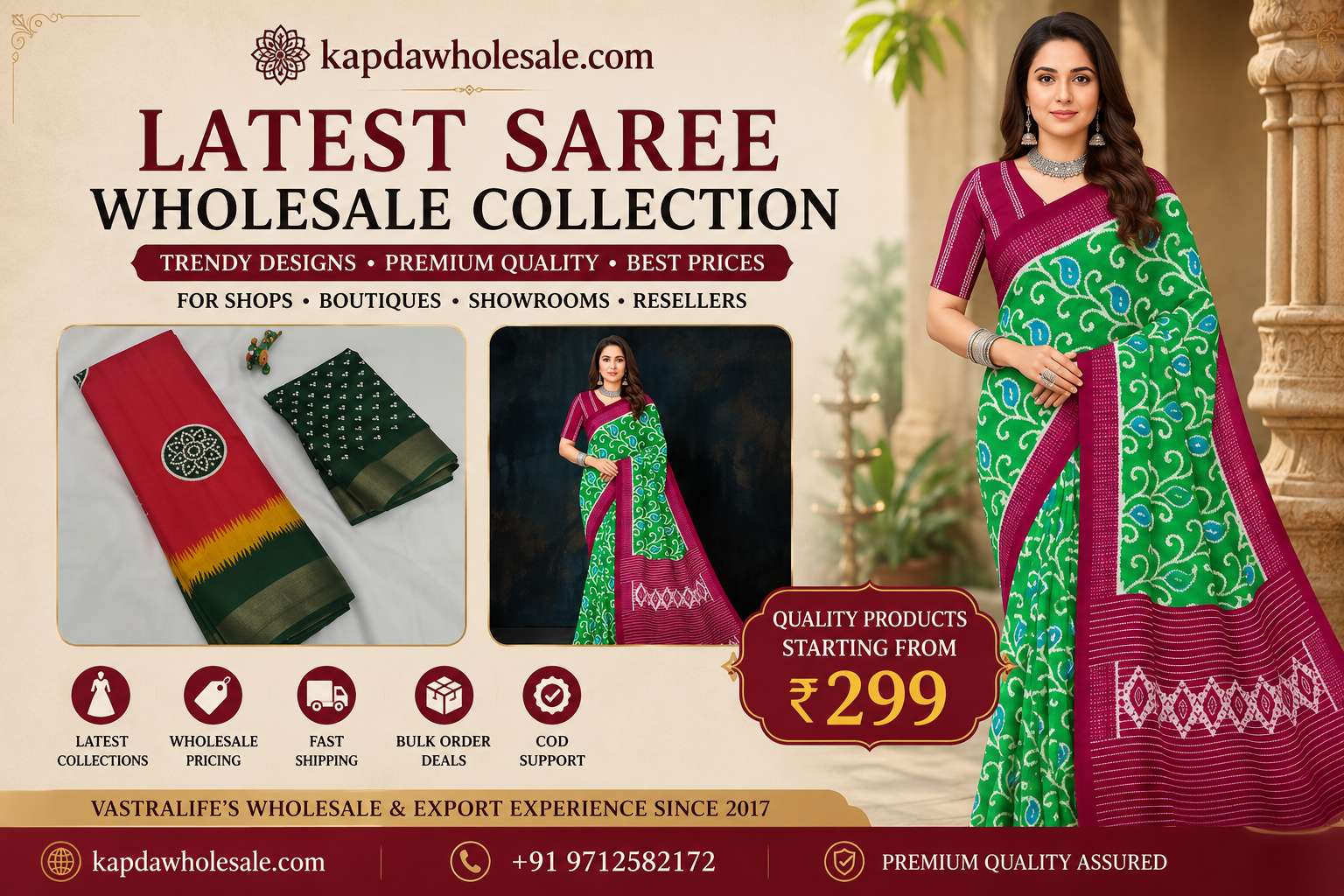
<h1><strong>Latest Saree Wholesale Collection 2026 – Buy Trending Sarees at Best Wholesale Price</strong></h1>
<p>Fresh designs can make a major difference to a saree business, especially when customers expect new colours, prints and styles every time they visit a shop or browse an online catalogue. Through <strong>kapdawholesale.com</strong>, retailers, boutique owners, resellers and wholesale buyers can explore saree stock connected with Surat's textile sourcing ecosystem and select collections according to their customer segment, selling range and seasonal requirements.</p>
<h2><strong>Introduction</strong></h2>
<p>The saree market in <strong>2026</strong> is driven by variety, faster trend cycles and customers who compare multiple designs before purchasing. For retailers, this creates a clear need to regularly source the <strong>latest saree wholesale collection</strong> instead of depending on the same inventory for long periods. Fresh stock gives existing customers a reason to return while also providing sellers with new products to promote through WhatsApp, Instagram, Facebook and other digital selling channels.</p>
<p>Wholesale purchasing, however, is not simply about choosing the newest design. Retailers must consider fabric, colour, pattern, quality, expected selling <strong>price</strong>, customer preferences and inventory rotation. The right saree purchased at a suitable wholesale rate can generate repeat sales, whereas an attractive but poorly selected collection may leave capital blocked in unsold stock.</p>
<p>Surat remains strongly connected with India's saree trade and textile <strong>manufacturing</strong> ecosystem. Buyers searching around the <strong>surat textile market</strong>, <strong>ring road</strong> and <strong>sahara darwaza</strong> can encounter an enormous range of sarees and other women's ethnic-wear products. Digital wholesale sourcing extends this opportunity to buyers who cannot visit Surat for every purchase.</p>
<p>This makes online wholesale sourcing practical for <strong>Home-Based Sellers</strong>, <strong>Shop Owners</strong>, <strong>Boutique Owners</strong>, <strong>Showroom Owners</strong>, <strong>Resellers</strong> and professional <strong>Wholesale Buyers</strong> looking to purchase new stock according to their own business requirements.</p>
<h2><strong>Why Fresh Saree Collections Matter for Wholesale Buyers</strong></h2>
<p>Customers increasingly see fashion products through social media before they enter a store. New colours and patterns can quickly attract attention, and buyers often arrive with expectations influenced by what they have already viewed online. Retailers who maintain access to <strong>latest sarees wholesale</strong> are better positioned to respond to these changing preferences.</p>
<h3><strong>Fresh Stock Encourages Repeat Store Visits</strong></h3>
<p>A customer who sees the same inventory repeatedly has little reason to visit again soon. Regular new arrivals create curiosity and make the shop feel active. Even when customers do not purchase every time, frequent exposure to new products keeps the business visible.</p>
<p>This strategy works for physical retailers as well as online resellers. A fresh catalogue can generate new WhatsApp inquiries, social-media engagement and repeat customer conversations.</p>
<h3><strong>New Collections Create More Marketing Opportunities</strong></h3>
<p>Every new saree collection gives a seller fresh promotional material. Retailers can create product posts, short videos, new-arrival announcements and customer broadcasts around recently received stock.</p>
<p>For home-based sellers, this is particularly valuable because new inventory and marketing content often work together. Regular access to <strong>wholesale sarees online</strong> can help sellers maintain a steady flow of products to showcase.</p>
<h3><strong>Trending Sarees Can Improve Customer Attention</strong></h3>
<p>Trend-focused products can help retailers attract customers looking for something different from conventional stock. New print styles, updated colour combinations, contemporary borders and fresh fabric treatments can make a collection stand out.</p>
<p>However, professional buyers should balance trends with proven products. The strongest inventory usually combines new fashion with dependable evergreen categories.</p>
<h2><strong>Best Saree Categories to Buy Wholesale in 2026</strong></h2>
<p>A profitable saree assortment can include multiple product categories serving different customer budgets and occasions. Instead of investing the complete buying budget into one style, retailers can create a balanced selection across everyday, fashionable, festive and premium products.</p>
<h3><strong>Printed Sarees Wholesale</strong></h3>
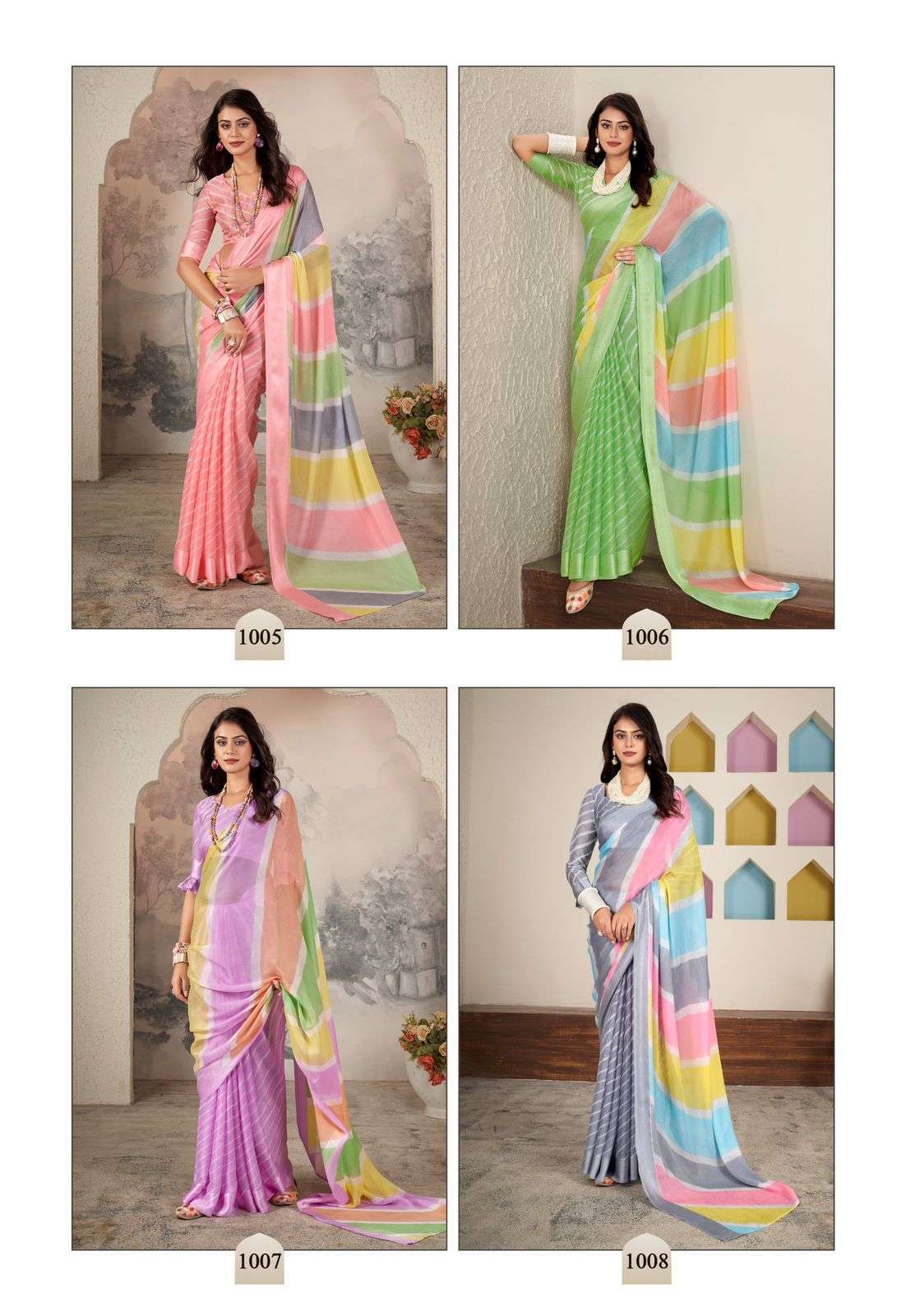
<p><strong>Printed sarees wholesale</strong> continue to offer strong variety for retailers. Floral patterns, geometric prints, ethnic motifs, abstract designs and digital prints can serve customers across different age groups and price ranges.</p>
<p>Printed sarees are also useful for digital selling because patterns are clearly visible in photographs and videos. This can help resellers generate inquiries through social-media catalogues and WhatsApp promotions.</p>
<h3><strong>Designer Sarees Wholesale</strong></h3>
<p><strong>Designer sarees wholesale</strong> are suitable for boutiques and stores serving customers looking for wedding, party and occasion wear. Attractive borders, embroidery, embellishment, premium-looking fabrics and distinctive colour combinations can increase perceived value.</p>
<p>Boutique owners can select designer products in controlled quantities to maintain exclusivity while avoiding excessive inventory concentration in one premium style.</p>
<h3><strong>Daily Wear Sarees Wholesale</strong></h3>
<p><strong>Daily wear sarees wholesale</strong> can provide consistent business throughout the year. Comfortable fabrics, lightweight construction, practical prints and accessible pricing make this segment useful for retailers serving regular-use customers.</p>
<p>Because everyday sarees generally operate in competitive price ranges, buyers should pay close attention to the balance between fabric quality and the final wholesale <strong>price</strong>.</p>
<h3><strong>Festive and Wedding Sarees Wholesale</strong></h3>
<p>Festival and wedding periods create opportunities for richer collections. Traditional designs, silk-look fabrics, decorative borders, vibrant colours and occasion-focused sarees can help retailers increase average transaction values during peak buying seasons.</p>
<p>Wholesale buyers should purchase seasonal inventory early enough to allow time for display, promotion and repeat customer outreach before demand reaches its peak.</p>
<h3><strong>Ikkat Style Sarees Wholesale</strong></h3>
<p>Ikkat-inspired patterns can add a traditional yet visually distinctive category to a saree store. Their recognisable motifs and colour combinations make them suitable for buyers seeking ethnic designs that stand apart from standard printed collections.</p>
<p>For retailers, the opportunity lies in selecting designs that combine traditional character with wearable colours and a suitable retail price range.</p>
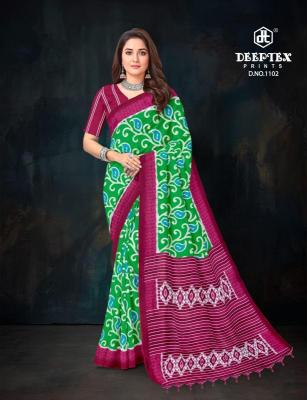
<h2><strong>How to Select the Latest Saree Wholesale Collection for Your Customers</strong></h2>
<p>The newest catalogue is not automatically the best catalogue for every retailer. A successful wholesale purchase starts with understanding the customers who will eventually buy the products. Age group, regional preference, occasion, spending level and previous sales should all influence the selection.</p>
<h3><strong>Buy According to Your Retail Price Range</strong></h3>
<p>Before selecting products, retailers can divide their buying budget into economical, mid-range and premium segments. This creates a broader customer offering and prevents the shop from becoming dependent on one selling range.</p>
<p>For example, an economical section can serve regular customers, mid-range sarees can form the core of the shop, and premium designs can target weddings and special occasions. The exact balance should reflect actual local demand.</p>
<h3><strong>Use Previous Sales to Choose New Stock</strong></h3>
<p>Sales history can make wholesale purchasing much more accurate. If particular fabrics, colours or patterns sell repeatedly, similar categories deserve greater attention in the next buying cycle.</p>
<p>Likewise, products that consistently remain unsold should influence future decisions. Instead of purchasing another similar catalogue simply because it is new, retailers can redirect that budget toward categories with stronger rotation.</p>
<h3><strong>Balance Trend-Led and Evergreen Designs</strong></h3>
<p>Trending sarees can create immediate excitement, but evergreen products provide stability. A retailer can reserve part of the buying budget for new fashion while maintaining proven traditional and everyday designs.</p>
<p>This approach allows the business to participate in current trends without putting too much working capital into products that may have a short selling cycle.</p>
<h2><strong>Surat Wholesale Saree Sourcing for Retailers and Boutiques</strong></h2>
<p>Surat has developed a large textile network connecting fabric processing, trading, distribution and <strong>manufacturing</strong>. The areas surrounding the <strong>surat textile market</strong>, <strong>ring road</strong> and <strong>sahara darwaza</strong> are closely associated with wholesale textile activity and attract buyers from many regions.</p>
<p>For retailers outside Gujarat, travelling to Surat for every new catalogue may not be practical. Online sourcing gives buyers another way to access products connected with this wholesale ecosystem.</p>
<h3><strong>Buy Surat Sarees Without Frequent Market Visits</strong></h3>
<p>Physical wholesale-market visits remain useful for major buying trips, but they involve travel costs and time away from the business. Retailers can use digital sourcing between those visits to check new arrivals and replenish selected product categories.</p>
<p>Through <strong>kapdawholesale.com</strong>, wholesale buyers can explore saree collections according to their inventory needs while managing their store or reselling operation from their own location.</p>
<h3><strong>Choose Collections According to Local Demand</strong></h3>
<p>The variety available through Surat sourcing can be enormous, but professional buyers still need to filter products carefully. A design performing well in one region may have different demand in another.</p>
<p>Retailers should therefore use Surat's variety as an advantage while keeping their own customer preferences at the centre of every purchasing decision.</p>
<h2><strong>Latest Saree Wholesale Collection for Different Business Models</strong></h2>
<p>The same saree collection can perform differently depending on how and where it is sold. A large showroom, neighbourhood shop, premium boutique and home-based reseller all require different purchasing strategies.</p>
<h3><strong>Collections for Boutique Owners</strong></h3>
<p>Boutique customers often expect more curated designs. Boutique owners can focus on distinctive prints, premium-looking borders, unusual colour combinations and selected designer collections instead of carrying excessive quantities of similar products.</p>
<p>A carefully selected <strong>latest saree wholesale collection</strong> can help boutiques maintain a fresh identity and create stronger visual merchandising.</p>
<h3><strong>Collections for Retail Shop Owners</strong></h3>
<p>Retail shops usually benefit from broader inventory. They may need affordable daily wear, printed sarees, mid-range festive products and selected premium designs to serve customers with different budgets.</p>
<p>Shop owners can use their daily sales experience to determine which category deserves the largest share of the wholesale buying budget.</p>
<h3><strong>Collections for Showroom Owners</strong></h3>
<p>Showrooms often require larger assortments and deeper stock. These buyers can plan purchases around seasonal campaigns, established customer demand and proven price segments.</p>
<p>For fast-moving products, suitable <strong>bulk sarees wholesale</strong> purchases can support larger retail operations while maintaining sufficient stock during high-demand periods.</p>
<h3><strong>Collections for Home-Based Sellers and Resellers</strong></h3>
<p>Home-based sellers generally need visually strong products that can be promoted digitally. Printed sarees, trend-focused colours and attractive festive designs can work well when the seller depends on WhatsApp, Instagram or other online channels to generate inquiries.</p>
<p>Starting with controlled quantities can help resellers test demand before increasing their investment in a particular collection.</p>
<h2><strong>Wholesale Saree Supply for India, USA and Sri Lanka</strong></h2>
<p>The saree market extends beyond one city or country. Wholesale buyers in <strong>India</strong>, the <strong>USA</strong> and <strong>Sri Lanka</strong> can source Indian sarees according to their customer demographics, festive calendar and retail positioning.</p>
<h3><strong>Latest Wholesale Sarees for India</strong></h3>
<p>India provides enormous opportunities because saree preferences vary across regions. Retailers can combine traditional local demand with new national trends to create an assortment that feels familiar yet fresh.</p>
<p>Online wholesale sourcing also gives buyers in smaller cities access to collections that may not yet be widely available in their local market.</p>
<h3><strong>Saree Wholesale and Export for USA Buyers</strong></h3>
<p>Boutiques and ethnic-wear retailers in the USA can source sarees for Indian festivals, weddings, community functions and customers interested in South Asian fashion. Product selection can include traditional sarees, designer collections and festive products according to the target market.</p>
<p>International buyers should calculate the product rate together with freight and applicable <strong>export</strong> costs before determining their final retail pricing.</p>
<h3><strong>Wholesale Sarees for Sri Lanka</strong></h3>
<p>Retailers and resellers serving customers in Sri Lanka can choose Indian sarees according to regional demand and preferred price segments. Planned consolidated purchases can help international wholesale buyers organise inventory and transportation more effectively.</p>
<h2><strong>Vastralife Wholesale and Export Experience Since 2017</strong></h2>
<p>A dependable wholesale relationship involves more than access to product images. Buyers need textile-industry understanding, sourcing experience and awareness of what retailers require when purchasing for resale.</p>
<p>Vastralife brings <strong>wholesale and export experience since 2017</strong>, supported by practical industry expertise in women's ethnic-wear sourcing and wholesale business requirements. This experience is relevant for boutique owners, shop owners, resellers, showroom businesses and international wholesale buyers.</p>
<p>The emphasis on <strong>premium product quality</strong> is particularly important because retailers depend on customer satisfaction for repeat business. Good fabric, finishing and design presentation can help sellers build trust while reducing the problems associated with inconsistent merchandise.</p>
<h3><strong>Choose Quality Along With Wholesale Price</strong></h3>
<p>Extremely low-cost stock may appear attractive at the purchasing stage, but the real value of a saree is determined when customers see and use the product. Quality problems can lead to complaints, slower sales and reduced customer confidence.</p>
<p>Professional wholesale buyers therefore compare the buying rate with fabric, finishing, design and expected resale potential. This approach can create stronger long-term profitability than simply purchasing the cheapest available products.</p>
<h3><strong>Build Repeat Purchasing Around Fast-Moving Categories</strong></h3>
<p>Once retailers identify categories that perform consistently, sourcing becomes more systematic. Instead of restarting the buying process every time inventory runs low, businesses can focus on replenishing proven segments while continuing to test selected new designs.</p>
<p>Using <strong>kapdawholesale.com</strong> as part of this process can help buyers explore new wholesale opportunities and plan fresh inventory according to their selling cycle.</p>
<h1><strong>Latest Saree Wholesale Collection 2026 – Buy Trending Sarees at Best Wholesale Price</strong></h1>
<p>Fresh designs can make a major difference to a saree business, especially when customers expect new colours, prints and styles every time they visit a shop or browse an online catalogue. Through <strong>kapdawholesale.com</strong>, retailers, boutique owners, resellers and wholesale buyers can explore saree stock connected with Surat's textile sourcing ecosystem and select collections according to their customer segment, selling range and seasonal requirements.</p>
<h2><strong>Introduction</strong></h2>
<p>The saree market in <strong>2026</strong> is driven by variety, faster trend cycles and customers who compare multiple designs before purchasing. For retailers, this creates a clear need to regularly source the <strong>latest saree wholesale collection</strong> instead of depending on the same inventory for long periods. Fresh stock gives existing customers a reason to return while also providing sellers with new products to promote through WhatsApp, Instagram, Facebook and other digital selling channels.</p>
<p>Wholesale purchasing, however, is not simply about choosing the newest design. Retailers must consider fabric, colour, pattern, quality, expected selling <strong>price</strong>, customer preferences and inventory rotation. The right saree purchased at a suitable wholesale rate can generate repeat sales, whereas an attractive but poorly selected collection may leave capital blocked in unsold stock.</p>
<p>Surat remains strongly connected with India's saree trade and textile <strong>manufacturing</strong> ecosystem. Buyers searching around the <strong>surat textile market</strong>, <strong>ring road</strong> and <strong>sahara darwaza</strong> can encounter an enormous range of sarees and other women's ethnic-wear products. Digital wholesale sourcing extends this opportunity to buyers who cannot visit Surat for every purchase.</p>
<p>This makes online wholesale sourcing practical for <strong>Home-Based Sellers</strong>, <strong>Shop Owners</strong>, <strong>Boutique Owners</strong>, <strong>Showroom Owners</strong>, <strong>Resellers</strong> and professional <strong>Wholesale Buyers</strong> looking to purchase new stock according to their own business requirements.</p>
<h2><strong>Why Fresh Saree Collections Matter for Wholesale Buyers</strong></h2>
<p>Customers increasingly see fashion products through social media before they enter a store. New colours and patterns can quickly attract attention, and buyers often arrive with expectations influenced by what they have already viewed online. Retailers who maintain access to <strong>latest sarees wholesale</strong> are better positioned to respond to these changing preferences.</p>
<h3><strong>Fresh Stock Encourages Repeat Store Visits</strong></h3>
<p>A customer who sees the same inventory repeatedly has little reason to visit again soon. Regular new arrivals create curiosity and make the shop feel active. Even when customers do not purchase every time, frequent exposure to new products keeps the business visible.</p>
<p>This strategy works for physical retailers as well as online resellers. A fresh catalogue can generate new WhatsApp inquiries, social-media engagement and repeat customer conversations.</p>
<h3><strong>New Collections Create More Marketing Opportunities</strong></h3>
<p>Every new saree collection gives a seller fresh promotional material. Retailers can create product posts, short videos, new-arrival announcements and customer broadcasts around recently received stock.</p>
<p>For home-based sellers, this is particularly valuable because new inventory and marketing content often work together. Regular access to <strong>wholesale sarees online</strong> can help sellers maintain a steady flow of products to showcase.</p>
<h3><strong>Trending Sarees Can Improve Customer Attention</strong></h3>
<p>Trend-focused products can help retailers attract customers looking for something different from conventional stock. New print styles, updated colour combinations, contemporary borders and fresh fabric treatments can make a collection stand out.</p>
<p>However, professional buyers should balance trends with proven products. The strongest inventory usually combines new fashion with dependable evergreen categories.</p>
<h2><strong>Best Saree Categories to Buy Wholesale in 2026</strong></h2>
<p>A profitable saree assortment can include multiple product categories serving different customer budgets and occasions. Instead of investing the complete buying budget into one style, retailers can create a balanced selection across everyday, fashionable, festive and premium products.</p>
<h3><strong>Printed Sarees Wholesale</strong></h3>
<p><strong>Printed sarees wholesale</strong> continue to offer strong variety for retailers. Floral patterns, geometric prints, ethnic motifs, abstract designs and digital prints can serve customers across different age groups and price ranges.</p>
<p>Printed sarees are also useful for digital selling because patterns are clearly visible in photographs and videos. This can help resellers generate inquiries through social-media catalogues and WhatsApp promotions.</p>
<h3><strong>Designer Sarees Wholesale</strong></h3>
<p><strong>Designer sarees wholesale</strong> are suitable for boutiques and stores serving customers looking for wedding, party and occasion wear. Attractive borders, embroidery, embellishment, premium-looking fabrics and distinctive colour combinations can increase perceived value.</p>
<p>Boutique owners can select designer products in controlled quantities to maintain exclusivity while avoiding excessive inventory concentration in one premium style.</p>
<h3><strong>Daily Wear Sarees Wholesale</strong></h3>
<p><strong>Daily wear sarees wholesale</strong> can provide consistent business throughout the year. Comfortable fabrics, lightweight construction, practical prints and accessible pricing make this segment useful for retailers serving regular-use customers.</p>
<p>Because everyday sarees generally operate in competitive price ranges, buyers should pay close attention to the balance between fabric quality and the final wholesale <strong>price</strong>.</p>
<h3><strong>Festive and Wedding Sarees Wholesale</strong></h3>
<p>Festival and wedding periods create opportunities for richer collections. Traditional designs, silk-look fabrics, decorative borders, vibrant colours and occasion-focused sarees can help retailers increase average transaction values during peak buying seasons.</p>
<p>Wholesale buyers should purchase seasonal inventory early enough to allow time for display, promotion and repeat customer outreach before demand reaches its peak.</p>
<h3><strong>Ikkat Style Sarees Wholesale</strong></h3>
<p>Ikkat-inspired patterns can add a traditional yet visually distinctive category to a saree store. Their recognisable motifs and colour combinations make them suitable for buyers seeking ethnic designs that stand apart from standard printed collections.</p>
<p>For retailers, the opportunity lies in selecting designs that combine traditional character with wearable colours and a suitable retail price range.</p>
<h2><strong>How to Select the Latest Saree Wholesale Collection for Your Customers</strong></h2>
<p>The newest catalogue is not automatically the best catalogue for every retailer. A successful wholesale purchase starts with understanding the customers who will eventually buy the products. Age group, regional preference, occasion, spending level and previous sales should all influence the selection.</p>
<h3><strong>Buy According to Your Retail Price Range</strong></h3>
<p>Before selecting products, retailers can divide their buying budget into economical, mid-range and premium segments. This creates a broader customer offering and prevents the shop from becoming dependent on one selling range.</p>
<p>For example, an economical section can serve regular customers, mid-range sarees can form the core of the shop, and premium designs can target weddings and special occasions. The exact balance should reflect actual local demand.</p>
<h3><strong>Use Previous Sales to Choose New Stock</strong></h3>
<p>Sales history can make wholesale purchasing much more accurate. If particular fabrics, colours or patterns sell repeatedly, similar categories deserve greater attention in the next buying cycle.</p>
<p>Likewise, products that consistently remain unsold should influence future decisions. Instead of purchasing another similar catalogue simply because it is new, retailers can redirect that budget toward categories with stronger rotation.</p>
<h3><strong>Balance Trend-Led and Evergreen Designs</strong></h3>
<p>Trending sarees can create immediate excitement, but evergreen products provide stability. A retailer can reserve part of the buying budget for new fashion while maintaining proven traditional and everyday designs.</p>
<p>This approach allows the business to participate in current trends without putting too much working capital into products that may have a short selling cycle.</p>
<h2><strong>Surat Wholesale Saree Sourcing for Retailers and Boutiques</strong></h2>
<p>Surat has developed a large textile network connecting fabric processing, trading, distribution and <strong>manufacturing</strong>. The areas surrounding the <strong>surat textile market</strong>, <strong>ring road</strong> and <strong>sahara darwaza</strong> are closely associated with wholesale textile activity and attract buyers from many regions.</p>
<p>For retailers outside Gujarat, travelling to Surat for every new catalogue may not be practical. Online sourcing gives buyers another way to access products connected with this wholesale ecosystem.</p>
<h3><strong>Buy Surat Sarees Without Frequent Market Visits</strong></h3>
<p>Physical wholesale-market visits remain useful for major buying trips, but they involve travel costs and time away from the business. Retailers can use digital sourcing between those visits to check new arrivals and replenish selected product categories.</p>
<p>Through <strong>kapdawholesale.com</strong>, wholesale buyers can explore saree collections according to their inventory needs while managing their store or reselling operation from their own location.</p>
<h3><strong>Choose Collections According to Local Demand</strong></h3>
<p>The variety available through Surat sourcing can be enormous, but professional buyers still need to filter products carefully. A design performing well in one region may have different demand in another.</p>
<p>Retailers should therefore use Surat's variety as an advantage while keeping their own customer preferences at the centre of every purchasing decision.</p>
<h2><strong>Latest Saree Wholesale Collection for Different Business Models</strong></h2>
<p>The same saree collection can perform differently depending on how and where it is sold. A large showroom, neighbourhood shop, premium boutique and home-based reseller all require different purchasing strategies.</p>
<h3><strong>Collections for Boutique Owners</strong></h3>
<p>Boutique customers often expect more curated designs. Boutique owners can focus on distinctive prints, premium-looking borders, unusual colour combinations and selected designer collections instead of carrying excessive quantities of similar products.</p>
<p>A carefully selected <strong>latest saree wholesale collection</strong> can help boutiques maintain a fresh identity and create stronger visual merchandising.</p>
<h3><strong>Collections for Retail Shop Owners</strong></h3>
<p>Retail shops usually benefit from broader inventory. They may need affordable daily wear, printed sarees, mid-range festive products and selected premium designs to serve customers with different budgets.</p>
<p>Shop owners can use their daily sales experience to determine which category deserves the largest share of the wholesale buying budget.</p>
<h3><strong>Collections for Showroom Owners</strong></h3>
<p>Showrooms often require larger assortments and deeper stock. These buyers can plan purchases around seasonal campaigns, established customer demand and proven price segments.</p>
<p>For fast-moving products, suitable <strong>bulk sarees wholesale</strong> purchases can support larger retail operations while maintaining sufficient stock during high-demand periods.</p>
<h3><strong>Collections for Home-Based Sellers and Resellers</strong></h3>
<p>Home-based sellers generally need visually strong products that can be promoted digitally. Printed sarees, trend-focused colours and attractive festive designs can work well when the seller depends on WhatsApp, Instagram or other online channels to generate inquiries.</p>
<p>Starting with controlled quantities can help resellers test demand before increasing their investment in a particular collection.</p>
<h2><strong>Wholesale Saree Supply for India, USA and Sri Lanka</strong></h2>
<p>The saree market extends beyond one city or country. Wholesale buyers in <strong>India</strong>, the <strong>USA</strong> and <strong>Sri Lanka</strong> can source Indian sarees according to their customer demographics, festive calendar and retail positioning.</p>
<h3><strong>Latest Wholesale Sarees for India</strong></h3>
<p>India provides enormous opportunities because saree preferences vary across regions. Retailers can combine traditional local demand with new national trends to create an assortment that feels familiar yet fresh.</p>
<p>Online wholesale sourcing also gives buyers in smaller cities access to collections that may not yet be widely available in their local market.</p>
<h3><strong>Saree Wholesale and Export for USA Buyers</strong></h3>
<p>Boutiques and ethnic-wear retailers in the USA can source sarees for Indian festivals, weddings, community functions and customers interested in South Asian fashion. Product selection can include traditional sarees, designer collections and festive products according to the target market.</p>
<p>International buyers should calculate the product rate together with freight and applicable <strong>export</strong> costs before determining their final retail pricing.</p>
<h3><strong>Wholesale Sarees for Sri Lanka</strong></h3>
<p>Retailers and resellers serving customers in Sri Lanka can choose Indian sarees according to regional demand and preferred price segments. Planned consolidated purchases can help international wholesale buyers organise inventory and transportation more effectively.</p>
<h2><strong>Vastralife Wholesale and Export Experience Since 2017</strong></h2>
<p>A dependable wholesale relationship involves more than access to product images. Buyers need textile-industry understanding, sourcing experience and awareness of what retailers require when purchasing for resale.</p>
<p>Vastralife brings <strong>wholesale and export experience since 2017</strong>, supported by practical industry expertise in women's ethnic-wear sourcing and wholesale business requirements. This experience is relevant for boutique owners, shop owners, resellers, showroom businesses and international wholesale buyers.</p>
<p>The emphasis on <strong>premium product quality</strong> is particularly important because retailers depend on customer satisfaction for repeat business. Good fabric, finishing and design presentation can help sellers build trust while reducing the problems associated with inconsistent merchandise.</p>
<h3><strong>Choose Quality Along With Wholesale Price</strong></h3>
<p>Extremely low-cost stock may appear attractive at the purchasing stage, but the real value of a saree is determined when customers see and use the product. Quality problems can lead to complaints, slower sales and reduced customer confidence.</p>
<p>Professional wholesale buyers therefore compare the buying rate with fabric, finishing, design and expected resale potential. This approach can create stronger long-term profitability than simply purchasing the cheapest available products.</p>
<h3><strong>Build Repeat Purchasing Around Fast-Moving Categories</strong></h3>
<p>Once retailers identify categories that perform consistently, sourcing becomes more systematic. Instead of restarting the buying process every time inventory runs low, businesses can focus on replenishing proven segments while continuing to test selected new designs.</p>
<p>Using <strong>kapdawholesale.com</strong> as part of this process can help buyers explore new wholesale opportunities and plan fresh inventory according to their selling cycle.</p>