<h1><strong>How Boutique Owners Buy Stock – Wholesale Clothing Buying Guide 2026</strong></h1> <p>Successful boutique purchasing starts with choosing collections that can sell at the right retail margin, match local customer demand and keep the store looking fresh. Whether you run a physical boutique, online fashion page, home-based clothing business or established showroom, Kapdawholesale.com gives wholesale buyers access to new ethnic and western-fusion collections from Surat. Buyers can select stock according to their budget, customer profile and required quantity instead of depending on limited local-market options.</p> <h2><strong>Introduction</strong></h2> <p>Boutique owners looking to <strong>buy wholesale clothing stock</strong> in 2026 have more sourcing opportunities than ever. Customers discover fashion through Instagram, Facebook, marketplaces, influencers and short-form videos, which means a design can start attracting attention very quickly. For retailers, waiting several months between stock purchases is no longer always practical.</p> <p>The modern boutique buying model is based on regular inventory rotation. Instead of filling the complete store with one large purchase and waiting for it to sell, many retailers prefer to buy multiple designs, identify the fast-moving products and reorder or introduce similar collections accordingly.</p> <p>This is where access to a dependable <strong>wholesale clothing supplier in Surat</strong> becomes important. Surat's textile ecosystem gives buyers access to kurtis, tunics, kurti sets, ethnic wear, dress materials, salwar suits and many other women's fashion categories across different wholesale price points.</p> <p>Kapdawholesale.com connects this wholesale sourcing opportunity with boutique owners, home-based sellers, shop owners, showroom owners, resellers and wholesale buyers. The sourcing ecosystem is supported by Vastralife's wholesale and export experience since 2017, bringing practical textile industry expertise and a focus on premium product quality.</p> <h2><strong>How Boutique Owners Buy Stock for Better Retail Margins</strong></h2> <p>Understanding <strong>how boutique owners buy stock</strong> is largely about understanding margin and inventory movement. A beautiful garment is not automatically a profitable purchase. Retailers need products that their target customers are willing to buy at a price that leaves enough margin after purchasing, transportation, marketing and other business expenses.</p> <h3><strong>Start with Your Customer's Buying Range</strong></h3> <p>Before placing a wholesale order, define the retail price bands that work in your store. A boutique serving value-conscious shoppers may require a larger share of affordable kurtis and tunics. A premium boutique may focus more heavily on embroidered sets, designer ethnic wear and occasion collections.</p> <p>Many retailers benefit from carrying multiple levels. Affordable products generate regular transactions, mid-range merchandise can form the core of the boutique, while selected premium designs create higher-value sales.</p> <h3><strong>Calculate Margin Before Buying</strong></h3> <p>Wholesale buyers should avoid selecting products only because the buying <strong>price</strong> appears low. Consider the complete landed cost and compare it with the realistic retail value in your market. A ₹100 difference in purchasing cost can be worthwhile when a better-looking garment allows a significantly stronger retail price.</p> <p>For example, fabric quality, embroidery, stitching, fitting, presentation and design exclusivity all affect perceived value. Boutique owners should therefore purchase for margin potential rather than simply chasing the cheapest catalogue.</p> <h3><strong>Buy Variety Instead of Too Much of One Design</strong></h3> <p>Unless a retailer already knows that a design is a proven bestseller, variety can reduce inventory risk. Purchasing multiple patterns, colours and styles gives customers more choice and lets the boutique test what is actually working.</p> <p>This strategy is especially valuable for smaller stores and home-based sellers. Their purchasing capital is limited, so distributing the budget across several sellable styles can be more practical than locking a large amount into one collection.</p> <h2><strong>What Stock Should Boutique Owners Buy?</strong></h2> <p>The ideal inventory depends on the boutique, but a balanced collection normally includes repeat-selling products alongside trend-driven designs. Buyers searching for <strong>boutique stock wholesale online</strong> should build a range that can serve everyday customers as well as shoppers purchasing for festivals, events and special occasions.</p> <h3><strong>Kurtis for Everyday Retail Demand</strong></h3> <p><strong>Wholesale kurtis for boutiques</strong> can provide consistent business because customers wear kurtis across office, college, casual outings and everyday occasions. Cotton kurtis, printed designs, short kurtis, straight-cut styles and premium patterns can be stocked at different price points.</p> <p>For retailers, kurtis are also easy to display online. A clear model photograph can quickly communicate the garment's cut, colour and overall appearance, making the category suitable for Instagram sellers and WhatsApp resellers as well as physical stores.</p> <h3><strong>Tunics and Short Tops for Younger Customers</strong></h3> <p>Tunics and short tops can help a boutique reach customers looking for contemporary everyday clothing. They can be paired with jeans, trousers or palazzos, giving buyers more styling flexibility than traditional occasion wear.</p> <p>A boutique located near colleges, offices or younger residential areas may allocate more inventory to these categories. Regular changes in prints and colours can make the rack feel new without requiring a complete change in product positioning.</p> <h3><strong>Ethnic Wear for Festive and Family Shopping</strong></h3> <p><strong>Wholesale ethnic wear</strong> can increase order value during festivals, weddings and family functions. Coordinated kurti sets, salwar suits, embroidered styles and premium collections allow retailers to serve customers who want a complete outfit rather than a single everyday garment.</p> <p>A boutique can therefore maintain a core daily-wear range throughout the year and gradually increase festive inventory ahead of important selling periods.</p> <h2><strong>Where Boutique Owners Source Wholesale Stock in Surat</strong></h2> <p>Surat remains one of India's most important textile sourcing destinations. The <strong>surat textile market</strong> includes extensive trading and <strong>manufacturing</strong> networks covering fabrics, sarees, dress materials, kurtis, suits and ready-made fashion.</p> <p>Wholesale activity around <strong>ring road</strong> and <strong>sahara darwaza</strong> gives buyers access to numerous suppliers and textile businesses. Traditionally, retailers travelled to Surat, visited different markets, compared catalogues and arranged transportation manually.</p> <p>Online wholesale platforms now make this process easier for buyers who cannot travel regularly. Kapdawholesale.com allows boutique owners to explore stock remotely and purchase according to their business requirements.</p> <p>This is especially useful for retailers located far from Surat. Instead of waiting until enough purchasing requirements accumulate to justify a physical trip, they can review fresh collections online and plan stock replenishment more frequently.</p> <img src="https://kapdawholesale.com/images/product/2025/02/tips-tops-cotton-shorties-vol-6-catalog-kurti-neck-designs-catalogue-pdf-2025-02-14_13_57_45.jpg"/> <h2><strong>How to Buy Boutique Stock Online</strong></h2> <p>Retailers who <strong>buy boutique stock online</strong> should use a structured purchasing process. Online sourcing is convenient, but profitability still depends on choosing the correct product mix rather than purchasing every attractive catalogue.</p> <h3><strong>Step 1: Set Your Wholesale Purchasing Budget</strong></h3> <p>Decide how much working capital can comfortably be used for inventory. Keep enough cash available for successful repeat orders, transportation and normal operating expenses. Spending the complete budget on one buying session can reduce flexibility when a new trend appears a week later.</p> <h3><strong>Step 2: Divide the Budget Across Categories</strong></h3> <p>Instead of buying randomly, allocate the budget according to expected demand. A boutique might give the largest share to its proven category, a second portion to related fast-moving products and a smaller portion to experimental or trend-led merchandise.</p> <p>The exact ratio should come from your own sales history. A store that sells mostly kurtis should not suddenly move most of its purchasing budget into premium suits simply because a catalogue looks attractive.</p> <h3><strong>Step 3: Select Different Price Points</strong></h3> <p>Customers often enter a boutique with different budgets. If every product is in the same price range, the store may lose customers at either end of the market. A varied wholesale purchase can create entry-level, mid-range and premium retail options.</p> <p>Affordable stock also allows retailers to run promotional offers without discounting premium products unnecessarily. Meanwhile, higher-value designs can support stronger margins and improve the boutique's overall image.</p> <h3><strong>Step 4: Check Product Presentation and Quality</strong></h3> <p>Look closely at fabric details, styling, work, finishing and the overall visual appeal of the product. For online selling, catalogue presentation also matters because it is often the first thing a potential customer sees.</p> <p>Premium product quality becomes particularly important for repeat business. A customer who likes both the design and quality is more likely to return, recommend the boutique and trust future collections.</p> <h3><strong>Step 5: Confirm Availability Before Finalising</strong></h3> <p>Fast-moving wholesale catalogues can change in availability. Buyers should confirm current stock, applicable quantity and order terms before final payment. This becomes especially important when a retailer has already started accepting customer orders based on catalogue images.</p> <h3><strong>Step 6: Plan Your Retail Launch Before Stock Arrives</strong></h3> <p>Retailers do not necessarily need to wait until products are sitting on the rack before preparing their marketing. Product categories, launch messages, customer lists and social-media content can be planned in advance. This reduces the time between receiving stock and generating retail sales.</p> <h2><strong>Buying Stock for Home-Based Clothing Businesses</strong></h2> <p>Home-based sellers should purchase differently from large showrooms. The goal is usually to keep initial inventory investment controlled while offering enough variety to generate enquiries.</p> <p>Start with products that are easy to demonstrate through images and videos. Kurtis, tunics and coordinated sets can work particularly well because customers can quickly understand the design. As orders increase, the seller can add new categories and gradually increase purchasing quantity.</p> <p>Home sellers can also use customer enquiries as purchasing data. If multiple customers repeatedly ask for cotton kurtis, larger sizes or particular price ranges, the next wholesale purchase can be adjusted accordingly.</p> <h2><strong>Buying Stock for Physical Boutiques and Showrooms</strong></h2> <p>Physical boutiques have the advantage of allowing customers to see and feel products, but they also need enough inventory to create an attractive display. Empty-looking racks can reduce perceived choice, while overcrowded displays can make premium products harder to notice.</p> <p>Showroom buyers can create dedicated sections for daily wear, office wear, trending products and premium ethnic wear. This also makes purchasing easier because the buyer can identify which section requires replenishment rather than buying the same type of product repeatedly.</p> <p>For established stores, weekly or regular sales analysis can become one of the strongest purchasing tools. Products that sell quickly should influence future orders, while slow-moving categories should receive less purchasing capital until demand improves.</p> <h2><strong>Wholesale Stock for India and Export Buyers</strong></h2> <p>Kapdawholesale.com can support sourcing requirements for buyers in India as well as businesses exploring Indian fashion for <strong>export</strong>. For this article, three relevant international markets are <strong>Nepal, USA and New Zealand</strong>.</p> <p>Retailers in these markets should select inventory according to their own customer demographics and seasonal requirements. Indian ethnic fashion can be particularly relevant around festivals, weddings, cultural events and family celebrations.</p> <p>International wholesale buyers should also evaluate shipping cost as part of their landed price. A product with stronger retail appeal and better perceived quality may offer more workable margins after international logistics than an extremely inexpensive garment with limited selling value.</p> <h2><strong>Why Experience Matters When Buying Wholesale Stock</strong></h2> <p>A supplier relationship becomes more valuable as the boutique grows. Regular retailers need more than a single catalogue; they need continued access to new products and practical wholesale support.</p> <p>Vastralife has been working in wholesale and export since 2017, bringing textile industry experience to the sourcing ecosystem behind Kapdawholesale.com. Understanding fabrics, product categories, market demand, manufacturing networks and wholesale buyer requirements helps create a more business-focused purchasing experience.</p> <p>For boutique owners, the objective is simple: source products that look attractive to customers, maintain premium quality relative to their segment and leave enough margin for sustainable retail growth.</p>
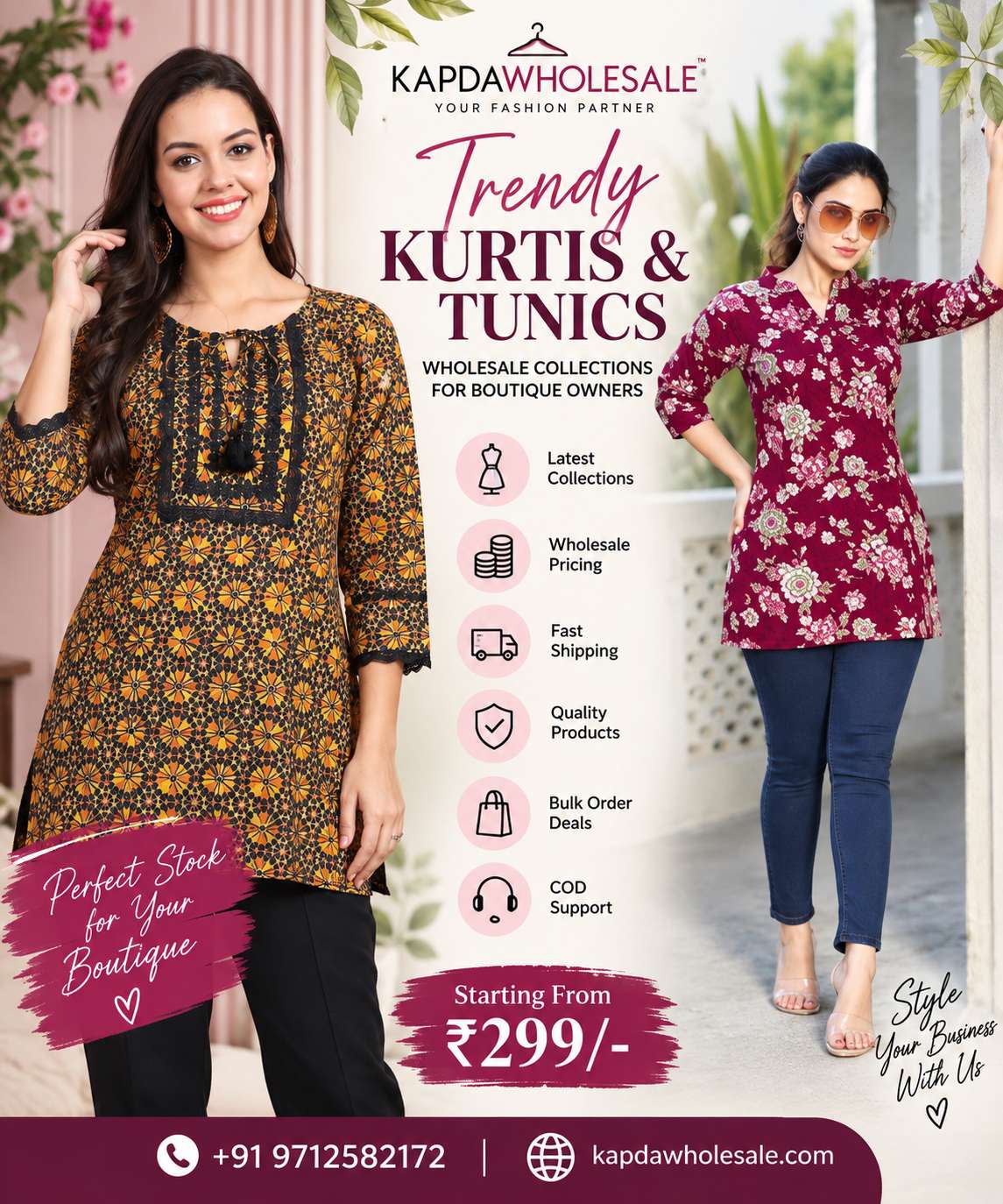
<h2><strong>How Boutique Owners Choose Fast-Moving Stock in 2026</strong></h2> <p>Once a boutique has established its basic inventory structure, the next step is identifying products that have stronger selling potential. In 2026, fashion demand can change quickly because customers are continuously exposed to new styles through social media, online marketplaces and influencer content. Boutique owners therefore benefit from keeping a portion of their purchasing budget available for fresh arrivals instead of committing everything to long-term inventory.</p> <p>A practical buying strategy is to combine dependable categories with newer designs. Everyday kurtis, cotton tunics and wearable ethnic styles can provide regular sales, while trending cuts, festive collections, coordinated sets and premium designs can create excitement. This combination allows a boutique to serve existing customers while continuously giving them something new to discover.</p> <p>Retailers purchasing through Kapdawholesale.com can compare different categories and select merchandise according to their customer base. Rather than simply searching for the lowest wholesale price, buyers can consider design, fabric, colour, sizing, finishing and expected retail value before finalising an order.</p> <h3><strong>Follow Actual Sales, Not Only Fashion Trends</strong></h3> <p>Trends are useful, but your own sales data should have greater influence on purchasing decisions. If straight kurtis repeatedly sell faster than experimental silhouettes in your store, maintain a strong selection of straight styles while testing newer fashion in smaller quantities.</p> <p>The same principle applies to colours and sizes. A boutique that knows which sizes, shades and price ranges sell most frequently can make more accurate wholesale purchases. This reduces dead stock and helps working capital move back into the business faster.</p> <h3><strong>Keep New Arrivals Regular</strong></h3> <p>Customers have a reason to revisit a boutique when they know fresh merchandise arrives regularly. Instead of buying a very large quantity only a few times per year, some retailers may find smaller and more frequent purchases more effective.</p> <p>Regular buying also gives shop owners and resellers greater flexibility. If a particular category slows down, the next order can shift toward a stronger category without waiting months to change the inventory mix.</p> <h2><strong>Internal Linking for More Wholesale Buying Options</strong></h2> <p>Boutique buyers who want to build a contemporary everyday range can explore <a href="https://www.kapdawholesale.com/tunics">wholesale tunics</a> for products suitable for casual, office and younger fashion customers. A mixed selection of lengths, prints and silhouettes can help retailers target multiple customer preferences without depending on a single design direction.</p> <p>Retailers planning to expand beyond everyday products can also explore <a href="https://www.kapdawholesale.com/ethnic-wear">wholesale ethnic wear</a> for festive, traditional and occasion-oriented inventory. Combining everyday merchandise with selected premium ethnic products can help increase both transaction frequency and average order value.</p> <h2><strong>How Much Stock Should a Boutique Buy?</strong></h2> <p>There is no single purchasing quantity suitable for every boutique. A home-based seller with a developing customer base should naturally purchase differently from an established showroom with daily walk-in traffic.</p> <p>The right quantity depends on available capital, average monthly sales, stock turnover, season, category performance and supplier availability. The goal should be to maintain enough variety for customers without unnecessarily locking money into inventory that may take months to sell.</p> <h3><strong>New Boutique Owners</strong></h3> <p>New businesses can begin by testing multiple designs in controlled quantities. The first few purchasing cycles should be treated as an opportunity to discover what the local or online audience actually wants.</p> <p>If certain styles begin generating repeat enquiries, increase their share in future orders. This creates a buying strategy based on real customer behaviour rather than assumptions.</p> <h3><strong>Growing Boutiques</strong></h3> <p>A growing boutique can increase stock depth in proven categories while continuing to introduce new products. At this stage, the retailer should also start maintaining basic records showing which designs sold, at what retail price and how quickly.</p> <p>This information can make future wholesale purchases considerably more accurate. It can also help identify whether a product is genuinely profitable or simply selling because it has been heavily discounted.</p> <h3><strong>Established Showrooms</strong></h3> <p>Established showrooms can purchase deeper inventory but should still avoid overstocking without demand evidence. Their advantage is access to a larger customer base and stronger historical sales data, which can be used to forecast seasonal purchasing.</p> <p>They may also maintain separate purchasing budgets for everyday merchandise, festive stock, premium collections and experimental trends. This creates better control over inventory investment.</p> <img src="https://kapdawholesale.com/images/product/2025/01/rajnandini-presents-pure-cotton-tunics-branded-kurti-manufacturers-2025-01-28_11_10_41.jpeg" /> <h2><strong>How to Prepare Boutique Inventory for Festival and Wedding Demand</strong></h2> <p>Festival and wedding periods can create strong opportunities for Indian fashion retailers, but seasonal stock requires advance planning. Waiting until peak demand has already started can leave a boutique with limited product choices or insufficient time for promotion.</p> <p>Boutique owners should begin evaluating festive requirements early and gradually introduce relevant collections. Embroidered kurtis, kurti sets, salwar suits, dress materials, premium ethnic wear and occasion-ready designs can form part of a festive assortment depending on the store's target customer.</p> <h3><strong>Buy Across Different Retail Budgets</strong></h3> <p>Festive shoppers do not all have the same budget. Some customers want an affordable outfit for casual celebrations, while others are willing to spend more for family functions and special occasions.</p> <p>A balanced wholesale purchase should therefore include value, mid-range and premium products. This makes it easier for sales staff or online sellers to offer alternatives when a customer's first choice is outside their budget.</p> <h3><strong>Use Premium Products Selectively</strong></h3> <p>Premium inventory can improve a boutique's positioning, but it should be selected carefully. Look for products where fabric, work, styling and finishing visibly justify the higher retail price.</p> <p>Premium product quality is particularly important because customers purchasing at a higher price point usually have higher expectations. The garment should create value not only in photographs but also when the customer sees and handles it.</p> <h2><strong>How Online Resellers Can Buy Wholesale Clothing Stock</strong></h2> <p>Online resellers have different inventory requirements from physical stores. Because much of their selling happens through photographs, reels, WhatsApp catalogues or social-media posts, product presentation becomes particularly important.</p> <p>Resellers can start by choosing a focused collection instead of trying to sell every category. A page specialising in kurtis, for example, can build a clearer identity than a new seller posting unrelated fashion products without a consistent audience.</p> <p>As customer enquiries increase, the reseller can expand into tunics, kurti sets, ethnic wear or other related products. Buying stock according to actual enquiry patterns helps reduce unnecessary investment.</p> <h3><strong>Calculate Your Selling Price Before Posting</strong></h3> <p>Before advertising a product, calculate wholesale cost, shipping, packaging, marketing expenses and desired margin. This helps establish a realistic retail price from the beginning and prevents frequent price changes after customers start enquiring.</p> <p>International resellers serving markets such as Nepal, USA or New Zealand should additionally consider international freight and local delivery costs when calculating the final selling price.</p> <h2><strong>Why Surat Is Important for Boutique Wholesale Purchasing</strong></h2> <p>Surat has developed an extensive textile ecosystem supported by manufacturing, trading, processing and distribution businesses. For boutique owners, sourcing from Surat can provide access to a broad selection of products rather than depending entirely on wholesalers in their own city.</p> <p>The commercial textile areas around the <strong>surat textile market</strong>, <strong>ring road</strong> and <strong>sahara darwaza</strong> have long been associated with wholesale textile trade. Digital sourcing has extended this market beyond physical visits, allowing retailers from different regions to explore Surat-based collections online.</p> <p>For a buyer, the advantage is not simply access to more products. A wider sourcing network makes it possible to compare categories, wholesale price levels, designs and quality before allocating purchasing capital.</p> <h2><strong>Common Stock-Buying Mistakes Boutique Owners Should Avoid</strong></h2> <p>One of the biggest mistakes is buying according to personal taste rather than customer demand. A boutique owner may personally love a particular colour or design, but purchasing decisions should ultimately be driven by what paying customers want.</p> <p>Another mistake is putting too much capital into a temporary trend. Trending products can produce excellent sales, but demand can also change quickly. Unless the boutique already has confirmed demand, trend-driven merchandise is often better introduced in controlled quantities.</p> <p>Retailers should also avoid comparing suppliers solely by the lowest price. Two products that appear similar in catalogue images may differ in fabric, finishing, stitching or overall presentation. A slightly higher purchasing cost can sometimes generate better customer satisfaction and a stronger retail margin.</p> <p>Finally, do not ignore stock rotation. Merchandise that has remained unsold for a long period occupies both physical space and working capital. Retailers should periodically identify slow-moving stock and use suitable offers, combinations or promotional campaigns to clear it.</p> <h2><strong>Customer FAQs</strong></h2> <h3><strong>1. Where can boutique owners buy wholesale clothing online?</strong></h3> <p>Boutique owners, resellers, home-based sellers and showroom buyers can browse wholesale clothing through Kapdawholesale.com. Buyers can explore multiple fashion categories and select stock according to their customer profile, quantity requirement and purchasing budget.</p> <h3><strong>2. What products should a new boutique buy first?</strong></h3> <p>A new boutique can begin with easy-to-sell categories such as kurtis, tunics and selected ethnic wear while maintaining variety in colours, designs and price points. Initial quantities should remain manageable until actual customer demand becomes clearer.</p> <h3><strong>3. Is Surat a good market for wholesale boutique clothing?</strong></h3> <p>Yes. Surat has a large textile manufacturing and wholesale ecosystem and is widely used for sourcing women's ethnic and fashion products. Online purchasing also allows buyers outside Gujarat to access collections without making frequent physical sourcing trips.</p> <h3><strong>4. Can home-based sellers purchase boutique stock?</strong></h3> <p>Yes. Home-based sellers can build inventory gradually and focus first on categories that suit their customer network. Smaller, varied purchases can help them test demand before increasing quantities in successful products.</p> <h3><strong>5. How should boutique owners decide their retail price?</strong></h3> <p>Retail pricing should consider wholesale cost, shipping, packaging, marketing, operating expenses, local competition, perceived product value and desired profit margin. The cheapest wholesale product is not automatically the product with the best retail profitability.</p> <h3><strong>6. How frequently should boutiques purchase new stock?</strong></h3> <p>Purchase frequency depends on sales velocity and available capital. Many retailers benefit from regular replenishment because it keeps the collection fresh and allows them to respond more quickly to customer demand.</p> <h3><strong>7. Can wholesale clothing be sourced for export markets?</strong></h3> <p>Wholesale buyers serving international markets can source Indian clothing for export, subject to applicable shipping, customs and import requirements in the destination country. Product selection should be based on local customer demand and landed cost.</p> <h3><strong>8. What should I check before placing a bulk clothing order?</strong></h3> <p>Confirm product details, available sizes or variants, quantity, wholesale price, shipping terms, expected dispatch conditions and applicable payment requirements. For larger purchases, planning the assortment before payment can prevent unnecessary duplication.</p> <h2><strong>Build Your Next Boutique Collection with Kapdawholesale.com</strong></h2> <p>If you are ready to purchase stock for a boutique, showroom, home-based fashion business or resale operation, Kapdawholesale.com provides access to wholesale clothing collections backed by textile industry experience. Vastralife's wholesale and export journey since 2017 adds practical sourcing knowledge with an emphasis on dependable service and premium product quality.</p> <p>Explore <strong>Latest Collections</strong> for new inventory, compare <strong>Wholesale Pricing</strong>, discover <strong>Trendy Ethnic Wear</strong> and plan your next purchasing cycle according to your customers. Buyers can also enquire about <strong>Fast Shipping</strong>, applicable <strong>COD Support</strong> and <strong>Bulk Order Deals</strong>.</p> <p><strong>Quality Products Starting From ₹299</strong> give retailers opportunities to build collections across different customer budgets. Product price, availability and applicable ordering terms should be confirmed at the time of purchase.</p> <p>Whether you are purchasing for a small online business or replenishing an established showroom, build your inventory around products your customers can confidently buy and you can profitably resell.</p> <p><strong>Contact:</strong> +91 9712582172<br /> <strong>Website:</strong> kapdawholesale.com</p> <p>Choose your next wholesale collection, plan your retail margins and start preparing fresh stock for your customers today.</p>