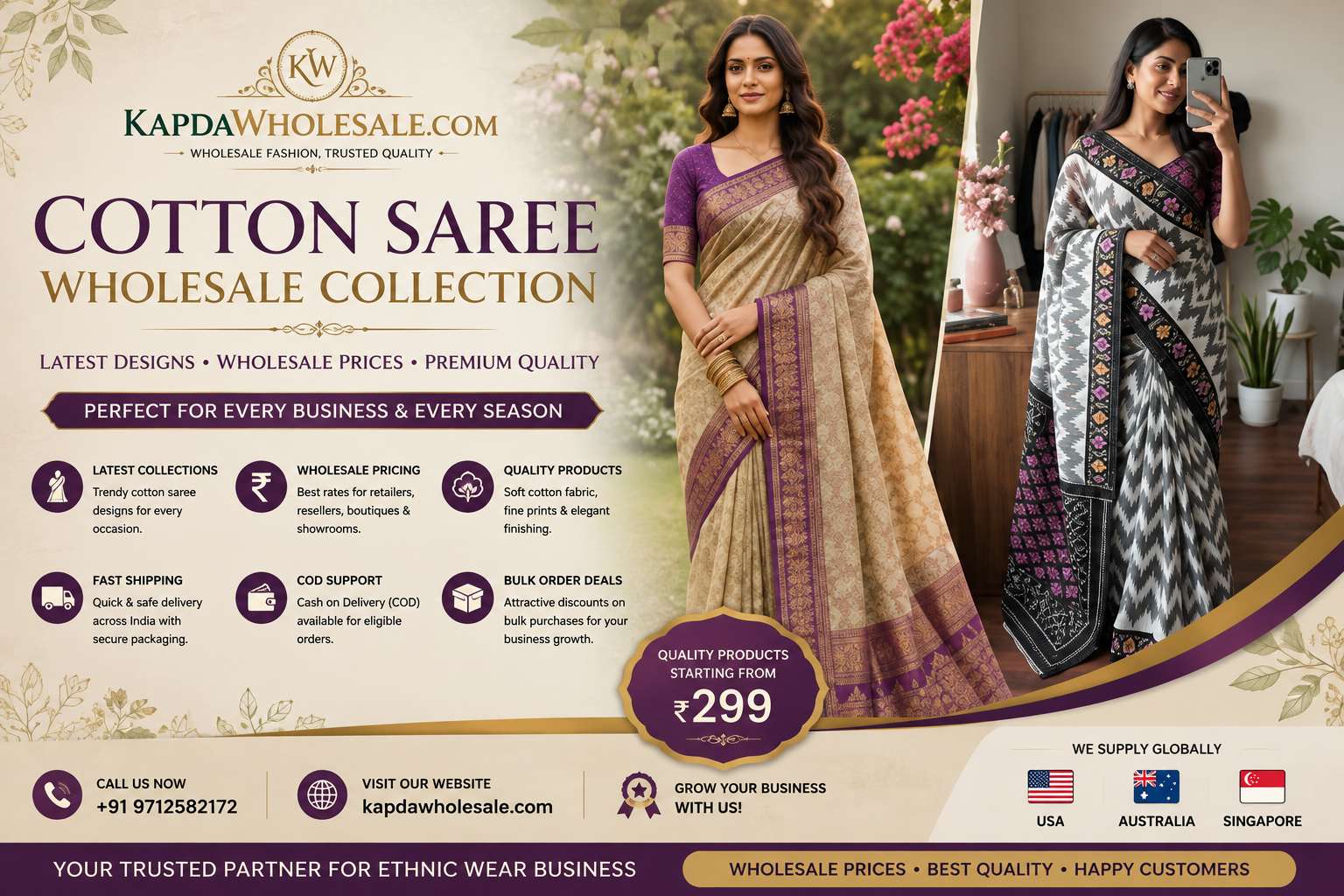
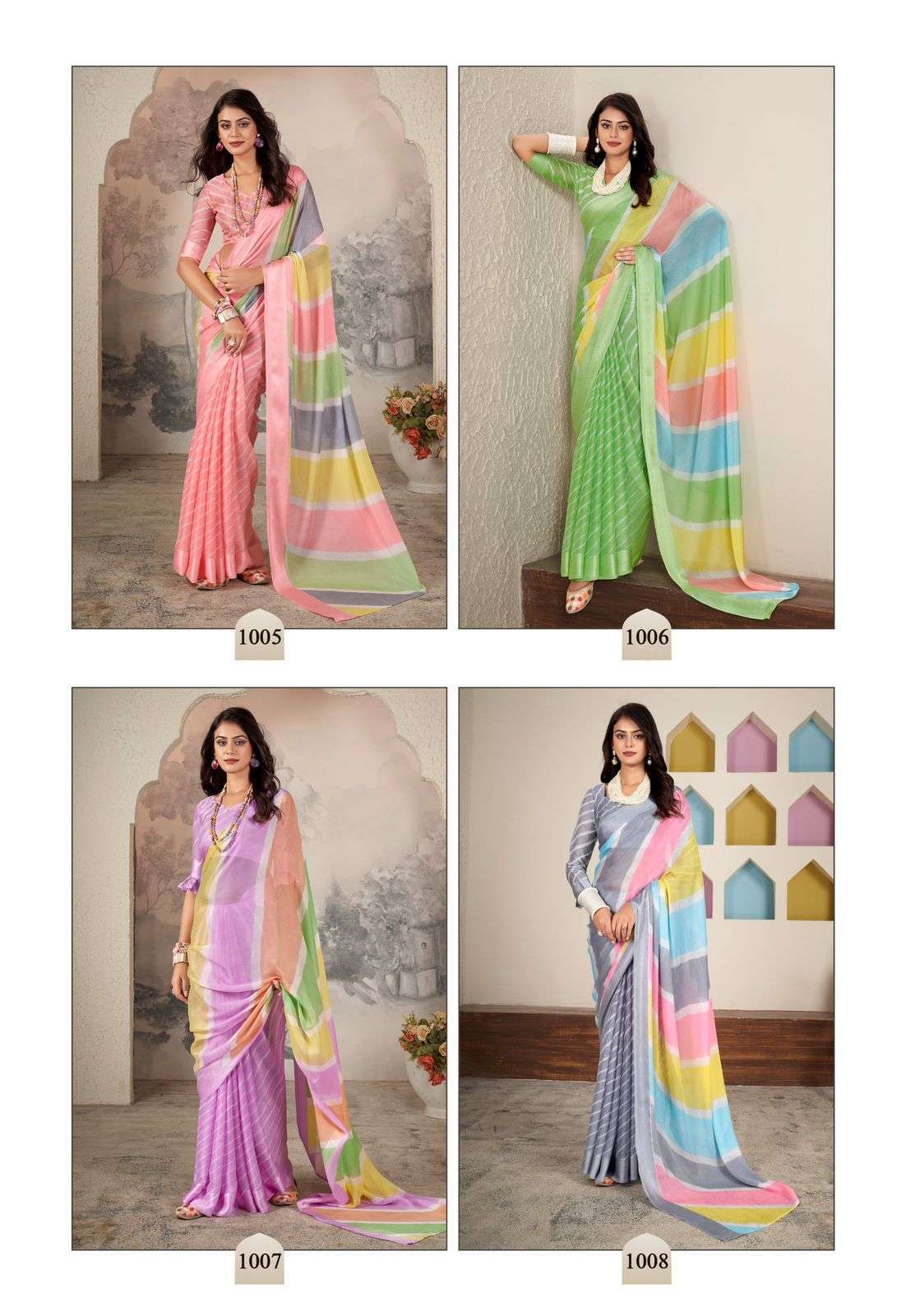



<h1><strong>Cotton Saree Wholesale Collection – Latest Bulk Sarees for Retailers 2026</strong></h1> <p>Cotton sarees are a practical inventory choice for businesses that need products with year-round selling potential. Comfortable fabrics, wearable designs, attractive prints and flexible price ranges make them suitable for everyday customers as well as office wear, festive shopping and gifting. For retailers and resellers, sourcing the right assortment from Surat can provide access to regularly updated designs that suit different regional markets and customer budgets.</p> <h2><strong>Introduction</strong></h2> <p>A well-selected <strong>Cotton Saree Wholesale Collection</strong> can become a dependable category for home-based sellers, saree shops, boutiques, showrooms and online resellers. Unlike highly occasion-specific products, cotton sarees can serve customers looking for comfortable daily wear, professional styling, traditional designs and lightweight ethnic wear.</p> <p>For wholesale buyers, this versatility creates opportunities to maintain stock throughout the year. The collection can include printed cotton sarees, woven patterns, ikkat-inspired designs, traditional borders, soft cotton styles, office-wear sarees and contemporary colour combinations. Buyers can select different price segments according to their customer base rather than depending on one narrow product range.</p> <p><strong>kapdawholesale.com</strong> helps business buyers source women's ethnic wear through Surat's extensive textile ecosystem. Supported by Vastralife's wholesale and export experience since 2017, textile-industry expertise and an emphasis on premium product quality, the sourcing approach is designed around practical resale requirements.</p> <h2><strong>Buy Cotton Sarees Wholesale for Your Business</strong></h2> <p>Retailers purchasing <strong>cotton sarees wholesale</strong> should focus on products that combine comfort, presentation and commercially suitable pricing. Cotton sarees attract a broad audience because they can be worn across seasons and for many different purposes.</p> <p>Home-based sellers can begin with selected fast-moving colours, while boutiques may prefer distinctive patterns and elegant borders. Larger stores can maintain separate daily-wear, office-wear and premium cotton sections. Wholesale distributors can purchase broader assortments according to demand among their retailer network.</p> <h3><strong>Cotton Sarees for Home-Based Sellers</strong></h3> <p>Home-based sellers usually benefit from keeping their initial investment controlled. Instead of purchasing excessive quantities of one catalogue, they can select several commercially appealing designs and observe customer response.</p> <p>Products can be promoted through WhatsApp, Instagram, Facebook and personal customer groups. Cotton sarees are particularly useful for this selling model because customers can purchase them for regular use rather than waiting for a major wedding or festival.</p> <h3><strong>Cotton Sarees for Boutique Owners</strong></h3> <p>Boutiques can build a curated range around colours, prints and distinctive textile styling. Rather than competing only on the lowest price, they can focus on attractive presentation and collections that complement their existing ethnic-wear inventory.</p> <p>A boutique may combine cotton sarees with kurtis, dress materials and other wearable women's categories. This gives regular customers more reasons to return and creates opportunities for cross-category sales.</p> <h3><strong>Cotton Sarees for Shop and Showroom Owners</strong></h3> <p>Physical retailers generally require greater variety because customers want to compare designs and prices before purchasing. Maintaining affordable everyday products alongside better-finished premium designs can help serve multiple budgets.</p> <p>Showrooms can also organise cotton sarees according to usage. Separate sections for office wear, daily wear, printed sarees and traditional styles can make product selection easier for customers.</p> <h2><strong>Cotton Saree Wholesale Price in 2026</strong></h2> <p>The <strong>cotton saree wholesale price</strong> depends on fabric quality, print or weaving style, border, pallu, blouse piece, finishing and overall design. Buyers should therefore evaluate the complete product instead of selecting stock only because the quoted price appears low.</p> <p>For a retailer, the most useful buying price is one that leaves sufficient resale margin while still providing a product customers are happy to purchase. Extremely low-cost stock can become expensive if it remains unsold or fails to meet customer expectations.</p> <h3><strong>Affordable Cotton Sarees for Fast-Moving Sales</strong></h3> <p>Affordable cotton ranges can be suitable for regular-wear customers, resellers and stores serving price-sensitive markets. Buyers should choose commercially attractive colours and patterns so that lower pricing is supported by genuine customer appeal.</p> <p>These collections can also help new resellers enter the saree business with manageable investment. Smaller test orders can provide useful information about which designs and price levels work best with their customers.</p> <h3><strong>Mid-Range Cotton Sarees for Retail Shops</strong></h3> <p>Mid-range products can offer better finishing, attractive borders and more distinctive designs while remaining accessible to a broad retail audience. This segment can work well for office wear, gifting and customers looking for something better than basic daily-wear stock.</p> <h3><strong>Premium Cotton Sarees for Boutiques</strong></h3> <p>Premium cotton styles can appeal to customers who prioritise fabric feel, sophisticated design and elegant presentation. Boutiques can use such collections to differentiate themselves from sellers competing only on low rates.</p> <p>When comparing premium products, buyers should consider fabric texture, colour quality, border detailing and overall finishing. A higher wholesale price can still provide attractive margins when the product carries stronger perceived retail value.</p> <h2><strong>Popular Cotton Saree Styles for Wholesale Buying</strong></h2> <p>Wholesale buyers should avoid building their entire inventory around one design style. Cotton sarees cover several subcategories, and a broader assortment can serve customers with different tastes and buying purposes.</p> <h3><strong>Printed Cotton Sarees</strong></h3> <p><strong>Printed cotton sarees wholesale</strong> can work particularly well for regular retail demand. Floral patterns, geometric prints, traditional motifs and contemporary designs give sellers numerous options across customer age groups.</p> <p>Printed collections can also be highly suitable for digital resellers because colourful patterns create attractive product photographs and provide regular content for online promotion.</p> <h3><strong>Ikkat Style Cotton Sarees</strong></h3> <p>Ikkat-inspired designs combine a recognisable textile aesthetic with practical wearability. These sarees can appeal to customers looking for something more distinctive than basic printed daily wear.</p> <p>Retailers can include several colour combinations rather than stocking only traditional shades. This can help the category appeal to both established saree buyers and younger customers.</p> <h3><strong>Office Wear Cotton Sarees</strong></h3> <p>Professional customers often prefer sarees that are comfortable, manageable and elegant without excessive detailing. Subtle prints, restrained borders and versatile colours can make <strong>office wear cotton sarees</strong> a useful year-round retail category.</p> <p>Stores serving working professionals can maintain a dedicated selection so customers can quickly find designs suited to regular office use.</p> <h3><strong>Traditional Cotton Sarees</strong></h3> <p>Traditional motifs, woven-style borders and regional design influences can appeal to customers who prefer a more classic appearance. These products can work for regular wear as well as religious functions and smaller family occasions.</p> <h3><strong>Soft Cotton Sarees</strong></h3> <p><strong>Soft cotton sarees wholesale</strong> are useful for buyers prioritising comfort and easy draping. Their lightweight appearance can make them attractive for everyday customers, especially in warmer regions.</p> <img src="https://kapdawholesale.com/images/product/2026/05/vastrangan-cotton-ikkat-hyderabad-saree-market-2026-05-25_17_14_45.jpeg"/> <h2><strong>Cotton Saree Wholesale from Surat Textile Market</strong></h2> <p>Surat is one of India's major textile sourcing, processing and distribution centres. Buyers from different states source women's ethnic wear through the <strong>Surat textile market</strong> because of its extensive supplier network and wide product selection.</p> <p>Commercial textile areas around <strong>Ring Road</strong> and <strong>Sahara Darwaza</strong> connect manufacturers, processors, traders, wholesalers, packing businesses and logistics providers. This ecosystem makes Surat useful for buyers who require regular stock across multiple textile categories.</p> <p>Retailers sourcing cotton sarees can also explore other women's wear during the same buying cycle. This allows boutiques and showrooms to distribute their investment across products rather than relying on one category.</p> <h3><strong>Surat Manufacturing and Wholesale Advantage</strong></h3> <p>Surat's large <strong>manufacturing</strong> and wholesale network helps new textile designs move rapidly into the market. Buyers can access changing collections and multiple price segments instead of depending entirely on limited local distributor stock.</p> <p>This can be especially valuable for retailers who need frequent new arrivals. Regular product updates give them fresh material for store displays, customer messages and social-media promotions.</p> <h3><strong>Buy Cotton Sarees Online from Surat</strong></h3> <p>Retailers no longer need to travel to Surat for every stock requirement. Online wholesale sourcing allows businesses to communicate their preferred price, quantity and product style before reviewing available collections.</p> <p>Through <strong>kapdawholesale.com</strong>, buyers can discuss wholesale requirements from different locations and plan orders according to current availability. This can save time for retailers who need repeat purchasing but cannot regularly visit Gujarat.</p> <h2><strong>How to Select Cotton Sarees for Better Resale</strong></h2> <p>Good wholesale buying begins with understanding the final customer. A saree may look attractive to the buyer but still perform poorly if its colour, fabric or price does not suit the local market. Retailers should therefore use customer behaviour and previous sales when selecting stock.</p> <h3><strong>Select Colours According to Customer Demand</strong></h3> <p>A balanced cotton collection can include earthy tones, pastel shades, brighter festive colours and classic combinations. Retailers should avoid investing too heavily in one colour unless previous sales demonstrate strong demand.</p> <h3><strong>Choose Different Print and Border Styles</strong></h3> <p>Customers often compare multiple sarees before making a purchase. Offering floral prints, traditional motifs, ikkat-inspired designs, geometric patterns and different border treatments can provide meaningful variety.</p> <h3><strong>Match Wholesale Price with Expected Retail Price</strong></h3> <p>Before purchasing, buyers should have a realistic idea of what their customers are likely to pay. Wholesale cost, applicable packing and shipping should be considered together when calculating resale margins.</p> <h3><strong>Check Fabric and Finishing</strong></h3> <p>Fabric comfort is particularly important in cotton sarees because many customers purchase them specifically for regular wear. Buyers should consider fabric appearance, finishing, colour presentation, border quality and blouse-piece coordination when evaluating products.</p> <p>A focus on <strong>premium product quality</strong> can help retailers earn repeat orders and build stronger customer confidence over time.</p> <h2><strong>Cotton Sarees for Wedding, Festive and Daily-Wear Business</strong></h2> <p>Although cotton sarees are strongly associated with everyday comfort, they are not limited to daily wear. Better-finished designs, elegant borders and richer colour combinations can also work for festive occasions, traditional events and family functions.</p> <h3><strong>Daily Wear Cotton Sarees</strong></h3> <p>Daily-wear customers generally prioritise comfort, easy handling and practical pricing. Retailers can maintain a broad selection in this category because customers may purchase more than one design when the price and fabric suit their requirements.</p> <h3><strong>Festive Cotton Sarees</strong></h3> <p>Festive designs can feature stronger colours, more decorative borders and richer presentation while maintaining the comfort associated with cotton. These sarees can serve customers who want traditional clothing without moving into heavier occasion fabrics.</p> <h3><strong>Office and Professional Wear</strong></h3> <p>Elegant, understated cotton sarees can become repeat-selling products among teachers, office professionals and customers who regularly wear sarees for work. Retailers serving this audience should prioritise wearable designs that can be used repeatedly.</p> <h2><strong>Cotton Saree Export from India</strong></h2> <p>Comfortable Indian ethnic wear also has potential in international markets. Retailers and resellers serving South Asian communities overseas can stock cotton sarees for everyday use, cultural events, gifting and traditional occasions.</p> <p>Wholesale buyers in <strong>Malaysia</strong>, <strong>Australia</strong> and <strong>Sri Lanka</strong> can source collections according to local customer preferences. International buyers should calculate the product price together with packing and <strong>export</strong> logistics to determine a commercially suitable landed cost.</p> <p>Vastralife's wholesale and export experience since 2017 provides practical understanding of the requirements of domestic and international textile buyers. Businesses can discuss product category, approximate quantity, target budget and destination while planning their wholesale purchase.</p> <h3><strong>Cotton Sarees for Malaysia</strong></h3> <p>Retailers in Malaysia serving Indian-origin customers can select cotton sarees for everyday wear, festivals and community occasions. Lightweight designs can provide an attractive option for customers who prioritise comfort in warmer weather.</p> <h3><strong>Cotton Sarees for Australia</strong></h3> <p>Australian boutiques and resellers can stock cotton sarees for Indian cultural events, gifting and customers seeking breathable ethnic wear. International buyers should select products with sufficient resale potential to account for shipping and other landed costs.</p> <h3><strong>Cotton Sarees for Sri Lanka</strong></h3> <p>Sri Lankan wholesale and retail buyers can explore Indian cotton saree collections according to local preferences and intended retail price. Planning assortments around proven colours and designs can help make bulk purchasing more commercially effective.</p> <h2><strong>Build a Profitable Cotton Saree Inventory in 2026</strong></h2> <p>A profitable <strong>Cotton Saree Wholesale Collection</strong> should contain enough variety to attract customers without creating excessive slow-moving inventory. Businesses can begin with a balanced assortment and use actual sales data to determine which designs deserve larger repeat orders.</p> <p>Home-based sellers can focus on smaller quantities and quick inventory rotation. Boutique owners can prioritise distinctive designs, while larger stores can maintain broader selections across daily, office and festive segments.</p> <p>Retailers should also promote new arrivals quickly. Fresh stock can be shared through WhatsApp, social media, online catalogues and physical store displays. Regular communication keeps existing customers aware of new products and can generate repeat inquiries.</p> <p>By combining practical wholesale pricing, customer-focused selection and consistent sourcing, cotton sarees can remain a valuable year-round category for retailers and resellers throughout 2026.</p>