
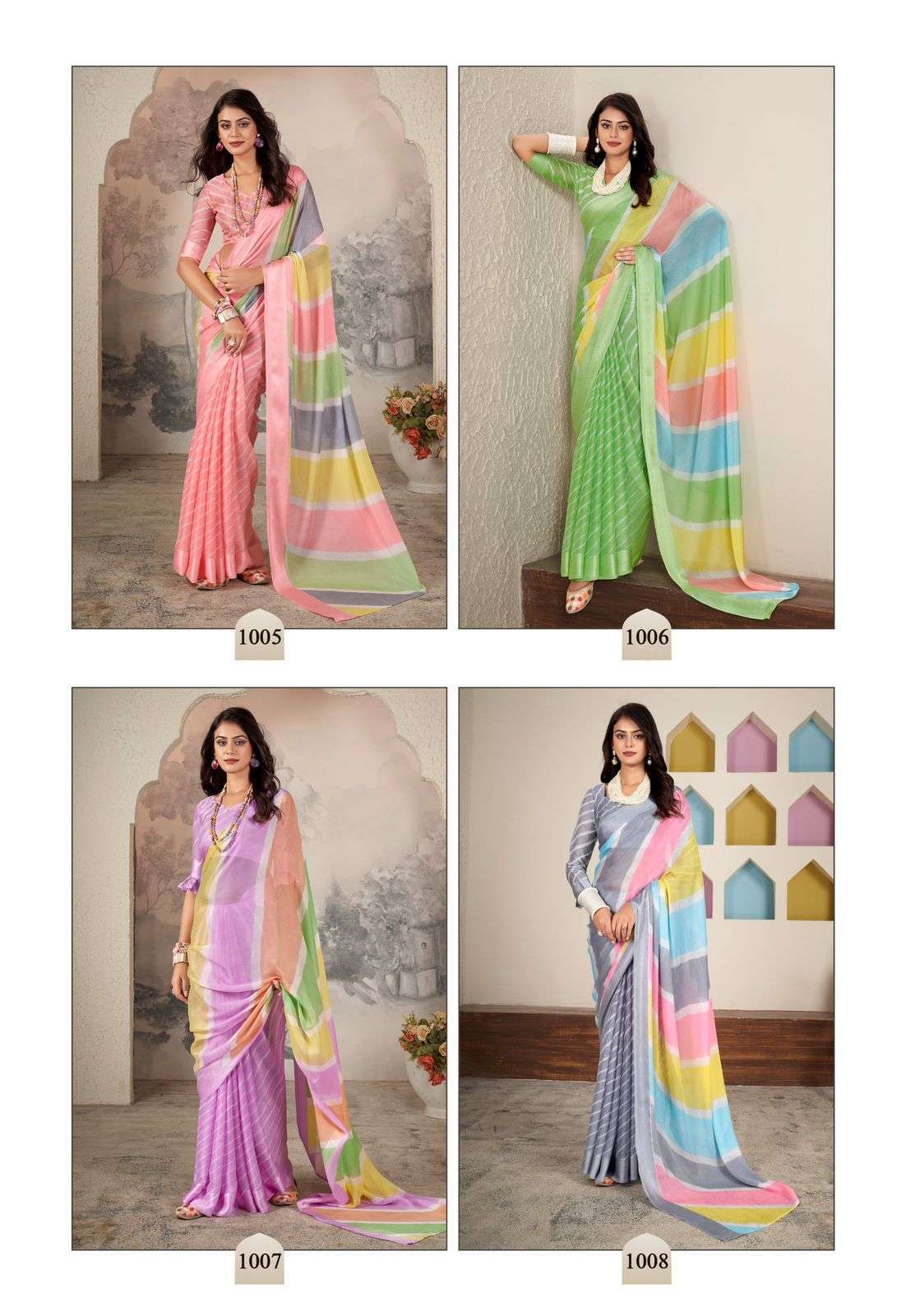



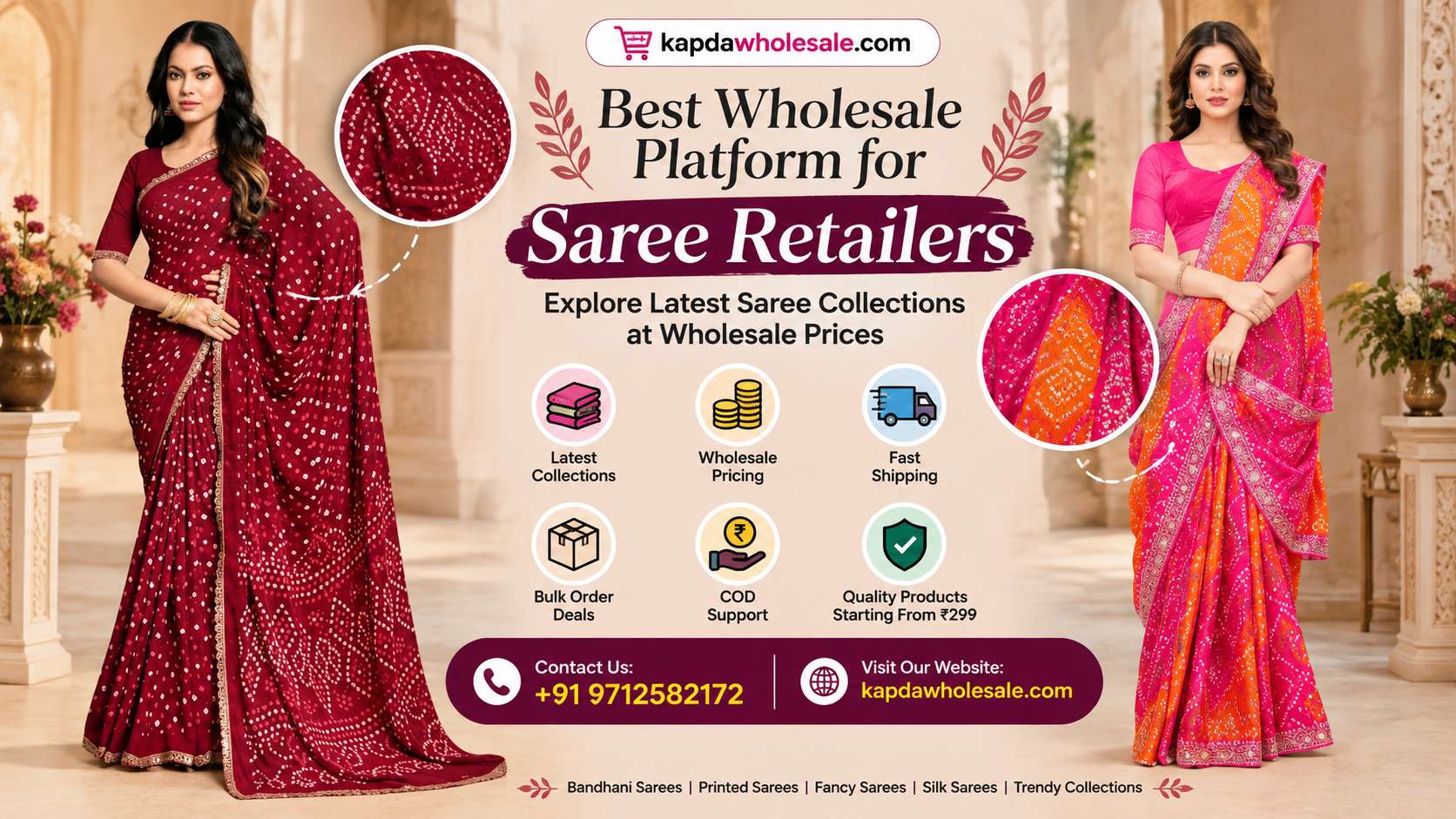
<h1><strong>Best Wholesale Platform for Saree Retailers in 2026 – Buy Sarees in Bulk at Wholesale Prices</strong></h1> <p>Running a profitable saree retail business depends heavily on where and how you source your stock. Retailers need more than attractive designs; they need competitive buying rates, dependable quality, fresh collections, practical minimum quantities and a supplier capable of fulfilling repeat orders. For boutique owners, saree shops, resellers and showroom owners looking to purchase directly from Surat, kapdawholesale.com provides an online route to discover and order wholesale ethnic wear without depending entirely on physical market visits.</p> <h2><strong>Introduction</strong></h2> <p>The saree business continues to offer strong opportunities for retailers because one product category can serve wedding buyers, festive customers, daily-wear shoppers, office wear customers and occasion-based demand. However, profitability begins at the sourcing stage. Buying an attractive saree at the wrong <strong>price</strong> can reduce retail margins, while buying outdated stock simply because it is inexpensive can lock up working capital.</p> <p>This is why retailers searching for the <strong>best wholesale platform for saree retailers</strong> increasingly look beyond a simple catalogue. They want a wholesale source where they can check current designs, compare product options, place bulk orders and build a repeat purchasing cycle as their stock moves.</p> <p>Surat remains an important sourcing centre for Indian ethnic wear, with extensive trading and <strong>manufacturing</strong> activity around areas such as the <strong>surat textile market</strong>, <strong>ring road</strong> and <strong>sahara darwaza</strong>. Online wholesale sourcing brings this market closer to retailers who may be hundreds or thousands of kilometres away.</p> <p>For a retailer in another Indian state or a buyer operating from Nepal, Australia or the USA, digital sourcing can reduce repeated travel and make product selection more convenient. The important point is to work with a wholesale source that understands the requirements of actual retailers rather than treating wholesale buying like ordinary consumer shopping.</p> <h2><strong>What Saree Retailers Should Expect From a Wholesale Platform</strong></h2> <p>A wholesale website should help a retailer purchase inventory that can actually be resold. A large product count alone does not make a platform useful. Retail buyers should consider collection freshness, wholesale buying rates, product variety, minimum order requirements, supply consistency and dispatch support before committing substantial capital.</p> <h3><strong>Competitive Wholesale Pricing</strong></h3> <p>Margin is one of the first calculations every reseller makes. The difference between the wholesale buying cost and achievable retail selling price needs to cover operating expenses while still leaving room for profit. Therefore, retailers searching for <strong>sarees wholesale online</strong> should evaluate the complete buying proposition instead of choosing a supplier only because one catalogue appears cheaper.</p> <p>A practical wholesale assortment can include entry-level products for price-sensitive customers alongside better-value festive and premium products. This gives shop owners the flexibility to create several retail price points instead of depending on a single customer segment.</p> <h3><strong>Fresh Saree Collections for Different Buyers</strong></h3> <p>A successful saree shop rarely depends on one fabric or one design family. Customers may ask for Bandhani sarees during festive periods, lightweight printed sarees for regular use, fancy sarees for functions, traditional styles for family occasions and more decorative options during wedding season.</p> <p>For <strong>2026 saree wholesale</strong> buying, retailers can build a healthier inventory by mixing proven designs with fresh market trends. New stock also gives sellers more content to promote through WhatsApp, Instagram, Facebook and their own online stores.</p> <p>Useful wholesale categories can include <strong>Bandhani sarees wholesale</strong>, printed sarees, Chinon sarees, georgette sarees, weightless sarees, silk-look sarees, festive sarees, designer sarees, wedding sarees and everyday collections. The exact assortment should reflect the retailer's local customer profile.</p> <h2><strong>Why Surat Is Important for Wholesale Saree Sourcing</strong></h2> <p>For Indian textile retailers, Surat has long been associated with large-scale textile trading, processing, distribution and production. The ecosystem surrounding the <strong>surat textile market</strong> allows buyers to access numerous styles and price segments in one sourcing city.</p> <p>Areas around <strong>ring road</strong> and <strong>sahara darwaza</strong> are familiar names to many textile traders visiting Surat for wholesale purchasing. Physical sourcing remains valuable, especially for buyers who want to inspect large quantities personally. Online wholesale platforms, however, make it possible to continue purchasing between market visits.</p> <p>This is particularly useful for shop owners outside Gujarat. A retailer should not need to travel to Surat whenever five, ten or twenty new designs are required. An online wholesale ordering process can help businesses replenish faster while reducing the time spent away from their own stores.</p> <h3><strong>Direct Access for Small and Growing Retailers</strong></h3> <p>Home-based sellers and new resellers often start with less capital than established showrooms. Their requirement is not necessarily thousands of pieces. They may need a carefully selected assortment that can be photographed, promoted and sold quickly.</p> <p>Shop owners and larger wholesale buyers have a different requirement. They may need deeper quantities, multiple designs and regular restocking. A useful <strong>online saree wholesale platform</strong> should therefore serve different business sizes while keeping the purchasing process straightforward.</p> <h2><strong>Which Sarees Should Retailers Buy in Bulk?</strong></h2> <p>There is no single saree type that works equally well in every market. Retailers should build their orders around customer demand, upcoming festivals, local climate, wedding calendars and the spending capacity of their target audience.</p> <h3><strong>Bandhani and Bandhej Sarees</strong></h3> <p>Bandhani-inspired patterns have strong recognition in Indian ethnic fashion. They can work for festive shopping, traditional functions, family celebrations and regional demand. Retailers sourcing <strong>Bandhej sarees wholesale</strong> can keep multiple colours rather than investing heavily in only one shade.</p> <p>Bright reds, maroons, greens, yellows, pinks and royal shades can work well for traditional buying, while contemporary colour combinations may attract younger shoppers. The right mix allows a retailer to serve both established ethnic tastes and newer fashion preferences.</p> <h3><strong>Printed Sarees for Faster Everyday Rotation</strong></h3> <p>Printed sarees can be useful for sellers looking for accessible price points and repeat demand. Lightweight fabrics, easy drapes and attractive prints can appeal to customers buying for regular wear, gifting or smaller functions.</p> <p>When buying <strong>printed sarees wholesale</strong>, retailers should look at more than the print itself. Fabric feel, colour combination, blouse pairing, finishing and the overall retail presentation influence whether a design converts after it reaches the store.</p> <h3><strong>Festive and Wedding Sarees</strong></h3> <p>Wedding and festive customers often look for products with a richer visual appearance. Retailers can therefore allocate part of their buying budget to decorative borders, embroidery-inspired details, richer fabrics and statement colours.</p> <p>Seasonal buying needs timing. Stock that reaches the shop too late can miss the highest-demand selling window. Retailers should plan wholesale saree orders ahead of major festivals and wedding periods rather than waiting until customer enquiries have already peaked.</p> <img src="https://kapdawholesale.com/images/product/2025/03/kapda-wholesale-mayurika-1-bandhej-printed-chinon-silk-saree-wholesale-manufacturers-in-surat-2025-03-07_20_53_44.png"/> <h2><strong>How to Buy Sarees Online for Resale Without Overloading Inventory</strong></h2> <p>Wholesale buying becomes more profitable when retailers treat inventory as working capital rather than simply trying to collect as many designs as possible. Every unsold saree occupies money that could otherwise be used for a faster-moving product.</p> <p>A practical strategy is to divide the purchasing budget between proven sellers, current trends and experimental designs. Proven products give the store stability, trending collections help generate customer interest, and smaller test quantities allow the retailer to discover new demand without taking an unnecessarily large risk.</p> <p>Retailers looking for the <strong>best wholesale platform for saree retailers</strong> should also consider how easily they can return for fresh stock. A supplier with regularly changing collections allows a business to purchase in cycles rather than attempting to buy an entire season's inventory at once.</p> <h3><strong>Start With a Mixed Wholesale Order</strong></h3> <p>For a new reseller, a mixed assortment can provide useful sales data. Instead of purchasing too many units of one design, the seller can test different colours, prints, fabrics and price levels. After actual customer response becomes visible, subsequent orders can concentrate on the styles generating the strongest demand.</p> <p>This approach is particularly useful for Instagram sellers, WhatsApp resellers, home-based businesses and boutique owners because their customers often respond quickly to new product photographs. A design that generates enquiries can be prioritized, while weak-performing styles do not need to be reordered.</p> <h3><strong>Calculate Landed Cost Before Setting Retail Price</strong></h3> <p>The catalogue <strong>price</strong> is only one part of inventory planning. Depending on the destination and transaction, retailers should understand applicable taxes, transportation, packaging or <strong>export</strong> costs before fixing their retail selling price.</p> <p>This becomes especially important for overseas wholesale buyers. A retailer in Nepal, Australia or the USA should calculate the complete landed cost rather than directly comparing an Indian wholesale rate with the final retail price in the destination market.</p> <h2><strong>Why Online Wholesale Buying Works for Modern Saree Retailers</strong></h2> <p>Traditional wholesale sourcing and online sourcing do not have to compete with each other. Many retailers can use both. A physical visit can help build supplier relationships and understand the market, while online ordering can handle regular replenishment and new catalogue purchases.</p> <p>Through kapdawholesale.com, buyers can explore ethnic wear options from their own shop or office instead of making every purchase dependent on another Surat visit. This is particularly practical for retailers who need frequent new arrivals to keep their social media feeds and customer groups active.</p> <p>Vastralife brings wholesale and export experience since <strong>2017</strong>, with industry knowledge built around the needs of resellers, retailers and wholesale buyers. Product selection, premium product quality and practical wholesale sourcing are important when building long-term retailer relationships rather than focusing only on a one-time transaction.</p> <h3><strong>Wholesale Buying for Boutiques and Showrooms</strong></h3> <p>Boutiques usually need designs that help them differentiate their assortment. They can combine statement sarees with selected everyday pieces and complementary ethnic wear. Showrooms may need broader collections and deeper stock because customers expect greater choice when shopping in-store.</p> <p>Both formats benefit from regular new arrivals. A boutique can promote limited fresh drops, while a showroom can maintain a larger selection across different price ranges. The wholesale purchasing strategy should therefore match the retailer's selling model rather than following a fixed formula.</p> <h3><strong>Wholesale Buying for Home-Based Sellers and Resellers</strong></h3> <p>Home-based sellers frequently sell through personal networks, WhatsApp groups and social media. Their advantage is lower overhead, but they need careful inventory control. Products with clear images, attractive styling and accessible buying rates can be easier to market digitally.</p> <p>For these businesses, <strong>buy sarees in bulk online</strong> searches are usually driven by immediate purchase intent. They need a source where products can be shortlisted quickly, quantities can be planned around available capital and new collections can be reordered as the business grows.</p> <h2><strong>Choosing the Right Wholesale Saree Supplier in 2026</strong></h2> <p>Retailers comparing suppliers should focus on consistency. One successful catalogue does not automatically make a reliable long-term sourcing partner. What matters is whether the supplier can continue presenting relevant products, maintain reasonable quality expectations and support repeat wholesale requirements.</p> <p>Look at the breadth of the assortment, the suitability of designs for your customer base, wholesale rate structure, minimum quantities, dispatch process and communication. For an international buyer, <strong>export sarees from India</strong> capability and shipment coordination become equally important.</p> <p>For businesses seeking a <strong>wholesale saree supplier in Surat</strong>, kapdawholesale.com can be used to explore current options without restricting sourcing to a physical market visit. Retailers can use the online catalogue as part of a regular purchasing workflow and adjust future orders according to actual sales.</p> <h3><strong>Premium Quality Matters More Than the Lowest Rate</strong></h3> <p>Wholesale retailers naturally compare prices, but an extremely low buying rate has limited value if the final product creates customer complaints. Fabric quality, stitching where applicable, colour presentation, finishing and overall appearance all influence repeat business.</p> <p>Retailers should therefore think in terms of value rather than only the lowest number. A product that costs slightly more but sells smoothly and produces repeat customers may contribute more to the business than cheaper inventory that remains unsold.</p> <h3><strong>Keep New Arrivals Moving Through Your Store</strong></h3> <p>Freshness creates a reason for existing customers to return. Retailers can schedule regular product drops instead of displaying the same stock for months. New saree arrivals can be promoted through short videos, WhatsApp broadcasts, social media posts, customer groups and in-store displays.</p> <p>This continuous rotation is one reason digital wholesale sourcing has become valuable. Retailers can monitor new options and purchase according to current demand instead of waiting for their next physical buying trip.</p>
<p>Retailers who want to scale beyond occasional purchases should build a repeatable sourcing system. Instead of selecting products randomly, track which saree categories, colours, fabrics and selling price points move fastest in your store. This sales history can guide every subsequent wholesale order and help reduce money blocked in slow-moving inventory.</p> <p>For example, if lightweight printed sarees consistently sell faster than heavily embellished styles, increase their share in your next order while still keeping selected premium designs for festive customers. The same principle applies to Bandhani, Chinon, georgette, silk-look and designer collections. A data-driven buying pattern can make online wholesale sourcing considerably more efficient.</p> <h2><strong>Build a Profitable Saree Inventory With Different Price Segments</strong></h2> <p>A saree retailer should rarely build an entire store around a single buying or selling price. Different customers enter with different budgets, occasions and expectations. A balanced assortment gives sales staff and online sellers more opportunities to convert enquiries into orders.</p> <h3><strong>Entry-Level Sarees for Volume Sales</strong></h3> <p>Affordable collections can help retailers attract customers who prioritize value and frequently purchase multiple pieces. These products can also work well for resellers serving local communities, online customer groups and regular-wear buyers.</p> <p>When selecting lower-priced wholesale stock, do not compromise unnecessarily on presentation. Attractive prints, wearable colours and comfortable fabrics can make an affordable product look commercially strong. The objective is not simply to find the lowest <strong>price</strong>; it is to find products customers are willing to purchase repeatedly.</p> <h3><strong>Mid-Range Sarees for Regular Retail Margins</strong></h3> <p>Mid-range products can become the core inventory for many boutiques and saree stores because they balance appearance, quality and affordability. Printed Chinon styles, Bandhej patterns, fancy sarees and contemporary ethnic designs can fit this segment depending on the local market.</p> <p>Retailers can also create combinations around occasion-based demand. Festive colour stories, wedding-season collections and regional preferences can be purchased separately so that customers see a curated assortment rather than an unrelated pile of wholesale products.</p> <h3><strong>Premium Sarees for Occasion Buyers</strong></h3> <p>Premium inventory serves customers who are prepared to spend more for weddings, family functions, festivals and gifting. These products do not always need the same stock depth as everyday sarees. A retailer can keep carefully selected statement pieces and reorder according to demand.</p> <p>For showroom owners, premium sarees can also improve the overall perception of the store. Even when a customer eventually buys a mid-range design, stronger display pieces can help communicate variety and create a richer shopping experience.</p> <p>Retailers expanding their assortment can explore <a href="https://www.kapdawholesale.com/bandhani-saree">Bandhani sarees</a> for traditional and festive demand. Businesses that want complementary ethnic categories alongside sarees can also consider <a href="https://www.kapdawholesale.com/printed-salwar-kameez">printed salwar kameez</a> when planning broader customer selections.</p> <img src="https://kapdawholesale.com/images/product/2025/03/kashvi-chaitanya-vol-2-bandhej-weightless-fancy-saree-wholesalers-in-surat-2025-03-01_22_00_37.jpeg" /> <h2><strong>Wholesale Saree Sourcing for India, Nepal and Australia</strong></h2> <p>The requirements of a retailer in India are not necessarily identical to those of an overseas buyer. Product preference, climate, local festivals, shipping cost, customer demographics and retail price expectations can change by destination. Wholesale purchasing should therefore be planned around the market where the sarees will actually be sold.</p> <h3><strong>Wholesale Sarees for Indian Retailers</strong></h3> <p>India offers a particularly broad customer base because sarees are purchased for daily wear, festivals, weddings, religious occasions, office wear, gifting and family functions. Shop owners can therefore maintain several categories rather than relying on a single seasonal collection.</p> <p>Retailers buying from the <strong>surat textile market</strong> ecosystem can combine fast-moving commercial products with regional styles relevant to their own city. Businesses located far from Surat can use online sourcing to reduce the need for frequent visits to <strong>ring road</strong> and <strong>sahara darwaza</strong> while still keeping their inventory updated.</p> <h3><strong>Wholesale Sarees for Nepal</strong></h3> <p>Nepal-based ethnic wear businesses can plan their purchases around festive, wedding and traditional demand while considering transportation time when ordering from India. Instead of waiting until the peak sales period begins, wholesale buyers can select collections early enough for stock to reach their stores before customer purchasing accelerates.</p> <p>For an overseas retailer, the final landed cost should always be calculated before setting the resale rate. Product value, transportation and applicable <strong>export</strong> or import-related expenses can influence the final margin. This calculation helps businesses decide which collections are commercially suitable for their target customers.</p> <h3><strong>Wholesale Sarees for Australia</strong></h3> <p>Indian communities and South Asian occasion wear demand create opportunities for ethnic fashion retailers in Australia. Sarees purchased for weddings, festivals, cultural events and celebrations may require a different assortment from a typical daily-wear store in India.</p> <p>Australian resellers can consider curated quantities of festive, Bandhani, designer and lightweight sarees instead of buying every available catalogue. Because international shipping affects landed cost, selecting products with suitable resale potential becomes particularly important.</p> <h2><strong>How Retailers Can Increase Margins After Buying Wholesale Sarees</strong></h2> <p>Buying well is only half of the retail equation. Once stock arrives, presentation and selling strategy determine how efficiently inventory turns into revenue. A strong wholesale rate creates room for profit, but retailers still need to present products in ways that justify their selling price.</p> <h3><strong>Create Better Product Photos and Videos</strong></h3> <p>Customers purchasing through WhatsApp or social media cannot physically touch the saree before ordering. Clear product images, close-up fabric views and short videos can therefore make a significant difference. Show the full saree, pallu, border, blouse details and important design elements whenever possible.</p> <p>Retailers can also create short styling videos for Instagram Reels, Facebook and WhatsApp Status. Instead of posting only a catalogue photograph, explain where the saree can be worn, what makes the design attractive and which customer segment it suits.</p> <h3><strong>Use New Arrivals to Generate Repeat Orders</strong></h3> <p>Existing customers are often easier to reach than completely new customers. Maintain an organized customer list and share selected new arrivals instead of overwhelming buyers with every catalogue at once.</p> <p>A boutique can create weekly new-arrival updates, while a larger showroom may organize separate festive, wedding, daily-wear and premium collections. Home-based resellers can use WhatsApp groups or broadcast lists to present smaller curated selections.</p> <h3><strong>Reorder Winners Instead of Guessing</strong></h3> <p>Keep records of designs that sell quickly. If a particular fabric, colour family or retail price point consistently performs well, use that information when purchasing again. Successful retail inventory is built through repeated learning rather than one large speculative order.</p> <p>This is another reason retailers may prefer the <strong>best wholesale platform for saree retailers</strong> that provides ongoing new collections. When sourcing is available online, buyers can react to actual customer demand instead of waiting several months between purchasing cycles.</p> <h2><strong>Why Retail Buyers Use kapdawholesale.com for Ethnic Wear Sourcing</strong></h2> <p>kapdawholesale.com is designed around wholesale ethnic wear sourcing for businesses such as home-based sellers, shop owners, boutique owners, showroom owners, resellers and wholesale buyers. The objective is to help buyers discover sellable products while making regular purchasing more convenient.</p> <p>The business is supported by Vastralife's wholesale and export experience since <strong>2017</strong>. Years of working with textile buyers provide practical industry understanding of what matters in wholesale: current designs, competitive rates, product quality, supply options and responsive service.</p> <p>For retailers who cannot visit Surat for every purchase, kapdawholesale.com offers an online sourcing option connected to one of India's major textile markets. Buyers can check collections from their location and plan orders according to their own inventory cycle.</p> <p>For <strong>2026</strong>, this type of digital-first sourcing can be particularly useful for businesses selling through multiple channels. A retailer may operate a physical shop while simultaneously selling through WhatsApp, Instagram, Facebook or an independent e-commerce store. Faster access to new wholesale stock helps keep all of these channels active.</p> <h2><strong>Internal Linking Section: Explore More Wholesale Ethnic Wear</strong></h2> <p>A saree retailer does not necessarily need to remain a saree-only business. Once a reliable customer base has been established, complementary ethnic categories can increase the average value of each customer relationship. The key is to expand carefully and purchase products that fit the same audience.</p> <p>For example, customers purchasing sarees may also be interested in salwar suits, kurtis, dress materials and seasonal ethnic collections. Boutique owners can use these categories to create coordinated store displays, while online resellers can test them through customer groups before carrying deeper stock.</p> <p>When planning expansion, continue using the same inventory discipline applied to sarees: check wholesale cost, estimate realistic resale value, test smaller quantities where appropriate, measure customer response and reorder products that perform well.</p> <h2><strong>Customer FAQs</strong></h2> <h3><strong>1. Where can saree retailers buy sarees in bulk online?</strong></h3> <p>Saree retailers can source wholesale ethnic wear through kapdawholesale.com. Buyers can browse available collections and select stock for boutiques, retail shops, showrooms, home-based businesses and resale operations. Before placing an order, check the current product details, quantity requirements and applicable wholesale pricing.</p> <h3><strong>2. Is Surat a good place to source wholesale sarees?</strong></h3> <p>Yes. Surat has a large textile trading and <strong>manufacturing</strong> ecosystem and is widely used by retailers sourcing sarees and other women's ethnic wear. Online purchasing can be especially useful for buyers who cannot regularly travel to the city's textile markets.</p> <h3><strong>3. Which sarees should a new retailer purchase first?</strong></h3> <p>A new retailer can begin with a mixed selection based on the target customer's budget and local demand. Printed sarees, Bandhani-inspired styles, lightweight sarees and selected festive pieces can create variety. Rather than purchasing excessive quantities immediately, test demand and reorder successful products.</p> <h3><strong>4. Can international resellers source sarees from India?</strong></h3> <p>Yes. International wholesale buyers can source Indian ethnic wear for resale, subject to shipping availability, destination requirements and applicable trade procedures. Buyers in markets such as Nepal and Australia should calculate the complete landed cost before deciding their resale price and order quantity.</p> <h3><strong>5. How can I choose a reliable wholesale saree supplier?</strong></h3> <p>Compare product variety, wholesale pricing, quality expectations, minimum quantity, dispatch support and the availability of regular new collections. A dependable supplier relationship is especially valuable when you need repeat stock rather than a single purchase.</p> <h3><strong>6. Is online wholesale saree buying suitable for home-based sellers?</strong></h3> <p>Yes. Home-based sellers can benefit because online sourcing reduces dependence on frequent market visits. Sellers can choose stock according to available capital and promote new designs through WhatsApp, Instagram and other digital channels.</p> <h3><strong>7. How much stock should a boutique owner purchase?</strong></h3> <p>There is no universal quantity because it depends on available capital, store size, existing sales and the supplier's minimum order requirement. A practical approach is to spread the budget across several sellable designs, monitor actual demand and then reorder faster-moving products.</p> <h3><strong>8. What should retailers check before confirming a bulk saree order?</strong></h3> <p>Check the product details, fabric description, colour options, catalogue composition, quantity requirement, wholesale rate, shipping terms and expected dispatch process. International buyers should additionally understand shipping and destination-related costs before confirming the order.</p> <h2><strong>Start Your Next Wholesale Saree Order</strong></h2> <p>If you are looking for the <strong>best wholesale platform for saree retailers</strong>, build your next purchase around products that match your customers rather than simply buying the largest catalogue available. Choose the right combination of price points, traditional designs, everyday styles and occasion collections, then use actual sales to guide your next order.</p> <p>Explore <strong>Latest Collections</strong>, competitive <strong>Wholesale Pricing</strong> and <strong>Trendy Ethnic Wear</strong> for your retail or reselling business. Buyers can also enquire about <strong>Fast Shipping</strong>, available <strong>COD Support</strong>, <strong>Bulk Order Deals</strong> and <strong>Quality Products Starting From ₹299</strong>. Product availability, applicable order conditions and current pricing should be confirmed when ordering.</p> <p>Whether you are a home-based seller testing your first collection, an established boutique searching for fresh designs, a saree shop expanding its range, a showroom planning seasonal inventory or a wholesale buyer looking for regular supply, kapdawholesale.com can become part of your ongoing sourcing process.</p> <p><strong>Contact Number:</strong> +91 9712582172</p> <p><strong>Website:</strong> kapdawholesale.com</p> <p>Build your inventory around what your customers actually buy, keep new collections moving regularly and source with a clear margin strategy. With disciplined buying and access to fresh wholesale stock, retailers can turn each purchasing cycle into an opportunity to strengthen repeat sales and grow their ethnic wear business.</p>