

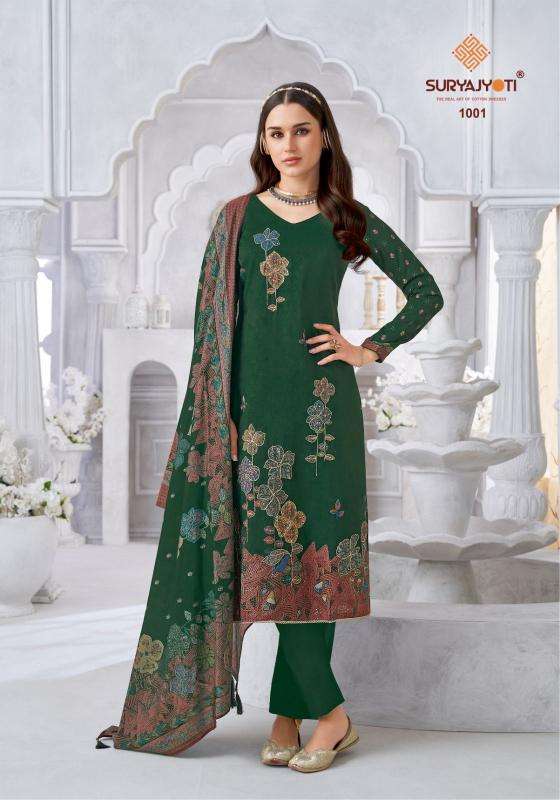


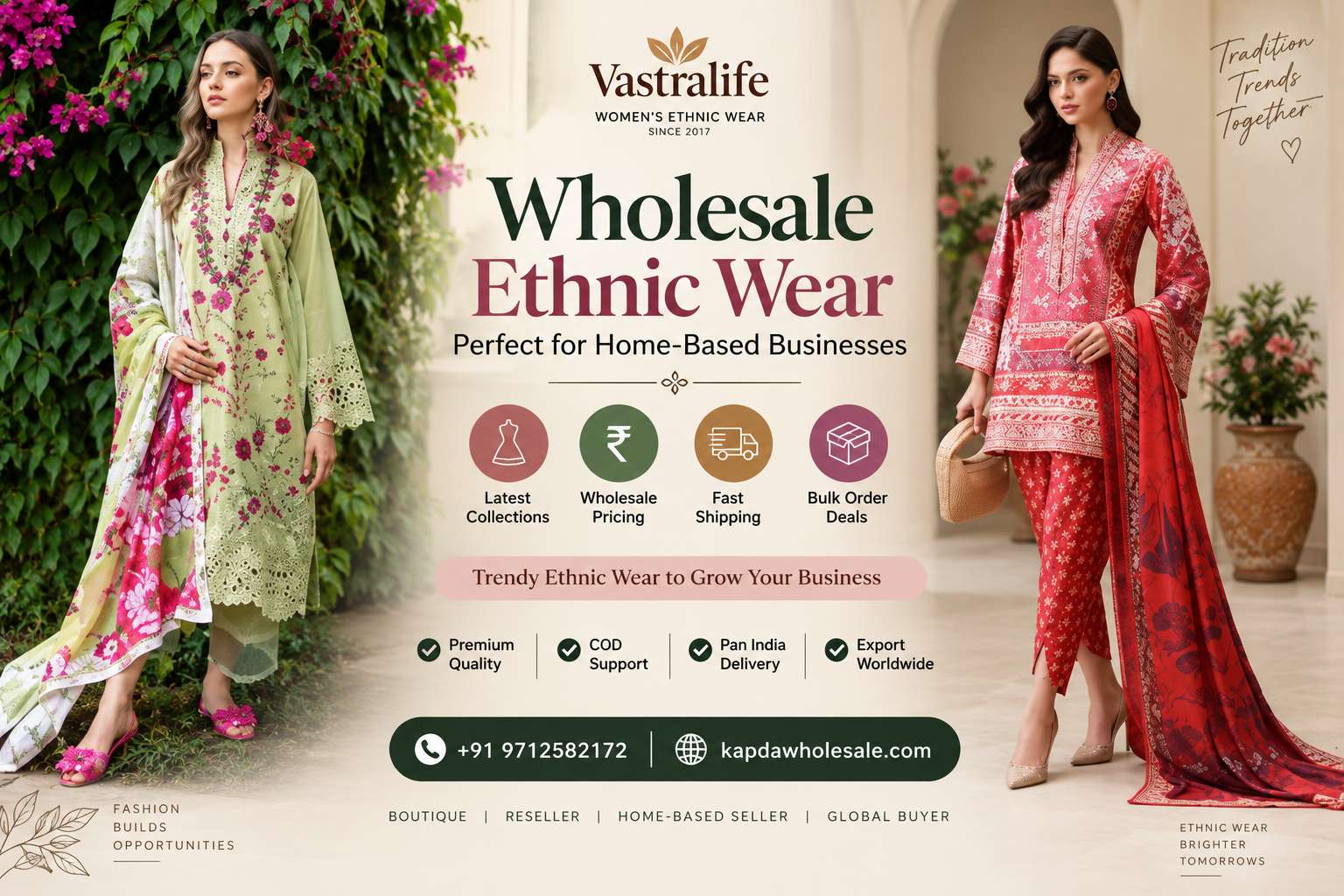
<h1><strong>Best Wholesale Clothing Supplier for Home-Based Businesses in 2026</strong></h1> <p>Starting a clothing business from home can be a practical way to enter fashion retail without immediately investing in a physical showroom. The success of this model, however, depends heavily on what you buy, how much stock you keep and whether your wholesale source can provide collections that match the budgets and preferences of your customers. With disciplined purchasing, home-based sellers can build a focused women’s ethnic wear business using WhatsApp, Instagram, Facebook, personal networks and repeat customers while gradually increasing inventory as sales grow.</p> <h2><strong>Introduction</strong></h2> <p>Choosing the <strong>best wholesale clothing supplier for home-based businesses</strong> is different from sourcing for a large retail showroom. Home-based sellers usually have limited storage, tighter working capital and a stronger need for products that can rotate quickly. Buying too much inventory at the beginning can block money that could otherwise be used to reorder proven designs.</p> <p>For sellers building a business in <strong>2026</strong>, categories such as salwar kameez, kurti sets, kurtis, dress materials, tunics, sarees and festive ethnic wear can provide multiple selling opportunities. The right product mix depends on your customers rather than on how many catalogues a wholesaler can offer.</p> <p><strong>kapdawholesale.com</strong> can help home-based sellers, boutique owners, resellers and wholesale buyers explore women’s clothing collections for wholesale purchasing. Buyers should shortlist products according to customer demand and then confirm the current price, stock, MOQ, size details and applicable dispatch terms before ordering.</p> <p>Surat remains an important sourcing centre for Indian textiles and ethnic fashion. Buyers searching around the <strong>surat textile market</strong>, <strong>Ring Road</strong> and <strong>Sahara Darwaza</strong> encounter a large network of textile trading, processing, distribution and garment <strong>manufacturing</strong>. Online wholesale sourcing can give home-based businesses access to relevant collections without requiring a physical Surat visit for every purchase.</p> <h2><strong>Start Your Home-Based Clothing Business with a Fixed Buying Budget</strong></h2> <p>The first wholesale order should not be based on how much stock looks attractive. Decide how much money you can invest without creating unnecessary pressure on household or business cash flow. That figure becomes your inventory budget.</p> <p>A home-based seller may eventually carry hundreds of products, but the first objective is to discover what customers actually buy. A controlled opening inventory makes this learning process less expensive.</p> <h3><strong>Do Not Spend the Entire Budget on Your First Order</strong></h3> <p>If your total planned inventory investment is fixed, consider keeping a portion available for reorders rather than spending everything immediately. Once customers start purchasing, you will receive much clearer signals about preferred designs, fabrics, colours, sizes and price points.</p> <p>Money retained for reorders allows you to increase stock in successful categories instead of remaining stuck with only the assumptions made before launching.</p> <h3><strong>Calculate Your Selling Price Before Buying</strong></h3> <p>Do not purchase a product first and decide the retail rate later. Check the wholesale product price, applicable shipping expense and other order costs, and then determine whether the expected customer selling price provides a commercially suitable margin.</p> <p>This simple calculation can prevent a home seller from accepting orders that generate turnover but very little actual profit.</p> <h3><strong>Keep Storage Capacity in Mind</strong></h3> <p>Home-based businesses have a physical limitation that large showrooms may not face. Clothing needs organised, clean and protected storage. Buying more stock than you can manage can create inventory confusion and make order fulfilment slower.</p> <p>Start with an assortment you can catalogue, store and retrieve easily. Increase inventory as both sales and operational capacity improve.</p> <h2><strong>Choose Fast-Moving Women’s Clothing Categories First</strong></h2> <p>The <strong>best wholesale clothing supplier for home-based businesses</strong> should provide products relevant to your target audience rather than forcing you into categories your customers do not need. For a new seller, two or three focused categories can be more practical than ten unrelated ones.</p> <h3><strong>Salwar Kameez for a Broad Ethnic Wear Audience</strong></h3> <p><strong>Wholesale salwar kameez</strong> can serve customers looking for traditional, regular, festive and occasion-based clothing. Depending on the product, sellers can offer printed designs, embroidered styles, premium collections and seasonal options.</p> <p>Before buying, confirm the fabric, product components, catalogue quantity and applicable order conditions. If the set includes a dupatta and bottom fabric or ready-made bottom, make sure you understand exactly what the customer will receive.</p> <h3><strong>Kurti Sets for Ready-to-Wear Buyers</strong></h3> <p>Kurti sets can be useful for customers who want a coordinated outfit without separately matching a kurti, bottom and dupatta. They can also create a higher perceived value when the complete combination is visually strong.</p> <p>For ready-made sets, check size availability carefully. A design can generate plenty of interest but still create lost sales if your customers' required sizes are repeatedly unavailable.</p> <h3><strong>Kurtis for Regular Repeat Sales</strong></h3> <p><strong>Wholesale kurtis</strong> can help home-based sellers cover several budgets and use cases. Everyday kurtis, printed designs, embroidered pieces and more festive options can be selected according to your audience.</p> <p>Rather than buying many similar styles, create variety through silhouettes, prints, fabrics and price bands. This makes a smaller home collection feel broader to customers.</p> <h3><strong>Tunics for Customers Seeking Contemporary Options</strong></h3> <p>Tunics can complement traditional ethnic wear and help sellers reach customers looking for contemporary everyday styling. Add them when they match your audience rather than simply to increase the number of categories.</p> <p>Testing a new category in controlled quantities can help determine whether it deserves more investment in future buying cycles.</p> <h2><strong>Build Your First Wholesale Order Around Real Customers</strong></h2> <p>One of the advantages of a home-based business is direct contact with customers. Friends, relatives, neighbours, existing WhatsApp contacts and social followers can provide useful demand signals before you commit to large inventory.</p> <h3><strong>Identify Your Main Customer Group</strong></h3> <p>Ask yourself whether your customers are primarily working women, homemakers, college-age buyers, festive shoppers, premium buyers or budget-focused customers. Your wholesale selection should reflect the strongest customer group first.</p> <p>A seller serving customers looking for affordable everyday clothing should not put most of the opening budget into premium occasion wear. Similarly, a home boutique serving higher-value customers may need stronger fabrics, detailing and presentation.</p> <h3><strong>Identify the Price Range Customers Actually Purchase</strong></h3> <p>Customers may appreciate expensive designs while still purchasing within a much narrower budget. Track completed sales instead of relying only on compliments and social engagement.</p> <p>If most completed orders fall within a particular retail range, build a substantial part of the next wholesale purchase around products that can profitably fit that segment.</p> <h3><strong>Use Previews to Test New Collections</strong></h3> <p>Where appropriate for your selling model, show selected upcoming products to existing customers and observe serious enquiries. Questions about price, size, delivery and payment can provide stronger buying signals than likes or emoji reactions.</p> <p>Do not interpret every positive response as a confirmed sale. Use previews to improve your judgement, not as a substitute for inventory discipline.</p> <h2><strong>Use a Simple Stock Formula for Your Home Clothing Business</strong></h2> <p>New home-based sellers can divide the purchasing budget into different risk levels. The exact percentages should be adjusted according to your own business, but a structured approach prevents random wholesale buying.</p> <h3><strong>60% for Core Sellable Products</strong></h3> <p>Allocate the largest portion to products you expect to have the broadest customer appeal. Once you have sales history, this section should increasingly consist of categories and price points already proven in your business.</p> <p>For a new seller, these might include accessible kurti sets, salwar suits or regular ethnic wear selected for your main customer segment.</p> <h3><strong>25% for Fresh and Seasonal Collections</strong></h3> <p>Use another portion for new arrivals, festival designs and seasonal products. Fresh stock gives repeat customers a reason to check your WhatsApp status, social pages or product catalogue regularly.</p> <p>The goal is freshness without making the complete business dependent on short-lived fashion trends.</p> <h3><strong>15% for Premium or Experimental Products</strong></h3> <p>A smaller allocation can be used to test a premium collection, new silhouette, different fabric or emerging trend. If customers purchase it, increase the quantity during the next buying round.</p> <p>This allows a home seller to experiment without exposing too much working capital to an untested product category.</p> <img src="https://kapdawholesale.com/images/product/2026/06/farida-fab-ramsha-nx-affordable-salwar-kameez-in-ahmedabad-2026-06-08_14_06_43.jpeg" alt="Wholesale salwar kameez for home based clothing businesses in 2026" /> <h2><strong>What to Check Before Choosing a Wholesale Clothing Supplier</strong></h2> <p>Product photographs are important for online sourcing, but they should not be the only factor used to choose a supplier. Home-based sellers need a wholesale buying process that remains manageable as order volume increases.</p> <h3><strong>Check Whether the Product Range Matches Your Customers</strong></h3> <p>A supplier offering thousands of products is not automatically useful if very few suit your customer profile. Look for relevant depth within the categories you intend to sell.</p> <p>If salwar suits generate most of your orders, for example, access to multiple suitable collections within that category can be more valuable than having dozens of unrelated product types.</p> <h3><strong>Confirm Current Stock Before Payment</strong></h3> <p>Wholesale inventory can change quickly. Confirm whether the selected catalogue or design is currently available before finalising payment, particularly for fast-moving and seasonal collections.</p> <p>This becomes even more important when you have already received customer interest in a particular design.</p> <h3><strong>Understand MOQ and Catalogue Conditions</strong></h3> <p>Minimum order quantity directly affects how much capital a home-based seller needs. Confirm whether a product is available catalogue-wise, in a specific minimum quantity or under another purchasing condition.</p> <p>A seemingly attractive wholesale price may not suit a small business if the required quantity is much larger than its current sales capacity.</p> <h3><strong>Confirm Product Details Before Selling</strong></h3> <p>Check fabric, product components, sizes and other relevant specifications. Accurate information becomes especially important when customers are purchasing from photographs and videos rather than examining the product physically.</p> <h2><strong>Buy from Surat Without Travelling for Every Wholesale Order</strong></h2> <p>Physical sourcing trips can be useful, particularly when developing supplier relationships or understanding new categories, but a home-based seller may not want to travel for every restock.</p> <p>Digital sourcing through <strong>kapdawholesale.com</strong> can help buyers explore collections remotely and shortlist products before placing wholesale orders. This can be especially practical for sellers located outside Gujarat.</p> <h3><strong>Use Surat’s Product Variety Selectively</strong></h3> <p>The large variety available through the <strong>surat textile market</strong> can tempt new buyers into over-purchasing. Maintain a written product requirement and budget before exploring collections.</p> <p>Whether sourcing from areas connected with <strong>Ring Road</strong>, <strong>Sahara Darwaza</strong> or through an online wholesale platform, your buying decision should remain connected to your customers and available capital.</p> <h3><strong>Compare Quality Along with Price</strong></h3> <p>Home-based sellers often depend heavily on referrals and repeat business. Selling a poor-quality product to save a small amount on wholesale cost can therefore have a larger long-term effect on customer trust.</p> <p>Compare fabric, stitching, finishing, design and overall presentation with the intended selling price. The goal is to provide value appropriate to the customer's budget.</p> <h2><strong>Turn WhatsApp into a Practical Home-Based Sales Channel</strong></h2> <p>WhatsApp can be especially useful for home-based clothing businesses because sellers can communicate directly with existing customers, share new collections and follow up on enquiries without requiring a physical store.</p> <h3><strong>Do Not Send Every Catalogue to Every Customer</strong></h3> <p>Segment customers according to previous interest. A customer who repeatedly buys salwar suits can receive relevant new suit collections, while someone interested in contemporary clothing can receive kurtis or tunics.</p> <p>More relevant product sharing can make customer communication feel useful instead of overwhelming.</p> <h3><strong>Use Clear Product Information</strong></h3> <p>When sharing a product, include the confirmed details customers need to make a purchase decision. Avoid creating unnecessary confusion by sending incomplete information and answering the same basic questions repeatedly.</p> <h3><strong>Follow Up on Serious Enquiries</strong></h3> <p>If a customer asks about size, colour, availability or payment and then stops responding, a polite follow-up can help recover potential sales. Focus your time on customers demonstrating genuine purchase intent rather than repeatedly messaging every contact.</p> <h2><strong>Plan Your Profit Before Expanding the Business</strong></h2> <p>The <strong>best wholesale clothing supplier for home-based businesses</strong> should support a business model in which stock can be purchased at a workable cost and sold at a sustainable retail margin. Revenue alone does not show whether the business is profitable.</p> <h3><strong>Separate Sales Revenue from Profit</strong></h3> <p>If a product sells for a particular amount, the complete amount is not your profit. Deduct the product cost and applicable order and selling expenses to understand what remains.</p> <p>Keeping simple records from the beginning makes it easier to see which categories are genuinely contributing to the business.</p> <h3><strong>Reinvest into Products That Actually Sell</strong></h3> <p>Instead of using every profit cycle to introduce a new category, put part of the money back into proven products. Consistent reordering of successful categories can create a more stable foundation for growth.</p> <h3><strong>Increase Inventory Gradually</strong></h3> <p>As monthly orders increase, expand inventory according to real sales. This can include greater size depth, more designs within proven categories and selected additions to complementary product segments.</p> <p>A home-based seller can therefore grow from a small inventory into a larger retail operation without making one oversized speculative purchase.</p>
<h2><strong>Internal Linking for Home-Based Wholesale Clothing Buyers</strong></h2> <p>Home-based sellers who want to build a strong ethnic wear assortment can explore <a href="https://www.kapdawholesale.com/printed-salwar-kameez">printed salwar kameez</a> collections according to their customers' preferred fabrics, designs, budgets and seasonal requirements. Instead of buying every available catalogue, shortlist products that fit your existing customer profile and expected retail price range.</p> <p>Sellers who want to add contemporary products alongside traditional clothing can also explore <a href="https://www.kapdawholesale.com/tunics">wholesale tunics</a> and test selected designs with customers before expanding the category. This approach can help maintain variety without unnecessarily increasing inventory risk.</p> <h2><strong>How to Create a Profitable Product Mix at Home</strong></h2> <p>A successful home-based clothing business does not need hundreds of designs on the first day. It needs the right combination of products at different price points. When customers can choose between affordable everyday pieces, mid-range coordinated sets and selected premium styles, a smaller inventory can still serve different buying needs.</p> <h3><strong>Keep an Entry-Level Price Range</strong></h3> <p>Affordable products can attract first-time buyers and customers who purchase clothing frequently. These products may also work well for WhatsApp selling, local reselling and regular repeat orders.</p> <p>When selecting budget products, do not evaluate them only by the lowest wholesale rate. Check whether the overall quality, fabric, stitching and appearance are appropriate for the retail price you plan to charge.</p> <h3><strong>Add a Strong Mid-Range Collection</strong></h3> <p>For many home-based sellers, the middle price segment can become an important part of the business because customers may want something better than basic daily wear without moving into expensive occasion wear.</p> <p>Kurti sets, coordinated ethnic sets, printed salwar suits and lightly embellished collections can be considered according to your market. Track which products generate repeat sales and allocate more buying capital to those categories.</p> <h3><strong>Keep Premium Products Selective</strong></h3> <p>Premium products can increase average order value, but they should be purchased according to actual customer demand. A few carefully selected premium pieces can make your catalogue look stronger without locking too much capital into slower-moving inventory.</p> <p>Home-based sellers serving customers who attend weddings, festivals and family functions can increase premium stock before relevant buying periods and reduce it when demand returns to regular everyday wear.</p> <img src="https://kapdawholesale.com/images/product/2026/06/deepsy-mushq-vol-3-salwar-suit-manufacturers-in-hyderabad-2026-06-02_13_30_23.jpeg" alt="Wholesale salwar suit collection for home based clothing sellers and resellers" /> <h2><strong>Plan Festival and Seasonal Wholesale Purchases Early</strong></h2> <p>Festival inventory can create a strong selling opportunity for home-based businesses, but timing is critical. Stock purchased too early can block working capital, while stock purchased too late may arrive after customers have already completed their shopping.</p> <h3><strong>Work Backward from the Customer Buying Period</strong></h3> <p>Do not plan only around the festival date. Customers often begin shopping well before the actual celebration. Determine when your customers normally start purchasing and make sure your wholesale order, receiving, photography and promotion are completed before that period.</p> <p>This is especially important when sourcing products from another city or for an <strong>export</strong> market where transportation can require additional time.</p> <h3><strong>Choose Festival Stock According to Local Demand</strong></h3> <p>A product that performs strongly in one market may not generate the same response elsewhere. Sellers should select colours, fabrics, styling and price ranges according to their own customers.</p> <p>This principle becomes particularly important for home-based sellers supplying customers in <strong>Nepal</strong>, <strong>Australia</strong> and <strong>Canada</strong>. Indian ethnic wear has buyers in international markets, but product selection should still reflect the local customer base, climate, occasion and purchasing budget.</p> <h3><strong>Do Not Turn Seasonal Stock into Permanent Dead Stock</strong></h3> <p>As the peak buying period approaches its end, monitor remaining quantities carefully. Avoid continuing to reorder a seasonal style simply because it sold well earlier in the cycle.</p> <p>The objective is to sell through most seasonal inventory while demand is active and then move working capital into the next relevant collection.</p> <h2><strong>Wholesale Clothing for International Home-Based Resellers</strong></h2> <p>Home-based ethnic wear businesses are not limited to India. Sellers serving Indian and South Asian communities overseas can source collections from India and resell them through social media, appointments, community networks and local delivery models.</p> <h3><strong>Calculate Landed Cost Instead of Only Indian Wholesale Price</strong></h3> <p>An international buyer should not decide profitability using only the product price in India. Consider the applicable freight and destination-related expenses when calculating the landed cost.</p> <p>Once you have a realistic landed cost, compare it with the expected local selling price. This helps determine whether a particular product or catalogue provides enough room for your business model.</p> <h3><strong>Consolidate Purchases Carefully</strong></h3> <p>International transportation can affect the economics of smaller orders. Buyers may find it useful to plan purchases systematically rather than placing frequent unstructured orders. The appropriate strategy depends on order size, destination and applicable shipping arrangement.</p> <p>At the same time, do not purchase excessive stock simply to increase shipment size. Inventory still needs to match realistic customer demand.</p> <h3><strong>Allow Additional Time for Festival Orders</strong></h3> <p>If your products are being sourced for Diwali, Navratri, Eid, wedding events or another specific sales period, allow sufficient time for sourcing and international movement. Late-arriving festival stock can significantly reduce the available selling window.</p> <h2><strong>How to Use Instagram and Facebook to Sell Wholesale-Sourced Clothing</strong></h2> <p>Home-based sellers can use social platforms as digital shop windows. The objective is not simply to collect followers but to turn relevant product content into enquiries and confirmed orders.</p> <h3><strong>Post Products with Clear Buying Information</strong></h3> <p>When publishing a product, give customers enough confirmed information to understand what is being offered. Mention relevant details such as product type, available size information and ordering method when known.</p> <p>A clear call to action such as “Message for current availability” can be more useful than a caption containing only generic fashion phrases.</p> <h3><strong>Use Short Videos for Product Discovery</strong></h3> <p>Reels and short-form videos can help customers see the complete silhouette, colour combination and overall appearance of a garment. A home seller does not need an elaborate studio for every post; consistent, clear presentation is more important.</p> <h3><strong>Move Serious Customers into Direct Communication</strong></h3> <p>Social media can generate discovery, while direct messaging or WhatsApp can be used for detailed product discussion and order confirmation. Maintain organised records so enquiries from multiple channels do not become difficult to manage.</p> <h2><strong>Why Repeat Customers Matter More Than One-Time Sales</strong></h2> <p>The economics of a home-based business can improve when existing customers return for additional purchases. You already understand their approximate preferences, and they already know your product and service experience.</p> <h3><strong>Remember What Different Customers Purchase</strong></h3> <p>Keep simple notes about previous purchases. If one customer regularly buys cotton daily wear and another prefers premium festive suits, you can share relevant new arrivals instead of sending identical catalogues to everyone.</p> <h3><strong>Give Existing Customers First Access to Relevant New Arrivals</strong></h3> <p>When you receive a collection that closely matches an existing customer's preferences, share it directly. Personalised product selection can make a small home-based business more useful to customers than an impersonal catalogue containing thousands of products.</p> <h3><strong>Protect Customer Trust with Accurate Information</strong></h3> <p>Do not promise a fabric, colour, delivery date or product feature unless it has been confirmed. Long-term customer relationships are more valuable than securing a single order using information that may later prove inaccurate.</p> <h2><strong>When Should a Home-Based Seller Increase Wholesale Buying?</strong></h2> <p>Inventory should increase when sales data supports expansion, not simply because the business has been operating for a certain number of months. A seller receiving regular orders can gradually increase stock depth while maintaining control over cash flow.</p> <h3><strong>Increase Stock When Products Sell Repeatedly</strong></h3> <p>If a category consistently sells and customers continue requesting similar products, allocate more of the next purchasing budget to it. This is a stronger signal than increasing inventory because a collection appears fashionable.</p> <h3><strong>Add New Categories When Customers Request Them</strong></h3> <p>Suppose you primarily sell salwar suits but customers repeatedly ask for kurtis or tunics. That can justify a controlled category test. Start small, track sales and expand only if the category performs.</p> <h3><strong>Consider a Boutique or Showroom Only When the Business Supports It</strong></h3> <p>A home-based model can remain profitable without immediately moving into commercial premises. A physical boutique introduces additional fixed expenses. Consider expansion when customer volume, stock requirements and sales economics make the additional cost commercially reasonable.</p> <h2><strong>Common Wholesale Buying Mistakes Home-Based Sellers Should Avoid</strong></h2> <h3><strong>Buying Because a Product Looks Good to You</strong></h3> <p>Your personal taste and your customer's buying behaviour are not always the same. Select products using actual enquiries and completed sales wherever possible.</p> <h3><strong>Putting Too Much Money into One Catalogue</strong></h3> <p>A large quantity of one untested design creates concentration risk. Unless customer demand is already established, maintain reasonable variety within your available purchasing budget.</p> <h3><strong>Ignoring Size Demand</strong></h3> <p>Ready-made clothing sales depend heavily on size availability. Track which sizes your customers request most frequently and use that information while selecting future products.</p> <h3><strong>Ignoring Slow-Moving Stock</strong></h3> <p>Review inventory regularly. Products that remain unsold should not disappear into storage. Identify why they are not moving and decide whether improved presentation, customer targeting or an appropriate sales offer can help clear them.</p> <h3><strong>Confusing Revenue with Profit</strong></h3> <p>High sales figures do not necessarily mean high profit. Maintain records of product costs and applicable business expenses so that you know what the business actually earns.</p> <h2><strong>Why Surat Sourcing Can Support Home-Based Clothing Businesses</strong></h2> <p>Surat’s textile ecosystem provides access to numerous women’s clothing categories across different price segments. Buyers can source everyday products, festive collections and premium ethnic wear depending on their business model.</p> <p>The <strong>surat textile market</strong> ecosystem around areas such as <strong>Ring Road</strong> and <strong>Sahara Darwaza</strong> is associated with extensive textile trading and distribution activity. The broader city also supports fabric processing, garment <strong>manufacturing</strong> and wholesale supply chains.</p> <p>For sellers who cannot visit Surat regularly, online sourcing through <strong>kapdawholesale.com</strong> provides another way to explore products and plan wholesale purchases remotely.</p> <h2><strong>Vastralife Wholesale and Export Experience Since 2017</strong></h2> <p>Vastralife brings wholesale and <strong>export experience since 2017</strong> to women’s fashion sourcing. Industry experience is particularly useful when serving different types of buyers, including home-based sellers, boutique owners, shop owners, showroom operators, resellers and wholesale buyers.</p> <p>The focus on <strong>premium product quality</strong>, industry knowledge and access to women’s ethnic wear can support buyers who want to build a more structured purchasing process rather than sourcing products randomly from multiple places.</p> <p>Through <strong>kapdawholesale.com</strong>, buyers can explore collections and identify products suited to their target market. Current availability, MOQ, prices and applicable commercial conditions should always be confirmed when placing an order.</p> <h2><strong>Customer FAQs</strong></h2> <h3><strong>1. Where can I buy wholesale clothing for a home-based business?</strong></h3> <p>Home-based sellers can explore women’s ethnic wear collections through <strong>kapdawholesale.com</strong>. Shortlist products according to your customers and confirm the latest stock, price, MOQ and applicable order terms before purchasing.</p> <h3><strong>2. What clothing should I sell when starting from home?</strong></h3> <p>Start with products that match your target customers. Depending on demand, this may include salwar kameez, kurtis, kurti sets, dress materials, tunics, sarees or selected festive wear. Avoid starting with too many unrelated categories.</p> <h3><strong>3. How much stock should I buy for a new home-based clothing business?</strong></h3> <p>There is no universal quantity. Base the investment on available working capital, storage capacity, supplier MOQ and realistic customer demand. Keeping part of your budget available for successful reorders can reduce inventory risk.</p> <h3><strong>4. How do I choose the best wholesale clothing supplier for home-based businesses?</strong></h3> <p>Compare relevant product variety, current stock availability, wholesale pricing, MOQ, product information, quality and ordering conditions. The supplier should fit your business size and target customer rather than simply offering the largest catalogue.</p> <h3><strong>5. Can I start a clothing business through WhatsApp?</strong></h3> <p>Yes. WhatsApp can be used to share collections, communicate with customers and receive enquiries. Keep product and order information organised and confirm stock before accepting a customer order.</p> <h3><strong>6. Is Surat suitable for sourcing women’s clothing wholesale?</strong></h3> <p>Surat has a substantial textile and garment ecosystem, making it a major sourcing location for multiple women’s wear categories and price ranges.</p> <h3><strong>7. Can I buy wholesale clothing online without visiting Surat?</strong></h3> <p>Yes. Online wholesale sourcing allows buyers to explore collections remotely. Check current product details and commercial terms before completing an order.</p> <h3><strong>8. Can home-based sellers order clothing for overseas resale?</strong></h3> <p>International sourcing may be possible depending on destination and order requirements. Overseas sellers should calculate freight, delivery time and applicable destination costs before deciding their final retail price.</p> <h3><strong>9. What is the best way to reduce dead stock?</strong></h3> <p>Buy according to customer demand, test new categories in controlled quantities, monitor stock age and use actual sales data when planning reorders. Avoid repeatedly purchasing products simply because they are trending.</p> <h3><strong>10. Should I buy cheap wholesale clothing to increase my margin?</strong></h3> <p>The lowest purchase price does not automatically create the highest profit. Evaluate quality, customer appeal, expected selling price and likely stock turnover together.</p> <h2><strong>Start Your Home-Based Wholesale Clothing Business Today</strong></h2> <p>The <strong>best wholesale clothing supplier for home-based businesses</strong> should help you source products that fit your customers, budget and growth stage. Start with a focused collection, monitor what sells, preserve working capital for reorders and gradually expand into additional categories when demand supports the decision.</p> <p>Explore <strong>Latest Collections</strong>, <strong>Wholesale Pricing</strong> and <strong>Trendy Ethnic Wear</strong> for your home-based clothing business. Enquire about <strong>Fast Shipping</strong>, available <strong>COD Support</strong>, <strong>Bulk Order Deals</strong> and <strong>Quality Products Starting From ₹299</strong>.</p> <p>Whether you are starting as a home-based seller, Instagram reseller, WhatsApp seller, boutique owner, shop owner or wholesale buyer, build your inventory around products your customers are genuinely prepared to purchase.</p> <p><strong>Wholesale & Bulk Order Enquiries</strong><br> <strong>Contact:</strong> +91 9712582172<br> <strong>Website:</strong> kapdawholesale.com</p> <p>Browse the latest women’s clothing collections, shortlist products suited to your market, confirm current wholesale terms and start building a more focused and profitable inventory for 2026.</p>