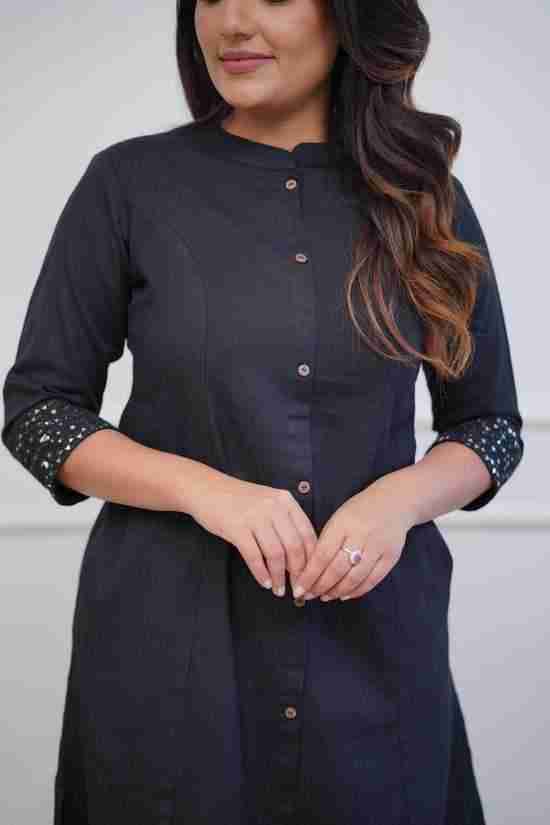
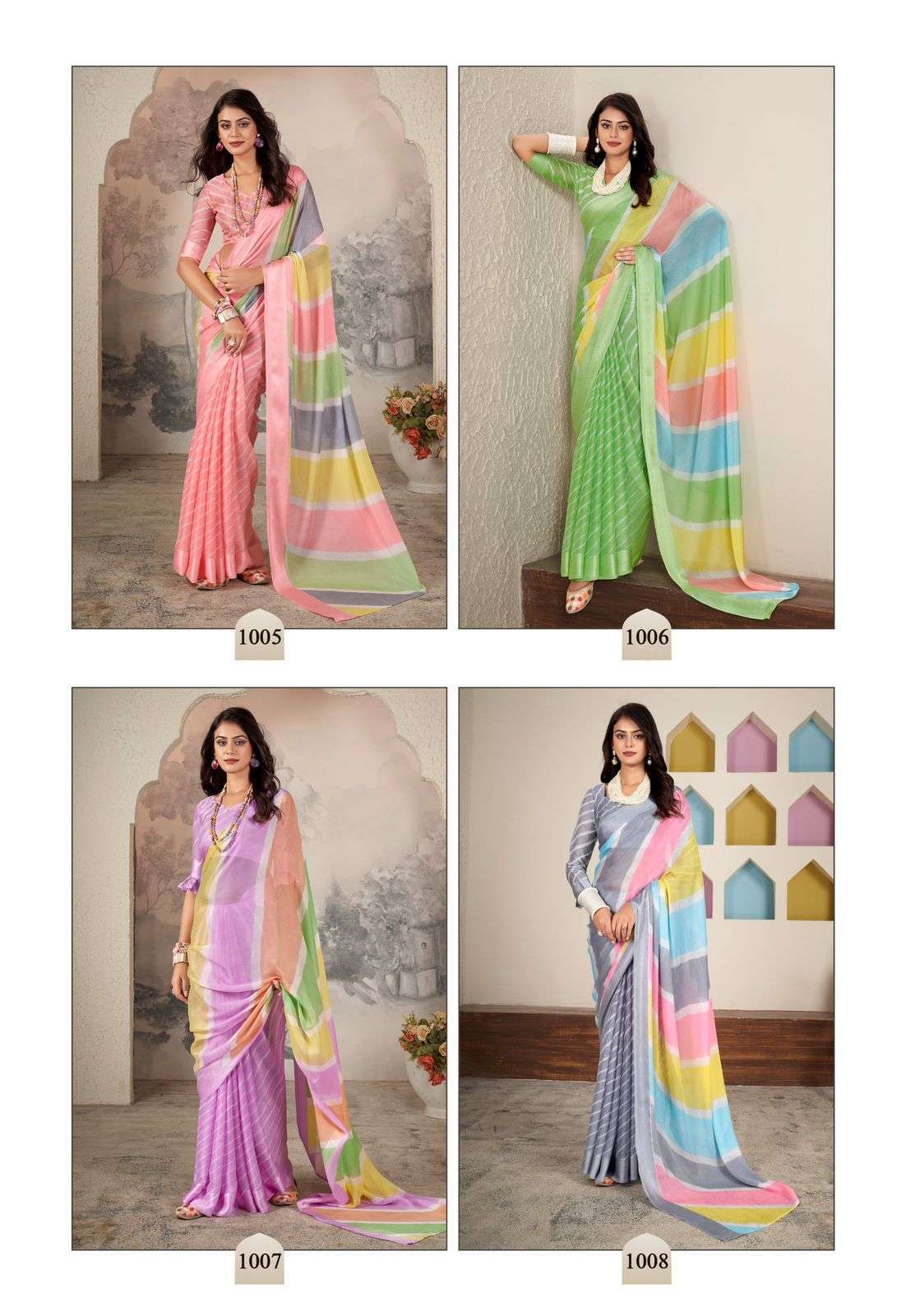
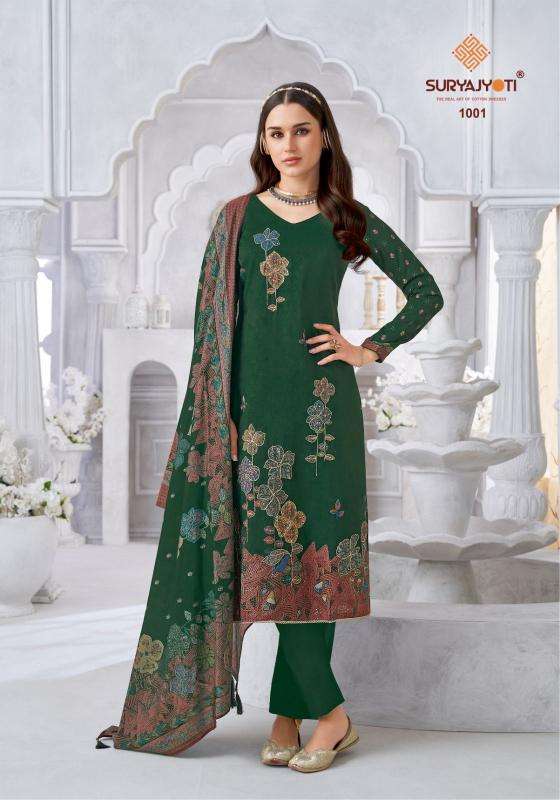
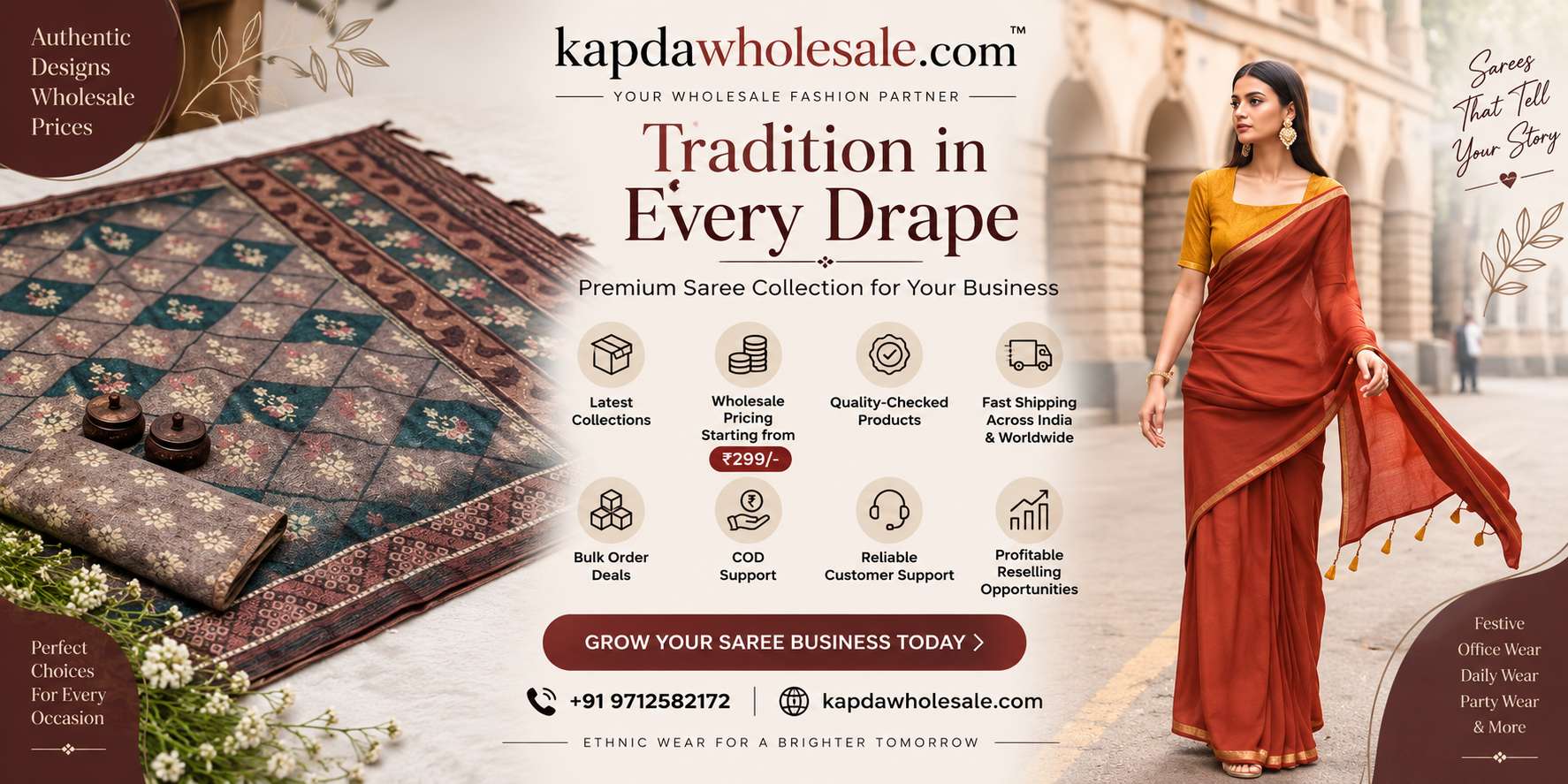
<h1><strong>Best Saree Supplier for Resellers in India 2026 – Wholesale Sarees at Best Price</strong></h1> <p>Building a profitable saree reselling business starts with products that customers actually want to buy. For home-based sellers, boutiques, retail shops, online resellers and established showrooms, the right collection needs to combine attractive designs, dependable quality, workable wholesale margins and regular new arrivals. Kapdawholesale.com brings these requirements together for buyers looking to source Indian sarees directly for resale in 2026.</p> <h2><strong>Introduction</strong></h2> <p>The saree business has changed significantly with the growth of WhatsApp selling, Instagram stores, online boutiques and social commerce. A reseller no longer needs a large showroom or huge inventory to start selling ethnic wear. What matters more is having access to a dependable <strong>wholesale saree supplier</strong> that can provide fresh designs at prices that leave enough room for resale profit.</p> <p>At the same time, established retailers have different requirements. Shop owners and showroom buyers need variety, repeat stock opportunities and collections covering multiple customer budgets. Boutique owners often prefer distinctive designs that are not available everywhere, while online sellers need visually attractive products that can generate enquiries from photographs and videos.</p> <p>This is where choosing the <strong>best saree supplier for resellers</strong> becomes commercially important. Instead of purchasing only on the basis of the lowest price, successful buyers look at design freshness, fabric, finishing, catalogue presentation, supplier experience, product range, shipping support and the potential retail margin of each collection.</p> <p>Kapdawholesale.com is built around this wholesale sourcing requirement. Buyers can explore sarees for everyday retail, festive sales, wedding demand, premium customers and seasonal inventory while purchasing according to their own business model.</p> <h2><strong>Why Resellers Need the Right Wholesale Saree Supplier</strong></h2> <p>A saree reseller earns when the difference between purchase cost and final selling price is commercially worthwhile. However, margin alone does not guarantee success. Products also need to move from inventory to customers quickly. A saree purchased cheaply but left unsold for months can be less profitable than a slightly higher-priced design that sells repeatedly.</p> <p>For this reason, experienced resellers normally evaluate three things together: <strong>wholesale price, customer demand and product presentation</strong>. A good supplier helps buyers access products across these three requirements instead of simply offering a large quantity of random designs.</p> <h3><strong>Latest Designs Help Generate Fresh Customer Interest</strong></h3> <p>Customers who regularly shop for ethnic wear want to see something new. This is particularly true for WhatsApp resellers and online boutiques, where the same customer may see new catalogues several times every week.</p> <p>Fresh collections give resellers a reason to contact customers again. New colours, borders, prints, fabrics and occasion-based styles can be presented as new arrivals rather than repeatedly promoting older inventory. Regular catalogue rotation can therefore support both customer engagement and repeat purchasing.</p> <h3><strong>Wholesale Pricing Protects Your Resale Margin</strong></h3> <p>Every reseller should calculate the complete product cost before deciding a selling price. The purchase rate, shipping expense, packaging and other applicable costs should be considered together. Once the landed cost is clear, the reseller can decide a retail price suitable for the local market and expected profit.</p> <p>A competitive <strong>saree wholesale price</strong> is particularly important for online sellers because customers can compare products quickly. However, competing only on price can reduce profitability. A better approach is to create multiple price segments so customers can choose between affordable, mid-range and premium products.</p> <h3><strong>Product Quality Builds Repeat Business</strong></h3> <p>For resellers, the real value of a customer is often in the second and third order rather than the first purchase. Product quality therefore becomes part of the reseller's own reputation.</p> <p>Fabric appearance, finishing, print clarity, colour combination, border work and overall presentation should match the positioning of the product. Premium customers may be willing to spend more, but they also expect better finishing. A reliable supplier should therefore support both value-oriented and premium product segments.</p> <h2><strong>Best Saree Collections for Resellers in 2026</strong></h2> <p>The strongest inventory is usually not built around one saree type. A balanced reseller catalogue gives customers options for different occasions, budgets and style preferences. In <strong>2026</strong>, sellers can benefit from maintaining a combination of everyday, festive and premium sarees instead of investing their entire budget in one segment.</p> <h3><strong>Cotton Sarees for Regular Retail Demand</strong></h3> <p>Cotton sarees can provide consistent opportunities for resellers because they work across everyday wear, office wear, casual occasions and gifting. Printed cotton sarees, woven styles, soft cotton varieties, handloom-inspired designs and contemporary patterns can appeal to different age groups.</p> <p>For home-based sellers, cotton sarees can also be useful for building repeat customers. Buyers who find a comfortable saree at the right price may return for different colours and patterns.</p> <h3><strong>Fancy Sarees for Social and Occasion Wear</strong></h3> <p><strong>Fancy sarees wholesale</strong> can attract customers shopping for family functions, parties, festivals and celebrations. These products often perform particularly well when presented through high-quality product images because embroidery, border work and decorative details create immediate visual appeal.</p> <p>Resellers should avoid selecting only heavily embellished designs. A mix of lightweight fancy sarees, elegant party wear products and more elaborate festive options allows the same catalogue to serve customers with different budgets.</p> <h3><strong>Designer Sarees for Boutique Customers</strong></h3> <p>Boutique customers often look for something different from standard mass-market products. Designer-inspired drapes, unique colour combinations, statement borders, embroidered details and premium presentation can give boutique owners stronger positioning.</p> <p>These collections can also support better margins when the product quality and styling justify the selling price. Instead of competing with every local seller, a boutique can build its identity around carefully selected products.</p> <h3><strong>Party Wear and Festive Sarees</strong></h3> <p>Festival and wedding seasons can create concentrated demand. Retailers preparing inventory in advance can stock party wear sarees, festive sarees, silk-look designs, embroidered collections and other occasion-oriented styles.</p> <p>Planning matters here. Buying after demand has already peaked can leave a seller with limited selling time. Wholesale buyers should identify their strongest sales periods and begin sourcing early enough to promote products before customers start finalising their purchases.</p> <img src="https://kapdawholesale.com/images/product/2026/06/sr-nera-cotton-wholesale-saree-manufacturers-2026-06-09_16_42_33.jpeg"/> <h2><strong>Surat Wholesale Saree Sourcing Advantage</strong></h2> <p>Surat has developed one of India's most recognised textile trading ecosystems. For saree resellers, sourcing from businesses connected with Surat gives access to an extensive network of textile trading, processing, designing and <strong>manufacturing</strong>.</p> <p>The <strong>Surat textile market</strong> is not limited to one building or one product segment. The broader textile business ecosystem around Ring Road, Sahara Darwaza and surrounding wholesale markets supports a huge range of Indian women's ethnic wear.</p> <p>Traditionally, buyers travelled to Surat and spent significant time visiting different markets and comparing catalogues. Online wholesale sourcing has changed this process. Buyers can now explore products remotely before planning their orders, which can be particularly useful for retailers outside Gujarat.</p> <h3><strong>Ring Road and Surat Textile Business</strong></h3> <p><strong>Ring Road</strong> has long been associated with Surat's textile trade. Buyers from different Indian states visit the area for sarees, dress materials, kurtis and other ethnic wear products. The concentration of textile businesses makes Surat commercially important for resellers who require continuous access to new merchandise.</p> <p>Online sourcing does not replace the importance of the market; it extends its reach. A reseller in another city can access Surat-oriented wholesale collections without making a physical trip for every stock purchase.</p> <h3><strong>Sahara Darwaza and the Wholesale Ecosystem</strong></h3> <p><strong>Sahara Darwaza</strong> is another familiar reference point for textile buyers visiting Surat. The surrounding market ecosystem connects wholesalers, manufacturers, traders and logistics services, helping products move from the textile hub to retailers in different regions.</p> <p>For an online reseller, this supply-side ecosystem matters because regular product movement is essential. A catalogue-based business cannot grow if new merchandise becomes difficult to source after the first few orders.</p> <h2><strong>Kapdawholesale.com for Saree Resellers</strong></h2> <p>Kapdawholesale.com provides a wholesale-focused route for business buyers searching for Indian ethnic wear. Rather than approaching sourcing as ordinary consumer shopping, resellers can evaluate products according to their selling audience, price segment and expected margins.</p> <p>Whether you are operating from home, running a boutique, managing a retail shop or purchasing for a larger showroom, the objective should be to select products that fit your actual customers. This approach helps reduce unnecessary stock while keeping investment focused on commercially relevant collections.</p> <h3><strong>For Home-Based Saree Resellers</strong></h3> <p>A home-based seller does not necessarily need to begin with a large stock commitment. The first objective should be identifying the type of sarees that receive the strongest response from existing contacts and social media audiences.</p> <p>Start with a controlled assortment across a few price levels. Observe which fabrics, colours and styles receive enquiries. Once customer preferences become clearer, purchasing can be increased around proven categories.</p> <h3><strong>For Boutique Owners</strong></h3> <p>Boutiques can use Kapdawholesale.com to search for collections that complement their existing product identity. Instead of buying every new catalogue, boutique owners can select designs based on their customers' spending level, age group, local trends and seasonal demand.</p> <p>A premium boutique may focus more strongly on finishing, exclusivity and presentation, whereas a volume-oriented boutique may prefer faster-moving products at accessible wholesale rates. Both strategies can work when purchasing is aligned with the customer base.</p> <h3><strong>For Shop and Showroom Owners</strong></h3> <p>Retail stores generally need greater variety because customers expect immediate choice. Maintaining multiple fabric types and price segments can help the sales team respond to customers without losing them because the desired range is unavailable.</p> <p>Showrooms can also use wholesale collections to create separate displays for everyday wear, festive wear, wedding shopping, premium sarees and value-oriented products. Clear segmentation makes a larger inventory easier for customers to shop.</p> <h2><strong>Vastralife Wholesale and Export Experience Since 2017</strong></h2> <p>Wholesale sourcing depends heavily on industry understanding. Vastralife has been working in the wholesale and <strong>export</strong> business since <strong>2017</strong>, with experience serving different requirements across ethnic fashion.</p> <p>This background provides practical understanding of what business buyers need: fresh collections, competitive purchasing opportunities, premium product quality, product variety and sourcing suitable for different retail markets.</p> <p>The requirement of a small reseller can be very different from that of an established showroom. Similarly, an overseas boutique may purchase differently from an Indian retailer. Industry experience helps in understanding these different buying patterns rather than treating every wholesale customer in the same way.</p> <h2><strong>Build a Profitable Saree Reselling Inventory</strong></h2> <p>The best saree supplier for resellers is only useful when the reseller also purchases strategically. Inventory planning should begin with the available investment, customer profile and expected sales cycle.</p> <h3><strong>Create Multiple Selling Price Segments</strong></h3> <p>Avoid building the entire inventory around a single retail price. Customers who like the same style may still have very different budgets. Maintaining entry-level, mid-range and premium choices gives sellers more opportunities to convert enquiries into orders.</p> <p>For example, selected <strong>quality products starting from ₹299</strong> can help address price-sensitive demand, while better fabrics and more detailed work can be positioned for customers seeking premium products. Availability and actual pricing should always be checked for the selected catalogue.</p> <h3><strong>Purchase According to Customer Demand</strong></h3> <p>Resellers should maintain simple sales records showing which products sold fastest, which price range generated the highest conversion and which designs received enquiries but did not convert. This information makes the next wholesale purchase more accurate.</p> <p>Buying based on data is especially useful when the catalogue is large. It prevents a reseller from selecting products only according to personal taste while overlooking what customers are actually purchasing.</p> <h3><strong>Keep New Arrivals Moving Regularly</strong></h3> <p>New arrivals create urgency. A reseller can promote fresh products as weekly drops, festive edits, premium picks or limited new collections. This gives customers a stronger reason to keep checking the seller's WhatsApp status, Instagram profile or online store.</p> <p>Kapdawholesale.com can therefore be used not just for one-time sourcing but as part of a regular product discovery process for sellers who want to keep their inventory and digital catalogues fresh.</p>
<h2><strong>Wholesale Sarees for India and International Resellers</strong></h2> <p>A strong saree reselling business does not have to remain limited to one city or even one country. Digital selling has made Indian ethnic fashion accessible to customers across different markets, and wholesale buyers can build collections according to the preferences of their own locations. For sellers purchasing from India, this creates opportunities to serve local customers as well as Indian communities overseas.</p> <p>For international buyers, the product mix should be planned carefully. A boutique serving Indian customers abroad may need festive sarees, wedding collections, elegant party wear and premium traditional styles, while an online reseller may prefer lighter products that are easier to promote and ship. Buyers should always calculate the complete landed <strong>price</strong>, including applicable logistics and destination-related expenses, before deciding their retail margin.</p> <h3><strong>Saree Wholesale Supply for USA Buyers</strong></h3> <p>Retailers and boutique owners in the <strong>USA</strong> can build saree collections around weddings, Indian festivals, cultural events, religious functions and family celebrations. Instead of stocking only heavily embellished products, a balanced assortment can include everyday styles, party wear sarees, designer sarees and premium festive collections.</p> <p>For online sellers targeting Indian communities in the USA, visual presentation is particularly important. Attractive catalogue images, clear product details and carefully selected designs can help sellers present their collections through websites and social platforms before investing in deeper inventory.</p> <h3><strong>Wholesale Sarees for Nepal Resellers</strong></h3> <p><strong>Nepal</strong> is another market where Indian ethnic wear can fit naturally into retail and boutique inventories. Resellers can select sarees for weddings, festivals, gifting and regular ethnic fashion demand. A mixed assortment across multiple price levels can help sellers cater to both value-focused and premium customers.</p> <p>Wholesale buyers should plan quantities according to their sales channel. A physical showroom may require greater stock depth, while a home-based reseller can begin with a more focused selection and expand after identifying best-selling designs.</p> <h3><strong>Indian Sarees for Australia</strong></h3> <p>Retailers in <strong>Australia</strong> serving South Asian communities can consider sarees for Diwali, Navratri, weddings, receptions, community functions and other celebrations. Premium Indian sarees can also help boutiques differentiate themselves from general fashion sellers by offering specialised ethnic collections.</p> <p>International buyers should confirm current stock, order quantities, shipping options and applicable export requirements before finalising an order. Planning these factors in advance makes it easier to calculate the final resale price and expected margin.</p> <img src="https://kapdawholesale.com/images/product/2026/06/vastrangan-kritika-saree-dealers-in-hyderabad-2026-06-08_17_05_10.jpeg" /> <h2><strong>How Resellers Can Increase Profit from Wholesale Sarees</strong></h2> <p>Buying at wholesale rates creates the foundation for margin, but profitability depends on how effectively the inventory is selected, presented and sold. Resellers should think beyond simply purchasing products and uploading photographs. Every collection should have a clear customer segment and selling strategy.</p> <h3><strong>Use a Good-Better-Premium Inventory Strategy</strong></h3> <p>A practical way to structure saree inventory is to divide it into three price and quality segments. The first can include affordable fast-moving products, the second can contain better fabrics and styling for regular boutique customers, and the third can feature premium sarees for buyers willing to spend more for design, quality and occasion wear.</p> <p>This strategy gives customers an immediate choice. A buyer who initially feels that a premium saree is expensive can be shown a mid-range alternative instead of leaving without purchasing. Similarly, customers looking for something special should not be limited to entry-level products.</p> <h3><strong>Do Not Buy Only Because a Product Is Cheap</strong></h3> <p>Low purchasing cost does not automatically create a profitable product. The most important question is whether the saree has sufficient retail demand at a price that produces a healthy margin.</p> <p>Resellers should therefore compare design, fabric, customer profile and selling potential before ordering. A commercially attractive saree is one that combines a workable wholesale rate with a realistic chance of being sold quickly.</p> <h3><strong>Use New Collections to Bring Customers Back</strong></h3> <p>Regular new arrivals can create repeat engagement. Instead of showing hundreds of products at once, resellers can introduce selected collections periodically. A “New This Week” or “Fresh Saree Collection” presentation can make the same customer return to check new stock.</p> <p>This approach works particularly well for WhatsApp sellers, Instagram resellers and online boutiques because each new collection becomes fresh content for marketing.</p> <h2><strong>Internal Linking – Explore More Wholesale Ethnic Wear</strong></h2> <p>Resellers who want to strengthen their saree inventory can explore the latest <a href="https://www.kapdawholesale.com/cotton-saree">cotton saree wholesale</a> selections for everyday, office, casual and regular retail demand. Keeping comfortable sarees alongside festive products can help maintain sales outside major wedding and festival periods.</p> <p>Retailers building a broader women's fashion business can also explore <a href="https://www.kapdawholesale.com/ethnic-wear">ethnic wear wholesale</a> collections. Combining complementary categories allows boutiques and showrooms to serve customers looking for more than one type of Indian outfit.</p> <h2><strong>Why Product Mix Matters More Than a Huge Inventory</strong></h2> <p>Many new resellers assume that a larger inventory automatically creates more sales. In practice, carefully selected stock can often perform better than an oversized collection without a clear strategy.</p> <p>A reseller may have 500 products available but still struggle if most of them target the same customer or price level. In contrast, a focused assortment can cover everyday wear, festive wear, premium products, gifting and occasion dressing while keeping the total investment under control.</p> <h3><strong>Keep Fast-Moving Sarees as the Core Inventory</strong></h3> <p>Products that generate regular enquiries should form the core of the business. If certain cotton sarees, prints, colour combinations or price ranges repeatedly sell well, those patterns can guide future purchasing.</p> <p>The objective is not necessarily to repeat identical products indefinitely. Instead, use previous sales to understand the characteristics customers prefer and look for new designs with similar commercial appeal.</p> <h3><strong>Add Premium Sarees Selectively</strong></h3> <p>Premium collections can raise the average order value, but they should be selected according to the reseller's audience. Sellers dealing with premium locations, boutiques or customers purchasing for weddings and special occasions can dedicate a larger share of inventory to higher-grade products.</p> <p>Premium quality can include better fabric, richer finishing, sophisticated borders, embroidery, weaving details and stronger overall presentation. These characteristics can justify higher resale positioning when communicated properly to customers.</p> <h2><strong>Wholesale Buying for Festival and Wedding Seasons</strong></h2> <p>Seasonal demand can create some of the strongest selling periods for Indian ethnic wear. Retailers should therefore prepare their stock before customers begin their final shopping rather than waiting until the festival or wedding season is already underway.</p> <p>Diwali, Navratri, wedding seasons and regional celebrations can create demand for different saree styles. The right selection will depend on the location and customer profile, but festive colours, elegant borders, premium designs and occasion-friendly fabrics can form an important part of seasonal purchasing.</p> <h3><strong>Order Early for Better Selling Time</strong></h3> <p>Receiving stock early gives a reseller more time to photograph products, create social media posts, share catalogues and follow up with customers. It also allows time for repeat ordering if a particular design performs exceptionally well.</p> <p>Buying very late in the season reduces this selling window. Even an attractive product can become difficult to move if customers have already completed their festive purchases.</p> <h3><strong>Use Bulk Order Deals Strategically</strong></h3> <p><strong>Bulk order deals</strong> can be valuable when the reseller already understands the demand for a product category. Larger purchases should ideally be concentrated around proven products rather than untested designs.</p> <p>Showroom owners and experienced wholesale buyers can use bulk purchasing to prepare deeper inventory, while smaller sellers may prefer diversified quantities across more designs. The right approach depends on capital, storage capacity, customer volume and expected stock rotation.</p> <h2><strong>Online Saree Reselling with Kapdawholesale.com</strong></h2> <p>Online reselling gives entrepreneurs the ability to reach customers without relying entirely on physical footfall. A home-based seller can build customer groups, an Instagram audience or an online store and gradually increase purchasing as sales grow.</p> <p>Kapdawholesale.com can support this model by giving business buyers access to wholesale-oriented ethnic wear collections. Sellers can select products according to the requirements of their customers rather than maintaining unnecessarily large inventory from the beginning.</p> <p>For established retailers, the same approach can supplement traditional store purchasing. Online product discovery makes it easier to review new collections and identify styles worth adding to existing stock.</p> <h3><strong>WhatsApp Saree Reselling</strong></h3> <p>WhatsApp can be effective for existing customer relationships because sellers can share selected catalogues directly. Rather than sending an overwhelming number of products, resellers can segment customers according to their previous purchases and share relevant collections.</p> <p>A customer who usually buys cotton sarees can receive comfortable daily-wear arrivals, while premium buyers can be shown higher-grade festive and designer collections. Personalised catalogue sharing can improve response compared with sending identical products to everyone.</p> <h3><strong>Instagram and Social Media Saree Selling</strong></h3> <p>Social platforms are highly visual, making sarees suitable for reels, short videos, carousel posts and styling content. Resellers can show fabric movement, border details, blouse combinations and close-up work instead of relying on a single catalogue photograph.</p> <p>Regular content also helps new arrivals receive more visibility. Sellers can combine product posts with styling ideas, festival selections and “new stock” presentations to create a more engaging storefront.</p> <h2><strong>What to Check Before Placing a Wholesale Saree Order</strong></h2> <p>Before finalising a wholesale purchase, buyers should verify the current product information relevant to their order. Fashion inventory can change quickly, so availability and rates should be confirmed at the time of purchase.</p> <h3><strong>Check Current Price and Availability</strong></h3> <p>Wholesale rates can differ by catalogue, fabric, design and quantity. Always check the current price instead of relying on an older product post or previously shared catalogue.</p> <h3><strong>Confirm Product and Quantity Requirements</strong></h3> <p>Choose quantities according to the size of your business and expected demand. Home-based sellers, boutiques and larger showrooms do not necessarily need the same purchasing structure.</p> <h3><strong>Confirm Shipping and COD Terms</strong></h3> <p>Buyers should confirm applicable shipping charges, dispatch conditions and delivery arrangements before payment. Where eligible, <strong>COD Support</strong> should also be checked according to the current order terms rather than assumed for every order.</p> <h3><strong>Calculate Your Resale Margin Before Buying</strong></h3> <p>Calculate the complete landed cost and decide the likely selling price before purchasing. This simple step helps prevent stock from being purchased at a rate that leaves insufficient margin after logistics and selling expenses.</p> <h2><strong>Customer FAQs</strong></h2> <h3><strong>1. Which is the best saree supplier for resellers in India?</strong></h3> <p>The best supplier depends on your target customer, budget and product requirements. Resellers looking for wholesale-oriented Indian ethnic wear can explore Kapdawholesale.com for saree collections suitable for home-based selling, boutiques, retail shops and showrooms.</p> <h3><strong>2. Can home-based resellers buy wholesale sarees online?</strong></h3> <p>Yes. Home-based sellers can source sarees online and build their business according to customer demand. A controlled initial selection can help new sellers test products before increasing their inventory.</p> <h3><strong>3. What is the starting wholesale price?</strong></h3> <p>Pricing varies by product, fabric, catalogue and current availability. Selected <strong>quality products starting from ₹299</strong> may be available, while premium sarees can fall into higher price ranges. Current rates should be confirmed before ordering.</p> <h3><strong>4. Can boutique owners order premium sarees?</strong></h3> <p>Yes. Boutique owners can focus on premium collections with better fabrics, attractive styling, detailed work and stronger presentation according to their customer segment.</p> <h3><strong>5. Is bulk saree purchasing available?</strong></h3> <p>Wholesale buyers can enquire about bulk requirements according to the selected products. Larger retailers should plan bulk purchases around proven demand and seasonal sales opportunities.</p> <h3><strong>6. Can international resellers source Indian sarees?</strong></h3> <p>International wholesale and export requirements can be discussed according to destination, order quantity and product availability. Buyers should confirm shipping and applicable destination requirements when calculating their landed cost.</p> <h3><strong>7. Is COD available for wholesale orders?</strong></h3> <p>COD Support may be available for eligible orders within India subject to applicable terms. Buyers should confirm the current COD conditions, advance requirement and eligibility before finalising an order.</p> <h3><strong>8. Does Kapdawholesale.com offer new saree collections?</strong></h3> <p>Buyers can check Kapdawholesale.com for current products and new ethnic wear collections. Regularly reviewing new arrivals can help resellers keep their own customer catalogue fresh.</p> <h3><strong>9. Which sarees are good for online reselling?</strong></h3> <p>There is no single category that works for every seller. Cotton sarees, fancy sarees, printed styles, festive sarees, party wear and premium collections can all perform well when matched with the right audience and price point.</p> <h3><strong>10. How can a reseller increase saree profit margins?</strong></h3> <p>Purchase according to proven customer demand, calculate landed cost before ordering, maintain multiple price segments, avoid excessive slow-moving stock and regularly introduce fresh collections. Strong margins come from the combination of smart purchasing and effective selling.</p> <h2><strong>Start Sourcing Sarees for Your Reselling Business</strong></h2> <p>If you are searching for the <strong>best saree supplier for resellers</strong>, focus on a sourcing partner that can support your business beyond one purchase. Regular new collections, commercially workable wholesale pricing, product variety and experience in the textile trade can make inventory planning easier as your business grows.</p> <p>With Vastralife's wholesale and export experience since 2017 and practical understanding of the Surat textile industry, Kapdawholesale.com is positioned for business buyers looking to source ethnic fashion for resale in India and international markets.</p> <p>Explore <strong>Latest Collections</strong>, competitive <strong>Wholesale Pricing</strong>, <strong>Trendy Ethnic Wear</strong>, <strong>Fast Shipping</strong>, eligible <strong>COD Support</strong>, <strong>Bulk Order Deals</strong> and selected <strong>Quality Products Starting From ₹299</strong>. Current stock, prices, shipping and order conditions should be confirmed at the time of purchase.</p> <p>Whether you are a home-based seller taking your first wholesale order, a boutique owner searching for distinctive designs, a shop owner expanding your saree range, a showroom buyer planning seasonal inventory or an experienced reseller looking for fresh stock, build your collection around what your customers are ready to buy.</p> <p><strong>Contact for Wholesale Orders:</strong> +91 9712582172<br /> <strong>Website:</strong> kapdawholesale.com</p> <p><strong>Source latest saree collections at wholesale prices, build better margins and prepare your reselling business for stronger sales in 2026.</strong></p>