
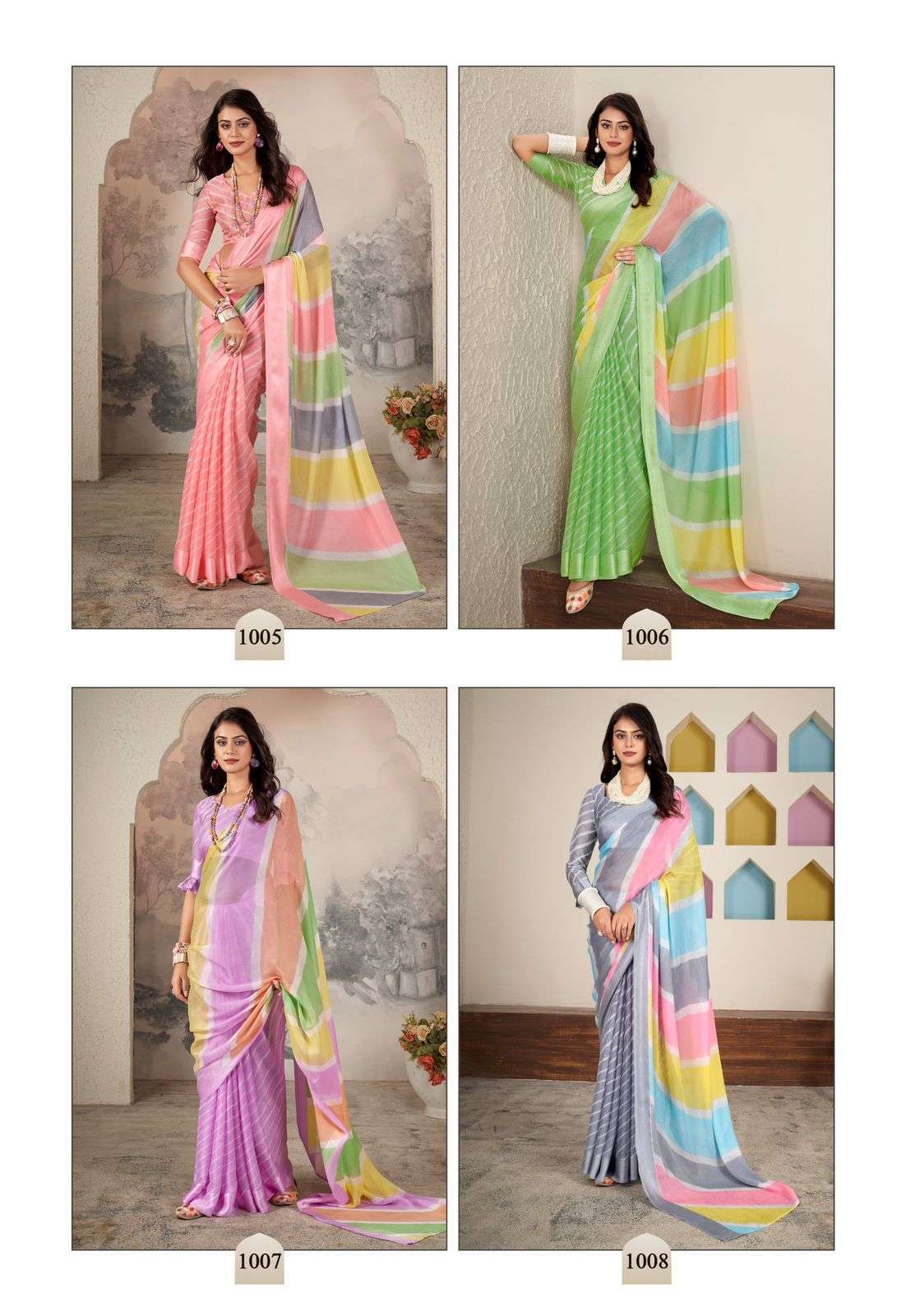



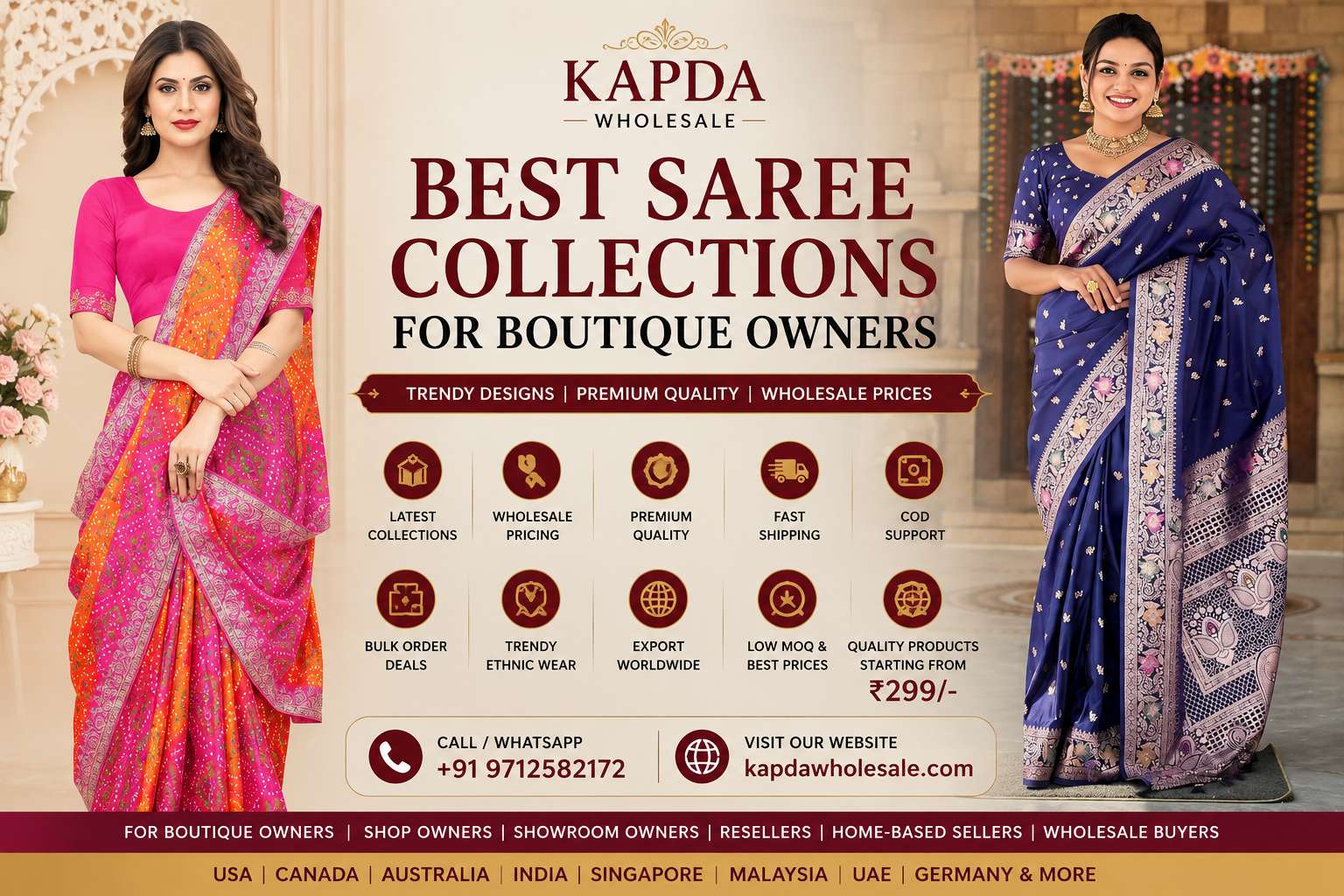
<h1><strong>Best Saree Collections for Boutique Owners: Wholesale Buying Guide 2026</strong></h1> <p>A profitable boutique needs more than a large saree inventory. It needs the right combination of eye-catching designs, wearable fabrics, attractive colours and suitable buying prices. When every collection has a clear customer and occasion behind it, boutique owners can create a premium-looking assortment while keeping their purchasing capital focused on products with stronger resale potential.</p> <h2><strong>Introduction</strong></h2> <p>The <strong>best saree collections for boutique owners</strong> in 2026 should give customers a reason to choose a boutique instead of purchasing from an ordinary mass-market seller. Fresh designs, distinctive fabrics, elegant borders and thoughtfully selected colour combinations can create that difference.</p> <p>For Boutique Owners, Shop Owners and Showroom Owners, wholesale purchasing should therefore focus on sellable variety rather than simply buying the maximum number of pieces at the lowest price. Home-Based Sellers and Resellers can follow the same strategy while creating curated collections for WhatsApp, Instagram and online customers.</p> <p>From Banarasi and Bandhani styles to silk sarees, printed collections, festive designs and contemporary party wear, retailers can build several profitable product segments. The ideal mix depends on the customers they serve, their average retail price and how frequently they can replenish inventory.</p> <p>Kapdawholesale.com provides buyers with access to changing wholesale ethnic wear opportunities connected with Surat's textile sourcing ecosystem. Retailers can use wholesale purchasing to create more competitive resale positioning while regularly refreshing their collections.</p> <h2><strong>Buy Sarees According to Your Boutique Customer</strong></h2> <p>Successful inventory begins with understanding who will eventually wear the product. A saree that performs exceptionally well in one boutique may move slowly in another because customer age, location, budget and occasion requirements are different.</p> <h3><strong>Identify Your Main Customer Segment</strong></h3> <p>Before placing a wholesale order, divide customers according to their most common requirements. Some boutiques primarily serve wedding shoppers, while others attract working women, festive buyers or customers looking for fashionable occasion wear.</p> <p>If most customers purchase in a particular price range, make that range the core of the inventory. Selected lower and higher price options can then provide additional choice.</p> <h3><strong>Purchase According to Occasion</strong></h3> <p>Create buying categories around actual purchasing occasions such as weddings, festivals, parties, office functions, gifting and everyday wear. Occasion-based purchasing makes it easier to build an assortment that customers understand immediately.</p> <h3><strong>Use Customer Requests as Buying Data</strong></h3> <p>Record colours, fabrics and styles customers request even when they do not complete a purchase. Repeated requests can reveal gaps in existing inventory and provide direction for the next <strong>wholesale sarees</strong> order.</p> <h2><strong>Banarasi Sarees for Premium Boutique Collections</strong></h2> <p>Banarasi-inspired designs can create a rich traditional section within a boutique. Their woven appearance, ornate borders and festive colour combinations make them suitable for weddings, celebrations and premium gifting.</p> <h3><strong>Traditional Banarasi Colour Range</strong></h3> <p>Red, maroon, bottle green, royal blue, purple and mustard can create a classic festive assortment. Boutique Owners can complement these shades with softer pastels and contemporary colour combinations for customers seeking a modern interpretation.</p> <h3><strong>Banarasi Sarees for Wedding Buyers</strong></h3> <p>Wedding customers frequently compare several products before making a decision. Maintaining multiple Banarasi-style options at different price levels allows sales staff to present an upgrade path without moving the customer into an unrelated category.</p> <h3><strong>Buy Controlled Quantities of Premium Designs</strong></h3> <p>Premium products generally require more working capital per piece. Rather than purchasing excessive quantities of one expensive design, boutiques can maintain a wider selection and reorder products that demonstrate genuine demand.</p> <h2><strong>Bandhani Sarees for Festive and Traditional Buyers</strong></h2> <p><strong>Bandhani sarees wholesale</strong> collections can bring strong regional and festive character to boutique inventory. Traditional-inspired patterns combined with modern fabrics and borders allow retailers to serve customers who want heritage styling with contemporary presentation.</p> <h3><strong>Choose Vibrant Festive Colours</strong></h3> <p>Red, rani pink, orange, yellow, green and maroon can create a vibrant traditional range. Dual-tone and contrasting colour combinations can add additional visual appeal for customers seeking statement pieces.</p> <h3><strong>Add Modern Bandhani-Inspired Styles</strong></h3> <p>Not every Bandhani customer wants a completely traditional saree. Printed Bandhani-inspired patterns on lightweight fabrics can provide easier draping while retaining the visual identity of the design.</p> <h3><strong>Merchandise Bandhani by Occasion</strong></h3> <p>Display these collections around festive periods, weddings and cultural celebrations. Coordinated blouse styling and jewellery presentation can help customers visualise the complete outfit rather than evaluating the saree in isolation.</p> <h2><strong>Silk Sarees for High-Value Boutique Sales</strong></h2> <p><strong>Silk sarees wholesale</strong> sourcing gives Boutique Owners an opportunity to build a premium section for customers purchasing for important occasions. The category can include traditional woven styles, silk-look fabrics and lighter contemporary interpretations.</p> <h3><strong>Keep Traditional Silk Designs</strong></h3> <p>Rich borders, classic motifs and deeper colours can serve wedding and festive customers. These products can become important display pieces because their premium visual character helps define the overall positioning of the boutique.</p> <h3><strong>Add Lightweight Silk Options</strong></h3> <p>Some customers want the appearance of a rich saree without excessive weight. Lightweight silk and silk-look products can meet this requirement while remaining suitable for longer events and easier draping.</p> <h3><strong>Compare Quality Before Comparing Only Price</strong></h3> <p>Wholesale price remains important, but fabric feel, weaving appearance, finishing, colour and border quality influence how customers perceive the final product. A slightly higher purchasing price may be justified when the saree offers clearly stronger resale value.</p> <h2><strong>Designer Sarees for Fashion-Focused Boutique Customers</strong></h2> <p><strong>Designer sarees wholesale</strong> collections can help retailers differentiate themselves from sellers carrying mostly standard designs. Contemporary prints, decorative borders, embroidery, embellishments and unusual colour combinations can all create boutique value.</p> <h3><strong>Statement Border Sarees</strong></h3> <p>A distinctive border can immediately attract attention on a display, mannequin or social media reel. Choose designs where the border enhances the saree without making it difficult to style.</p> <h3><strong>Embroidered Sarees</strong></h3> <p>Selected embroidery can create occasion value without requiring an extremely heavy saree. Border work, pallu details and scattered motifs can provide enough visual richness for parties and festive functions.</p> <h3><strong>Contemporary Party Wear Sarees</strong></h3> <p>Fashion-conscious customers may prefer clean drapes, elegant shimmer, modern prints or minimal decorative work. These products can be positioned for receptions, evening events, parties and modern festive styling.</p> <img src="https://kapdawholesale.com/images/product/2025/07/banarasi-5-surat-silk-saree-wholesale-market-2025-07-06_10_03_51.jpeg"/> <h2><strong>Buy Wholesale Sarees from Surat for Better Variety</strong></h2> <p>Surat has an extensive textile ecosystem that connects weaving, processing, designing, <strong>manufacturing</strong>, wholesale trading and distribution. For boutique buyers, this creates access to regularly changing products across several fabrics and price ranges.</p> <h3><strong>Source from Surat Textile Market</strong></h3> <p>The <strong>surat textile market</strong> is one of the important sourcing ecosystems for women's ethnic wear. Trading areas around <strong>ring road</strong> and <strong>sahara darwaza</strong> are closely associated with Surat's textile business and attract buyers seeking sarees and other fashion categories.</p> <p>Boutique Owners can use Surat sourcing to compare traditional, festive, contemporary and premium designs instead of depending on a limited local assortment.</p> <h3><strong>Use Online Wholesale Buying to Save Sourcing Time</strong></h3> <p>Travelling to Surat for every inventory update may not be practical for retailers located elsewhere. Kapdawholesale.com allows buyers to explore wholesale opportunities remotely and select collections according to their business requirements.</p> <p>Online sourcing can be particularly useful for Home-Based Sellers and Resellers who want to keep operating expenses controlled while accessing products from a larger textile market.</p> <h3><strong>Buy New Collections in Controlled Quantities</strong></h3> <p>A large wholesale market offers enormous choice, which can also encourage overbuying. Select products according to customer data and existing inventory rather than purchasing every attractive new catalogue.</p> <h2><strong>Create the Right Wholesale Saree Product Mix</strong></h2> <p>The <strong>best saree collections for boutique owners</strong> should not depend on one fabric or one selling season. A balanced assortment gives the retailer multiple opportunities to convert customers while reducing dependence on a single trend.</p> <h3><strong>Keep Everyday and Lightweight Sarees</strong></h3> <p>Lightweight sarees can generate regular turnover from customers purchasing for work, everyday use, casual functions and gifting. This category can help maintain sales between major festive seasons.</p> <h3><strong>Keep a Strong Mid-Range Collection</strong></h3> <p>Mid-range products can become the core of many boutiques. Customers receive a noticeable improvement in design and presentation while the selling price remains accessible enough for frequent occasion purchases.</p> <h3><strong>Maintain Selected Premium Sarees</strong></h3> <p>Premium Banarasi, silk, embroidered and designer collections can increase average order value. Maintain enough variety to provide choice without investing excessive capital in products that may require longer selling periods.</p> <h2><strong>Printed Sarees for Faster Inventory Rotation</strong></h2> <p><strong>Printed sarees wholesale</strong> collections can provide useful year-round inventory for boutiques, shops and online Resellers. The category offers enormous variation in patterns, fabrics and colour combinations.</p> <h3><strong>Floral Printed Sarees</strong></h3> <p>Floral designs can range from delicate and elegant to bright statement prints. Softer patterns can appeal to customers seeking daytime and semi-formal looks, while larger prints can create stronger fashion impact.</p> <h3><strong>Traditional-Inspired Prints</strong></h3> <p>Bandhani-inspired, block-style and other heritage-influenced patterns can help retailers create traditional visual appeal at different price points.</p> <h3><strong>Contemporary Printed Sarees</strong></h3> <p>Abstract, geometric and artistic patterns can attract customers who prefer ethnic clothing with a modern identity. These designs can work particularly well in social media promotions because distinctive patterns remain visually noticeable on mobile screens.</p> <h2><strong>Plan Boutique Inventory Around Festivals and Weddings</strong></h2> <p>Seasonal purchasing can create some of the strongest opportunities for ethnic wear retailers. The challenge is buying enough inventory to serve demand without leaving excessive stock after the season ends.</p> <h3><strong>Purchase Wedding Sarees in Advance</strong></h3> <p>Wedding customers can purchase multiple sarees for different functions. Prepare a selection covering family occasions, gifting, premium traditional wear and reception styling before the main wedding period begins.</p> <h3><strong>Build Festival-Specific Collections</strong></h3> <p>Navratri, Durga Puja, Diwali and regional celebrations can create demand for festive colours and traditional styling. Buying early provides time for product photography, social promotion and customer previews.</p> <h3><strong>Keep Reorder Capital Available</strong></h3> <p>Do not spend the complete seasonal purchasing budget in the first buying cycle. Keeping some capital available allows the boutique to respond when certain colours or designs begin selling faster than expected.</p> <h2><strong>Wholesale Saree Sourcing for India, USA and Germany</strong></h2> <p>For this 2026 buying strategy, <strong>India</strong>, the <strong>USA</strong> and <strong>Germany</strong> provide three different customer environments where boutique saree assortments can be selected according to local demand.</p> <h3><strong>Boutique Sarees for India</strong></h3> <p>Indian Boutique Owners can create collections around regional festivals, weddings, traditional preferences and contemporary fashion. Maintaining multiple price bands allows retailers to serve a wider customer base.</p> <h3><strong>Wholesale Sarees for USA Boutiques</strong></h3> <p>Boutiques serving Indian communities in the USA can combine traditional wedding and festive sarees with lighter contemporary collections suitable for parties and cultural events.</p> <h3><strong>Wholesale Sarees for Germany</strong></h3> <p>Retailers serving customers in Germany can create a curated selection for weddings, cultural celebrations and festive purchases. Product weight, shipping and complete landed price should be considered before confirming larger orders.</p> <p>For international <strong>export</strong>, wholesale buyers should evaluate transportation, packaging and applicable destination costs as part of the complete purchasing calculation.</p> <h2><strong>Wholesale Experience Behind Better Boutique Sourcing</strong></h2> <p>Product selection becomes easier when sourcing is supported by practical textile knowledge. Retailers need more than attractive photographs; they need products that fit their customers, selling channels and intended retail positioning.</p> <p>Vastralife has wholesale and export experience since 2017, supported by textile industry expertise and a continued focus on <strong>premium product quality</strong>. This experience supports retailers looking to source women's ethnic wear for domestic and international markets.</p> <p>Through kapdawholesale.com, Boutique Owners, Shop Owners, Showroom Owners, Home-Based Sellers, Resellers and Wholesale Buyers can explore changing collections while planning inventory according to real business demand.</p> <h2><strong>How Boutique Owners Should Calculate Saree Buying Price</strong></h2> <p>A profitable boutique needs to understand the complete cost of every product. The supplier's wholesale price is only the starting point when determining the actual margin available to the retailer.</p> <h3><strong>Calculate Landed Product Cost</strong></h3> <p>Add the wholesale purchasing amount, transportation, packaging, applicable taxes and other direct expenses. For international buyers, freight and relevant export-related costs should also be included.</p> <h3><strong>Set Retail Price According to Product Value</strong></h3> <p>Customers evaluate fabric, design, finishing, exclusivity and presentation. Two sarees purchased at similar wholesale prices may have different perceived retail values depending on these factors.</p> <h3><strong>Protect Margin During Discounts</strong></h3> <p>If the boutique frequently offers festive promotions or loyalty discounts, consider this while setting the regular selling price. Discounting without understanding the complete product cost can create turnover without sufficient profit.</p> <h2><strong>Turn Wholesale Saree Purchases into Repeat Boutique Sales</strong></h2> <p>Inventory becomes valuable only when it moves. Retailers should therefore connect wholesale purchasing with product presentation, customer follow-up and disciplined reordering.</p> <h3><strong>Show New Arrivals Regularly</strong></h3> <p>Display selected new products through Instagram, WhatsApp and in-store presentation. Customers who have purchased previously should see relevant new arrivals instead of receiving every catalogue available.</p> <h3><strong>Track Fast-Selling Colours and Fabrics</strong></h3> <p>Maintain simple records of completed sales. If particular colours, fabrics or price ranges consistently perform well, give them greater priority in future wholesale orders.</p> <h3><strong>Reorder According to Confirmed Demand</strong></h3> <p>A product receiving likes or inquiries is not necessarily a proven seller. Give greater weight to completed purchases when deciding which categories deserve additional investment.</p> <p>The next stage is to combine this buying strategy with carefully selected internal product categories, stronger inventory rotation and customer-focused merchandising so the boutique can continue expanding without accumulating unnecessary stock.</p>
<h2><strong>Build a Boutique Inventory That Looks Exclusive</strong></h2> <p>A boutique does not need hundreds of identical sarees to create a premium impression. Customers often value variety, distinctive styling and the feeling that a design is not available everywhere. This makes controlled wholesale purchasing particularly useful for Boutique Owners.</p> <h3><strong>Buy More Designs in Smaller Quantities</strong></h3> <p>Instead of concentrating the purchasing budget on a few catalogues with large quantities, select a broader mix of relevant designs where wholesale terms allow. This gives customers more choice while reducing dependence on a single pattern or colour.</p> <h3><strong>Create Limited Collection Displays</strong></h3> <p>Selected Banarasi, Bandhani, silk and designer sarees can be presented as limited boutique collections. Give each display a clear theme such as wedding edit, festive collection, traditional collection or contemporary party wear.</p> <h3><strong>Rotate Displays Regularly</strong></h3> <p>A saree that has been in stock for several weeks can look fresh when styled differently. Change mannequin draping, blouse combinations and product placement before immediately reducing the price.</p> <p>For online boutiques, the same principle applies. A new reel, close-up video or occasion-based styling post can introduce existing inventory to customers in a different way.</p> <h2><strong>Internal Linking Section for Boutique Wholesale Buyers</strong></h2> <p>Retailers building a traditional festive assortment can explore <a href="https://www.kapdawholesale.com/bandhani-saree">Bandhani saree wholesale</a> collections for colourful designs suitable for boutiques, festive selling and ethnic wear customers.</p> <p>Boutique Owners who want to expand beyond sarees can also add <a href="https://www.kapdawholesale.com/designer-kurtis">designer kurtis wholesale</a> selections and create additional purchasing opportunities for existing customers.</p> <p>Category expansion should remain connected with actual customer demand. A boutique that already has strong saree customers can introduce related ethnic wear gradually rather than investing heavily in several unfamiliar categories at once.</p> <img src="https://kapdawholesale.com/images/product/2025/03/kapda-wholesale-mayurika-1-bandhej-printed-chinon-silk-saree-wholesale-manufacturers-in-surat-2025-03-07_20_53_44.png" /> <h2><strong>Bandhej and Chinon Sarees for Festive Boutique Sales</strong></h2> <p>Bandhej-inspired designs combined with lightweight fabrics such as Chinon can create a strong balance between traditional appearance and contemporary wearability. These collections can be particularly attractive for customers who appreciate festive colours but prefer a saree that feels easier to carry.</p> <h3><strong>Choose High-Impact Colour Combinations</strong></h3> <p>Rani pink, maroon, red, orange, green, royal blue and contrasting combinations can create immediate visual impact. Boutique Owners can combine these stronger colours with a smaller selection of muted shades for customers seeking understated styling.</p> <h3><strong>Use Bandhej Sarees for Festival Campaigns</strong></h3> <p>Festive collections can be promoted through themed displays, WhatsApp catalogues and Instagram reels. Rather than simply showing the folded product, demonstrate the complete drape and highlight the border, pallu and blouse styling.</p> <h3><strong>Keep Lightweight Options Alongside Traditional Sarees</strong></h3> <p>A customer may appreciate traditional design but reject a saree because of weight or draping difficulty. Lightweight Bandhej and printed sarees provide an alternative without moving the customer away from the traditional aesthetic.</p> <h2><strong>How to Buy Sarees for Better Boutique Profit Margins</strong></h2> <p>The <strong>best saree collections for boutique owners</strong> should create enough perceived value to support sustainable retail margins. Wholesale buying therefore requires more than comparing supplier rates.</p> <h3><strong>Calculate the Complete Landed Cost</strong></h3> <p>Start with the wholesale purchase price and include transportation, packaging, applicable taxes and other direct costs. International Wholesale Buyers should also calculate freight and destination-related expenses.</p> <p>Knowing the complete landed cost makes it easier to set a retail price without accidentally reducing the actual margin.</p> <h3><strong>Buy Products with Strong Perceived Value</strong></h3> <p>A distinctive border, premium-looking fabric, elegant colour combination or attractive blouse concept can increase how customers perceive a saree. Boutique Owners can use this value difference to create stronger retail positioning.</p> <h3><strong>Avoid Excessive Discounting</strong></h3> <p>Discounts can support clearance and seasonal promotions, but they should not become the only reason customers purchase. Consistent product quality, thoughtful curation and good service can help a boutique compete without continuously reducing prices.</p> <h2><strong>Use Social Media to Sell Boutique Sarees Faster</strong></h2> <p>Wholesale inventory can reach far beyond customers who physically visit a boutique. Instagram, WhatsApp and other digital channels allow retailers to repeatedly showcase new arrivals and reconnect with previous buyers.</p> <h3><strong>Create Saree Draping Reels</strong></h3> <p>Video can communicate fabric movement and overall styling better than a folded product photograph. Show the border, pallu and complete drape within a short, visually clear reel.</p> <h3><strong>Use Close-Up Product Videos</strong></h3> <p>For Banarasi, Bandhani, silk and embroidered sarees, close-up footage can highlight weaving, texture, decorative work and finishing. This is particularly important for online customers who cannot physically examine the product.</p> <h3><strong>Organise WhatsApp Catalogues by Category</strong></h3> <p>Create separate selections for wedding sarees, festive sarees, printed sarees, premium sarees and products within specific price bands. Customers can then browse according to their actual buying requirement.</p> <h3><strong>Promote New Arrivals to Existing Customers</strong></h3> <p>Repeat customers already understand the boutique's products and service. Share new arrivals according to their previous purchases instead of sending every new catalogue to every customer.</p> <h2><strong>Reduce Dead Stock in Your Boutique</strong></h2> <p>Inventory that remains unsold for too long blocks capital that could otherwise be invested in <strong>latest saree collections</strong>. Regular stock review is therefore an essential part of wholesale buying.</p> <h3><strong>Track Saree Sales by Category</strong></h3> <p>Maintain records for printed, Banarasi, Bandhani, silk, designer, festive and daily wear sarees. Compare how quickly each category moves and how much capital remains invested in unsold stock.</p> <h3><strong>Identify Slow-Moving Colours</strong></h3> <p>A successful design may still have individual colours that sell slowly. Future purchases should reflect this information instead of repeatedly ordering every colour in equal quantity.</p> <h3><strong>Refresh Slow Stock Before Discounting</strong></h3> <p>Try a new blouse combination, mannequin presentation, product photograph or social media reel. Customers may respond differently when the same saree is presented in a more appealing context.</p> <h3><strong>Use Controlled Clearance When Necessary</strong></h3> <p>If a product remains unsold despite repeated promotion, a targeted clearance offer can release working capital. Avoid applying unnecessary discounts to new or fast-moving products simply to clear a few older designs.</p> <h2><strong>Ready Stock Sarees for Faster Boutique Replenishment</strong></h2> <p>Ready-stock purchasing can help retailers respond when a category sells faster than expected. Instead of waiting for a completely new production cycle, Boutique Owners can explore currently available products and replenish their assortment more quickly.</p> <h3><strong>Use Ready Stock Between Major Buying Cycles</strong></h3> <p>A boutique may make larger planned purchases before a season and use smaller ready-stock orders to refresh the collection afterward. This keeps displays changing without requiring a major investment every time.</p> <h3><strong>Confirm Availability Before Customer Commitment</strong></h3> <p>Wholesale inventory can change as orders are booked. When selling products that are not physically in your boutique, confirm supplier availability before promising them to customers.</p> <h3><strong>Reorder Proven Categories First</strong></h3> <p>When capital is limited, give priority to categories with confirmed sales rather than products receiving only social media engagement. Completed purchases provide stronger evidence of demand.</p> <h2><strong>Wholesale Saree Buying for Home-Based Sellers and Resellers</strong></h2> <p>The same boutique-style purchasing strategy can work for sellers operating without a physical store. A curated online catalogue can create a stronger identity than hundreds of unrelated product images.</p> <h3><strong>Start with a Focused Saree Selection</strong></h3> <p>Home-Based Sellers can begin with selected printed, Bandhani, festive and lightweight sarees. Once customers demonstrate demand for premium products, Banarasi and designer collections can be expanded.</p> <h3><strong>Keep Inventory Investment Controlled</strong></h3> <p>Purchase new products in manageable quantities and increase investment according to sales. This gives smaller sellers flexibility to change their assortment as customer preferences become clearer.</p> <h3><strong>Build Repeat Sales Through Personal Service</strong></h3> <p>Remember customers' preferred colours, fabrics and approximate budgets. When a suitable new collection arrives, personalised communication can be more effective than sending a generic catalogue to everyone.</p> <h2><strong>Wholesale Saree Strategy for Showroom Owners</strong></h2> <p>Showroom Owners may need greater inventory depth, but product selection should remain disciplined. Larger space should not become a reason to accumulate slow-moving merchandise.</p> <h3><strong>Create Dedicated Product Sections</strong></h3> <p>Organise displays into Banarasi, Bandhani, silk, printed, festive, designer and premium categories. Clear segmentation helps customers navigate the showroom and allows sales staff to recommend suitable products faster.</p> <h3><strong>Maintain Multiple Price Bands</strong></h3> <p>A showroom can serve customers with different budgets by maintaining entry, mid-range and premium sections. The differences between these ranges should be visible through fabric, design, work or overall product presentation.</p> <h3><strong>Use Bulk Buying for Proven Products</strong></h3> <p><strong>Wholesale sarees</strong> purchased in larger quantities can improve buying economics when the category has established demand. Bulk buying simply to obtain a lower per-piece rate can be risky when sales are uncertain.</p> <h2><strong>Scale Boutique Saree Sales in India, USA and Germany</strong></h2> <p>Boutique businesses can gradually expand beyond their immediate local customer base. Sellers serving India, USA and Germany should build separate product strategies based on the requirements of customers in each market.</p> <h3><strong>Grow Local and Pan-India Sales</strong></h3> <p>Retailers in India can use digital selling to reach customers outside their immediate neighbourhood. Product videos, organised catalogues and reliable order communication can support wider selling without requiring another physical store.</p> <h3><strong>Curate Sarees for USA Customers</strong></h3> <p>For customers in the USA, boutiques can combine wedding sarees, traditional festive products and lighter contemporary designs. Shipping weight and complete landed price should be calculated before international orders are confirmed.</p> <h3><strong>Select Occasion Wear for Germany</strong></h3> <p>Businesses supplying Germany can maintain a focused assortment for weddings, festivals, cultural celebrations and Indian community events rather than carrying every available saree category.</p> <p>International <strong>export</strong> orders require careful calculation of product cost, packaging and logistics so that the transaction remains commercially viable.</p> <h2><strong>Customer FAQs</strong></h2> <h3><strong>1. Which are the best saree collections for boutique owners?</strong></h3> <p>The ideal mix can include Banarasi sarees, Bandhani styles, silk sarees, printed collections, designer sarees, lightweight products and selected festive designs. The exact assortment should match the boutique's customer profile, budget and local demand.</p> <h3><strong>2. Where can Boutique Owners buy sarees wholesale?</strong></h3> <p>Boutique Owners can source from established manufacturers, wholesalers and online wholesale platforms connected with textile hubs such as Surat. Kapdawholesale.com provides an online route for buyers looking to explore changing ethnic wear collections.</p> <h3><strong>3. Is Surat suitable for wholesale saree buying?</strong></h3> <p>Yes. Surat has a major textile manufacturing, processing and wholesale ecosystem. Ring Road, Sahara Darwaza and the wider Surat textile market are closely associated with the city's textile trade and provide access to numerous product categories.</p> <h3><strong>4. Which sarees should a new boutique stock first?</strong></h3> <p>A new boutique can begin with a balanced mix of printed and lightweight sarees for regular turnover, mid-range festive products and a smaller selection of premium Banarasi, silk or designer sarees.</p> <h3><strong>5. How many saree designs should Boutique Owners purchase?</strong></h3> <p>There is no single quantity suitable for every business. Controlled quantities across a broader design range can be useful initially. Increase quantities after actual customer sales identify the strongest products.</p> <h3><strong>6. Which sarees are suitable for wedding customers?</strong></h3> <p>Banarasi-inspired sarees, silk styles, rich Bandhani collections, embroidered designs and premium festive sarees can create a strong wedding assortment across different price ranges.</p> <h3><strong>7. Can Home-Based Sellers purchase boutique sarees wholesale?</strong></h3> <p>Yes. Home-Based Sellers can source wholesale collections, maintain controlled inventory and sell through WhatsApp, Instagram, referrals and direct customers. The purchasing quantity should remain aligned with actual selling capacity.</p> <h3><strong>8. How can boutiques improve saree profit margins?</strong></h3> <p>Calculate complete landed cost, purchase according to demand, control dead stock, reduce unnecessary discounting and create stronger perceived value through styling and product presentation.</p> <h3><strong>9. Can sarees be sourced for international boutique customers?</strong></h3> <p>Yes, depending on the supplier's applicable export and shipping arrangements. Wholesale Buyers should calculate freight, packaging and destination costs before confirming the final selling price.</p> <h3><strong>10. How often should boutiques add new saree designs?</strong></h3> <p>New products should be introduced according to stock movement and customer demand rather than a rigid schedule. Regular smaller updates can keep the boutique fresh without requiring excessive inventory investment.</p> <h2><strong>Build a Profitable Boutique Saree Collection in 2026</strong></h2> <p>The <strong>best saree collections for boutique owners</strong> are not necessarily the largest collections. Strong boutique inventory is built around customers, occasions, price segments and proven purchasing behaviour.</p> <p>Use printed and lightweight sarees to support regular sales, maintain Banarasi and Bandhani styles for traditional demand, add silk and festive products for important occasions and use selected designer pieces to strengthen premium positioning.</p> <p>Surat sourcing can provide access to regularly changing designs, while disciplined purchasing helps protect working capital. Track completed orders, identify successful fabrics and colours and reinvest in products that customers genuinely purchase.</p> <p>Vastralife's wholesale and export experience since 2017, combined with textile industry expertise and a focus on premium product quality, supports buyers seeking a more dependable sourcing approach for their ethnic wear business.</p> <h2><strong>Order Latest Wholesale Saree Collections for Your Boutique</strong></h2> <p>Refresh your boutique, shop, showroom or online catalogue with <strong>Latest Collections</strong>, competitive <strong>Wholesale Pricing</strong> and regularly updated <strong>Trendy Ethnic Wear</strong> for 2026.</p> <p>Explore available collections with <strong>Fast Shipping</strong>, eligible <strong>COD Support</strong> and attractive <strong>Bulk Order Deals</strong> according to applicable stock and order conditions.</p> <p>Buy <strong>Quality Products Starting From ₹299</strong> and create a balanced inventory for Home-Based Sellers, Shop Owners, Boutique Owners, Showroom Owners, Resellers and Wholesale Buyers.</p> <p><strong>Contact Number:</strong> +91 9712582172</p> <p><strong>Website:</strong> kapdawholesale.com</p> <p>Choose collections according to real customer demand, maintain controlled quantities and keep introducing designs that give shoppers a reason to return. With the right wholesale sourcing strategy, your boutique can build a distinctive saree identity while creating stronger opportunities for repeat sales and sustainable growth.</p>