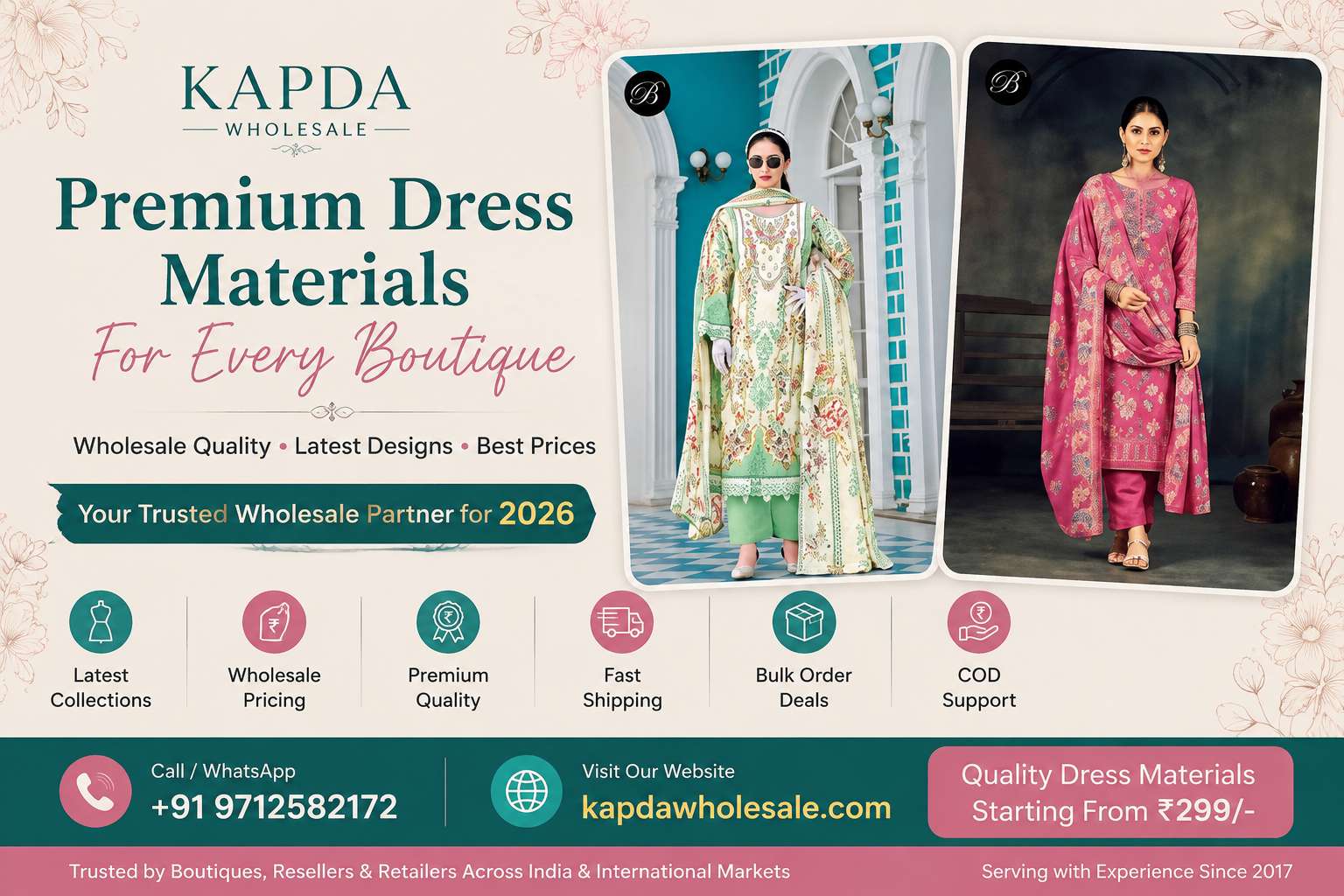
<h1><strong>Best Dress Material Supplier for Boutiques in 2026 – Wholesale Buying from Surat</strong></h1> <p>Running a profitable boutique depends heavily on what you buy, where you source it from, and how quickly you can refresh your collection. Customers today want attractive designs, comfortable fabrics, fresh colour combinations and prices that feel reasonable. For boutique owners, resellers and shop owners, this makes dependable wholesale sourcing one of the most important parts of the business. A carefully selected dress material collection can help a retailer offer variety without unnecessarily increasing inventory investment.</p> <h2><strong>Introduction</strong></h2> <p>The ethnic wear market continues to create strong opportunities for boutiques, home-based sellers, retailers and online resellers in <strong>2026</strong>. Dress materials remain especially practical because buyers can select designs according to their preferred stitching, fit and styling. From everyday cotton suits to premium festive sets, embroidered collections, viscose fabrics and designer dress materials, retailers can build inventory for multiple customer segments.</p> <p>Finding the <strong>best dress material supplier for boutiques</strong> is therefore not simply about finding the lowest price. A boutique needs a supplier that can provide attractive designs, dependable quality, competitive wholesale rates and frequent new arrivals. Consistency becomes even more important when customers return asking for similar products or when a particular catalogue begins selling quickly.</p> <p>For buyers sourcing from India, Surat remains one of the most important textile destinations. The <strong>surat textile market</strong>, including commercial areas around <strong>ring road</strong> and <strong>sahara darwaza</strong>, connects buyers with an extensive textile ecosystem covering fabric trading, processing, wholesale distribution and manufacturing. This gives retailers access to collections suitable for everyday, office, festive, wedding and occasion-based demand.</p> <h2><strong>Why Boutiques Should Buy Dress Materials at Wholesale Prices</strong></h2> <p>Retail profitability begins with the purchase cost. When boutique owners buy products at an appropriate wholesale <strong>price</strong>, they have greater flexibility to create a retail margin while still keeping the final selling price attractive for customers.</p> <p>Buying dress materials wholesale can also make assortment planning easier. Instead of depending on one style, a boutique can maintain a balanced mix of printed cotton suits, embroidered dress materials, festive suits, premium unstitched suits, viscose collections and dupatta-based designer sets.</p> <h3><strong>Better Buying Cost for Retail Margins</strong></h3> <p>A good wholesale purchase is not necessarily the cheapest purchase. Boutique owners should evaluate fabric quality, design appeal, finishing, colour combination, catalogue presentation and expected retail demand together. Paying slightly more for a collection that customers genuinely want may produce a stronger margin than buying inexpensive stock that remains unsold.</p> <p>This is why experienced <strong>wholesale buyers</strong> often compare products according to sell-through potential rather than purchase cost alone. When a collection combines a reasonable buying rate with premium presentation, retailers may have more freedom to position it at an attractive retail price.</p> <h3><strong>More Variety for Different Customer Budgets</strong></h3> <p>A boutique rarely serves customers from only one price segment. Some shoppers want affordable daily wear, while others specifically ask for premium fabrics, embroidery, festive styling or sophisticated dupattas. Wholesale sourcing allows retailers to create different price levels within the same store.</p> <p>For example, a seller may maintain entry-level products for value-conscious shoppers, mid-range dress materials for regular boutique customers and premium designer collections for festive and occasion buyers. This assortment strategy can help increase the number of customers who find something suitable within their preferred budget.</p> <h2><strong>What Boutique Owners Should Look for in a Dress Material Supplier</strong></h2> <p>Choosing the <strong>best dress material supplier for boutiques</strong> requires more than looking through a few attractive catalogue images. A reliable sourcing relationship should support the boutique over multiple buying cycles. Retailers should consider product range, quality consistency, availability, wholesale terms and how frequently fresh collections are introduced.</p> <h3><strong>Consistent Product Quality</strong></h3> <p>Quality directly affects customer trust. Fabric feel, colour clarity, embroidery finishing, printing, dupatta quality and overall presentation all influence whether a customer feels satisfied with the purchase. Boutique owners should therefore prioritize suppliers that focus on <strong>premium product quality</strong> rather than treating every order purely as a price transaction.</p> <p>Consistency matters even more for repeat buyers. If customers associate a boutique with good fabric and dependable products, maintaining that standard can support referrals and repeat purchases. A temporary saving from poor-quality inventory can become expensive if it results in complaints or loss of customer confidence.</p> <h3><strong>Regular New Collections</strong></h3> <p>Fashion inventory needs movement. Customers who regularly visit a boutique want to see something different. A wholesale source offering frequent new catalogues can help shop owners rotate their display and promote fresh arrivals through WhatsApp, Instagram, Facebook and direct customer groups.</p> <p>For <strong>2026 dress material wholesale</strong> buying, retailers can consider maintaining a combination of classic evergreen products and trend-responsive collections. Evergreen designs provide continuity, while new styles create excitement and give customers a reason to return.</p> <h3><strong>Access to Multiple Fabrics and Designs</strong></h3> <p>A versatile supplier can make buying simpler by giving boutiques access to multiple product types from one sourcing channel. Popular categories can include cotton dress material, viscose dress material, embroidered suits, printed suit material, festive collections, designer unstitched suits, salwar suit material, premium dupatta sets and ethnic wear collections.</p> <p>This variety is useful not only for physical boutiques but also for <strong>Home-Based Sellers</strong>, online resellers, showroom owners and retailers building catalogues for WhatsApp-based selling.</p> <img src="https://kapdawholesale.com/images/product/2026/05/azara-firoza-4-wholesale-dress-materials-suppliers-in-pune-2026-05-23_14_37_39.jpeg"/> <h2><strong>Surat as a Major Dress Material Wholesale Sourcing Hub</strong></h2> <p>Surat has developed a large textile supply network covering fabrics, processing, trading, garment production and wholesale distribution. For boutiques searching for a <strong>dress material wholesaler in Surat</strong>, the scale of the market provides access to collections across numerous fabrics, styles and price ranges.</p> <p>The commercial textile areas surrounding <strong>ring road</strong> and <strong>sahara darwaza</strong> are particularly familiar to wholesale buyers. The broader <strong>surat textile market</strong> ecosystem also supports businesses dealing in domestic supply as well as <strong>export</strong> orders.</p> <p>Kapdawholesale.com helps make this sourcing process more accessible for buyers who may not be able to visit Surat repeatedly. Boutique owners can evaluate wholesale collections online and shortlist products according to their target customer, price segment and preferred ethnic wear category.</p> <h3><strong>Manufacturing and Wholesale Ecosystem</strong></h3> <p>One advantage of sourcing through a major textile centre is proximity to the wider <strong>manufacturing</strong> and distribution network. Designs move through fabric production, printing, embroidery, processing, catalogue development and wholesale channels, allowing retailers to discover new collections throughout the season.</p> <p>For boutique owners, this ecosystem can be valuable because customer demand changes quickly. A retailer may need breathable cotton during warmer months, richer festive suits around celebrations and premium embroidered collections during wedding seasons. Access to a broad supply base makes such inventory changes easier to manage.</p> <h2><strong>High-Demand Dress Material Categories Boutiques Can Stock in 2026</strong></h2> <p>The ideal inventory depends on the boutique's customer profile, location and average selling price. However, certain categories offer practical opportunities for sellers looking to purchase <strong>wholesale dress materials</strong> for resale.</p> <h3><strong>Cotton Dress Materials for Regular Demand</strong></h3> <p>Cotton continues to be a practical category for everyday ethnic wear. Customers frequently choose cotton for comfort, office use, casual outings and regular wear. Boutiques can stock floral prints, traditional motifs, contemporary patterns, subtle colours and coordinated dupatta combinations.</p> <p>A balanced cotton range can be particularly useful for retailers who want repeat business instead of depending only on festival seasons. Buyers looking to place wholesale orders can explore <a href="https://www.kapdawholesale.com/pure-viscouse">pure viscose dress material</a> alongside cotton-based selections to expand their fabric assortment.</p> <h3><strong>Viscose and Premium Flowing Fabrics</strong></h3> <p>Viscose-based collections can appeal to customers who want a softer drape and a more polished appearance. These products can work well for office wear, casual occasions and semi-festive use depending on the design and embellishment.</p> <p>Boutique owners can use different fabric categories to create clear price tiers. A well-presented premium collection may support a stronger retail margin when its fabric, colour palette and detailing justify the final selling price.</p> <h3><strong>Festive and Embroidered Dress Materials</strong></h3> <p>Festive products are important for boutiques targeting seasonal demand. Embroidery, detailed dupattas, elegant borders, rich colours and premium-looking fabric combinations can make a dress material suitable for celebrations, family functions and gifting.</p> <p>Retailers should plan festive buying early enough to photograph, display and market the products before customer demand reaches its peak. The objective is not merely to purchase stock but to have the right stock available when customers are actively ready to buy.</p> <h2><strong>How to Build a Profitable Boutique Inventory</strong></h2> <p>A common buying mistake is investing too much money in one design or price segment. Instead, boutique owners can divide their purchasing budget across different demand categories. This reduces dependency on a single collection and gives customers more options.</p> <p>A practical assortment might combine affordable daily wear, mid-range designer suits and selected premium festive products. The exact ratio should be based on actual customer enquiries and previous sales rather than assumptions.</p> <h3><strong>Start with Controlled Quantities</strong></h3> <p>For new boutiques and <strong>resellers</strong>, controlling inventory is particularly important. Rather than purchasing large quantities before understanding customer preferences, sellers can begin with a carefully selected assortment and monitor which colours, fabrics and price ranges move faster.</p> <p>Once clear demand patterns appear, successful designs or similar collections can receive a larger share of the next buying budget. This approach can help improve inventory turnover and reduce the amount of capital locked in slow-moving products.</p> <h3><strong>Use Customer Demand to Guide Reordering</strong></h3> <p>Keep simple records of which collections generate enquiries and which ones convert into actual purchases. Note preferred colours, average retail price, fabric type and whether customers prefer heavily designed or minimal products.</p> <p>These observations can make the next wholesale order significantly more accurate. A boutique that understands its own customer data can make better purchasing decisions than one that simply buys whatever appears newest.</p> <h2><strong>Wholesale Sourcing for India and International Boutique Buyers</strong></h2> <p>Indian ethnic wear is not limited to the domestic retail market. Boutique businesses serving Indian and South Asian communities abroad can also source collections based on local demand. For this article, three relevant markets are <strong>India, USA and Australia</strong>.</p> <p>Buyers in India may focus on a broad combination of everyday and festive products, while boutiques serving customers in the USA or Australia may prefer curated ethnic collections for weddings, cultural events, festivals and family functions. International wholesale buyers should consider product positioning, shipping costs, order planning and customer preferences before deciding quantities.</p> <p>Kapdawholesale.com can serve buyers looking to explore Indian ethnic wear collections without limiting their search to a single physical market. For sellers expanding beyond dress materials, related ethnic categories such as <a href="https://www.kapdawholesale.com/pure-viscouse">viscose ethnic wear</a> can also support a broader boutique assortment.</p> <h2><strong>Why Experience Matters When Choosing a Wholesale Partner</strong></h2> <p>Textile sourcing involves more than showing product photographs. Understanding fabrics, changing fashion preferences, wholesale buying behaviour and the practical requirements of retailers comes from working closely with the industry over time.</p> <p>Vastralife brings wholesale and <strong>export experience since 2017</strong>, along with industry knowledge developed through serving different types of textile buyers. This experience helps in understanding what boutique owners, retailers and resellers generally look for: competitive buying opportunities, fresh designs, dependable quality and collections that can be positioned profitably.</p> <p>For Kapdawholesale.com, the focus is on connecting wholesale buyers with a broad ethnic wear selection suitable for contemporary retail requirements. Whether the buyer operates a home-based business, physical boutique, showroom or online resale operation, the objective remains the same: source products that customers are willing to purchase at a profitable retail price.</p>
<img src="https://kapdawholesale.com/images/product/2026/05/belliza-riwayat-vol-17-cheap-dress-materials-in-kolkata-2026-05-06_14_34_31.jpeg" /> <h2><strong>How Boutique Owners Can Improve Profit Margins with Smart Wholesale Buying</strong></h2> <p>Profitability is not created only when a product is sold; it begins when inventory is purchased. Boutique owners who negotiate their buying decisions around demand, quality and realistic retail potential generally have more control over margins. Selecting the <strong>best dress material supplier for boutiques</strong> can therefore influence both inventory turnover and the overall profitability of the business.</p> <p>Before placing a wholesale order, calculate the complete landed cost rather than considering only the catalogue price. Depending on the order, the actual investment can include product cost, applicable taxes, transportation, packaging and other business expenses. Once the complete cost is clear, retailers can determine a practical selling price instead of randomly adding a percentage.</p> <h3><strong>Do Not Compete Only on the Lowest Retail Price</strong></h3> <p>Small boutiques often believe they must sell cheaper than every competitor. That approach can reduce margins without necessarily creating loyal customers. A better strategy is to compete through product selection, presentation, customer service and access to fresh designs.</p> <p>A well-curated <strong>designer dress material wholesale</strong> collection can create greater perceived value than a large quantity of ordinary stock. Boutique owners can present fabrics properly, show close-up details, explain the dupatta and embroidery work, and help customers visualize the final stitched outfit. This selling approach can support healthier margins.</p> <h3><strong>Create Multiple Retail Price Bands</strong></h3> <p>Instead of keeping every product in one price range, divide inventory into clear levels. Entry-level collections can attract budget-conscious customers, mid-range designs can serve regular boutique shoppers, and premium products can cater to buyers seeking something distinctive for festivals, weddings and occasions.</p> <p>This strategy allows <strong>Shop Owners</strong> and Boutique Owners to serve a broader customer base without changing their core business positioning. It also provides opportunities for upselling when customers are willing to spend more for superior fabric, embroidery or design.</p> <h2><strong>Dress Material Wholesale Buying Strategy for Different Sellers</strong></h2> <p>Not every textile seller should purchase inventory in the same way. A physical boutique has different requirements from a home-based reseller, while a large showroom may require greater design depth and quantity. Understanding your own selling model should come before deciding the size and composition of a wholesale order.</p> <h3><strong>Home-Based Sellers</strong></h3> <p>Home-Based Sellers can begin with selected designs instead of building a large inventory immediately. Products can be marketed through WhatsApp, Instagram, Facebook and existing personal networks. Attractive catalogue images combined with clear pricing and prompt customer communication can make this model practical for beginners.</p> <p>The main priority should be controlling investment. Start with designs that have broad appeal and gradually expand into premium categories after identifying which products generate consistent enquiries.</p> <h3><strong>Boutique Owners</strong></h3> <p>Boutique Owners generally benefit from maintaining a more curated selection. Customers visit boutiques expecting products that feel different from mass-market merchandise. Therefore, boutique purchasing should balance everyday commercial designs with distinctive premium pieces.</p> <p>Seasonal planning is equally important. Festive collections should reach the store before demand begins, while comfortable cotton and viscose products can maintain regular sales during everyday periods.</p> <h3><strong>Showroom Owners</strong></h3> <p>Showroom Owners typically need greater variety because they serve higher customer volumes. They can build inventory across multiple fabrics, price points, colours and design categories. Strong display planning can then help shoppers navigate different collections easily.</p> <p>For larger businesses, repeatable sourcing becomes particularly important. A supplier relationship should support regular buying rather than functioning as a one-time transaction.</p> <h3><strong>Online Resellers</strong></h3> <p>Online Resellers can focus heavily on visual appeal. Catalogue presentation matters because customers often make their initial decision from a photograph or short video. Products with attractive colours, clearly visible detailing and contemporary styling can therefore perform particularly well in social selling.</p> <p>Resellers should still avoid forwarding every available catalogue. A smaller curated selection can make customer decision-making easier and establish a recognizable product identity.</p> <h2><strong>Choosing Dress Materials According to Customer Demand</strong></h2> <p>A successful wholesale order should reflect what customers are actually asking for. Before purchasing, review previous sales and customer enquiries. Look for patterns in fabrics, colours, designs and budgets.</p> <p>If customers repeatedly ask for comfortable daily wear, increase the share of cotton and soft fabrics. If your boutique serves wedding and festival shoppers, allocate more budget to embroidered and premium dress materials. If younger customers dominate your audience, experiment with contemporary prints and modern colour combinations.</p> <h3><strong>Daily Wear Dress Materials</strong></h3> <p>Daily wear inventory should prioritize comfort, practical styling and accessible pricing. Printed cotton, soft viscose, simple embroidered suits and easy-to-maintain fabrics can help create repeat purchases.</p> <p>Because daily wear products may move faster than premium occasion pieces, retailers should monitor stock regularly and replenish successful categories before they become unavailable.</p> <h3><strong>Festive Dress Materials</strong></h3> <p>Festive inventory can include embroidery, elegant borders, premium dupattas, richer colour palettes and more detailed fabrics. Retailers should select products that appear special without becoming difficult to sell because of excessive pricing.</p> <p>Purchasing festive stock ahead of the season also gives boutiques enough time to photograph products, create social media promotions and contact existing customers.</p> <h3><strong>Premium Designer Collections</strong></h3> <p>Premium dress materials can help establish the identity of a boutique. Even if these products sell in lower quantities than basic merchandise, they can attract customers looking for exclusive designs and improve the overall presentation of the store.</p> <p>A balanced inventory therefore does not need to consist entirely of fast-moving budget products. Carefully chosen premium collections can complement regular stock and increase average order value.</p> <h2><strong>Why Fresh Collections Matter in the 2026 Boutique Market</strong></h2> <p>Fashion customers are exposed to new ethnic wear designs continuously through social media, influencers, marketplaces and online catalogues. As a result, customers may recognize trends much faster than they did several years ago.</p> <p>For <strong>2026 wholesale dress material</strong> buying, frequent inventory refreshes can become a competitive advantage. New arrivals give retailers content to share online while also encouraging existing customers to revisit the boutique.</p> <p>Kapdawholesale.com can be used by retailers searching for fresh wholesale ethnic wear collections from the Surat textile ecosystem. Instead of purchasing excessive quantities of one design, buyers can maintain a rotating assortment and respond to changing customer preferences.</p> <h2><strong>Quality Checks Before Placing a Bulk Dress Material Order</strong></h2> <p>Wholesale price matters, but quality should remain part of every buying decision. Poor-quality inventory can create complaints, exchanges and damage to customer trust. Before committing substantial capital, retailers should evaluate product specifications and available details carefully.</p> <h3><strong>Check Fabric and Product Details</strong></h3> <p>Understand the fabric category before purchasing. Cotton, viscose and blended fabrics have different characteristics, and customers may specifically ask what they are buying. Clear product knowledge also helps sales staff explain collections confidently.</p> <h3><strong>Evaluate Embroidery and Printing</strong></h3> <p>For designer collections, look at the overall finishing and visual balance of embroidery, prints, borders and decorative work. Premium appearance should be supported by appropriate finishing, particularly when the product will be positioned in a higher retail price segment.</p> <h3><strong>Review Colour and Dupatta Coordination</strong></h3> <p>In three-piece dress materials, the overall combination matters as much as the main fabric. Coordinated bottoms and dupattas can significantly improve the perceived value of the complete set.</p> <p>This is especially relevant for boutique customers who expect a ready styling concept rather than simply purchasing individual pieces of fabric.</p> <h2><strong>Wholesale and Export Opportunities for Ethnic Wear Retailers</strong></h2> <p>The market for Indian ethnic wear extends beyond India. Retailers serving South Asian communities internationally can build focused assortments of dress materials, suits and other ethnic products. For example, boutiques operating in <strong>USA</strong> and <strong>Australia</strong> may serve customers purchasing outfits for festivals, weddings, religious occasions and cultural events.</p> <p>For international <strong>export</strong> buyers, purchasing decisions should consider product value, shipping efficiency and local retail potential together. Higher-value curated products may sometimes be more practical for international businesses than competing entirely in the lowest-price segment.</p> <p>Vastralife's wholesale and export experience since 2017 adds practical textile industry knowledge to the sourcing ecosystem. Years of dealing with wholesale products and changing market requirements help in understanding the expectations of retailers, resellers and professional wholesale buyers.</p> <h2><strong>Internal Linking and Related Wholesale Collections</strong></h2> <p>Retailers should avoid depending on a single product category for their entire business. Once a customer base is established, complementary ethnic wear categories can help increase repeat purchases and average order value. Dress material buyers can gradually expand into related fabrics, suits and other coordinated ethnic products according to demand.</p> <p>The two relevant category links provided earlier in this article allow buyers to explore related collections without interrupting the purchasing journey. When planning inventory, use these categories to compare fabrics, design positioning and potential retail price before finalizing a wholesale order.</p> <h2><strong>Customer FAQs</strong></h2> <h3><strong>1. How do I choose the best dress material supplier for boutiques?</strong></h3> <p>Look for a supplier offering competitive wholesale pricing, consistent product quality, frequent new collections and sufficient variety across fabrics and budgets. The right supplier should support repeat sourcing rather than simply provide the lowest price for one order.</p> <h3><strong>2. Where can boutique owners buy wholesale dress materials in Surat?</strong></h3> <p>Surat has an extensive textile ecosystem around the surat textile market, Ring Road and Sahara Darwaza areas. Buyers who prefer online sourcing can also explore collections through Kapdawholesale.com instead of depending entirely on repeated physical market visits.</p> <h3><strong>3. Which dress materials are suitable for boutique resale in 2026?</strong></h3> <p>Cotton dress materials, viscose collections, printed suits, embroidered sets, festive dress materials, premium unstitched suits and designer collections can all be considered. The ideal mix depends on your customers' budget and local demand.</p> <h3><strong>4. Can home-based resellers start with dress materials?</strong></h3> <p>Yes. Home-Based Sellers can start with controlled inventory and promote products through WhatsApp and social platforms. Beginning with manageable quantities can reduce investment risk while helping sellers identify which categories receive the strongest customer response.</p> <h3><strong>5. How much profit can a boutique make on dress materials?</strong></h3> <p>There is no single guaranteed margin because profitability depends on purchase price, shipping and operating costs, product positioning, competition and the final retail selling price. Retailers should calculate the complete landed cost before setting their margin.</p> <h3><strong>6. Should boutiques buy cheap products or premium dress materials?</strong></h3> <p>A balanced inventory is generally more practical. Affordable products can attract price-sensitive shoppers, while premium collections can increase average order value and differentiate the boutique. Buying according to actual customer demand is more important than choosing only one price segment.</p> <h3><strong>7. Can international wholesale buyers source Indian dress materials?</strong></h3> <p>Indian ethnic wear is purchased by retailers serving customers in multiple international markets. Export buyers should confirm applicable order, payment and shipping arrangements before purchasing and select products based on demand in their destination market.</p> <h2><strong>Order Wholesale Dress Materials for Your Boutique</strong></h2> <p>If you are building a new boutique, expanding an existing showroom or looking for fresh inventory for your resale business, the next step is to select products according to your actual customer segment. Kapdawholesale.com offers access to ethnic wear collections for buyers looking for wholesale sourcing opportunities connected with India's textile market.</p> <p>Explore options suitable for <strong>Boutique Owners, Shop Owners, Showroom Owners, Home-Based Sellers, Resellers and Wholesale Buyers</strong>. Compare designs, fabrics and price levels before placing your order so that every purchase has a clear role in your retail assortment.</p> <ul> <li><strong>Latest Collections</strong> for frequently refreshed boutique inventory</li> <li><strong>Wholesale Pricing</strong> for business and resale purchases</li> <li><strong>Trendy Ethnic Wear</strong> for modern retail demand</li> <li><strong>Fast Shipping</strong> for efficient order movement</li> <li><strong>COD Support</strong> where applicable according to current order terms</li> <li><strong>Bulk Order Deals</strong> for qualifying wholesale purchases</li> <li><strong>Quality Products Starting From ₹299</strong> across eligible collections</li> </ul> <p>For current catalogue availability, wholesale price details, bulk-order requirements and purchasing assistance, contact the team before finalizing your order.</p> <p><strong>Contact Number:</strong> +91 9712582172</p> <p><strong>Website:</strong> kapdawholesale.com</p> <p>For boutique businesses, the strongest inventory is not simply the collection with the lowest buying rate. It is the collection that combines attractive design, dependable quality, customer demand and enough margin to make resale worthwhile. By working with an experienced wholesale sourcing network and continuously adapting purchases to real customer preferences, retailers can build a healthier and more sustainable ethnic wear business in 2026.</p>