



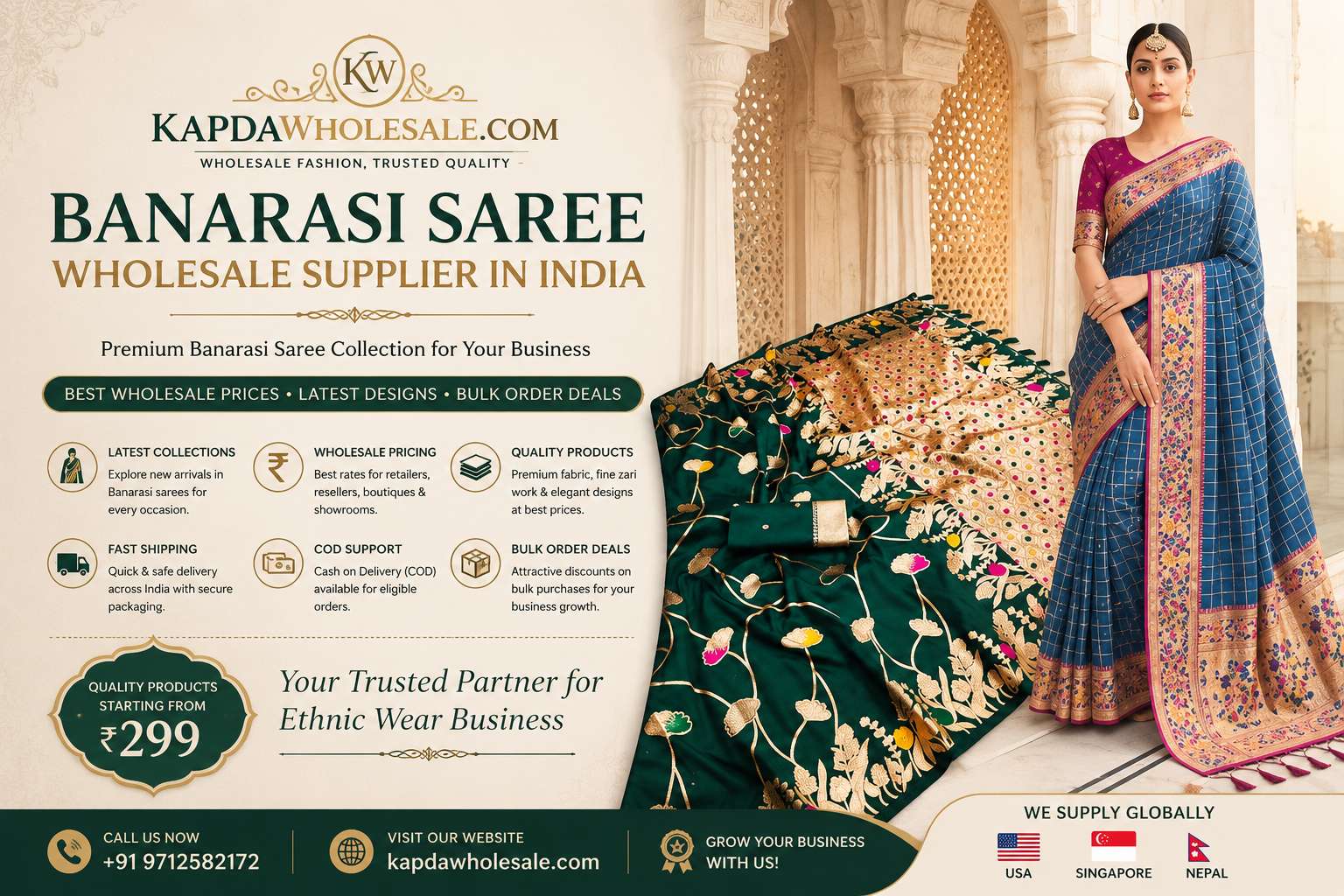
<h1><strong>Banarasi Saree Wholesale Supplier in India – Bulk Saree Collection 2026</strong></h1> <p>Retailers looking to expand their saree business need collections that combine traditional appeal, attractive presentation and practical resale margins. Banarasi sarees continue to perform strongly across wedding, festive and occasion-wear segments, making them a valuable inventory category for boutiques, saree shops, online resellers and larger showrooms. Buyers sourcing through Surat can access a broad textile network with regularly changing designs, multiple price segments and bulk purchasing opportunities for domestic as well as international markets.</p> <h2><strong>Introduction</strong></h2> <p>Choosing a dependable <strong>Banarasi Saree Wholesale Supplier in India</strong> can directly influence product variety, customer satisfaction and profitability. A retailer needs more than attractive catalogue photographs. Product quality, current availability, wholesale price, design selection, order coordination and dependable dispatch all matter when purchasing stock for resale.</p> <p>In 2026, saree buyers are looking for both traditional and updated designs. Classic zari borders, woven motifs and rich colour combinations continue to attract wedding customers, while pastel shades, lighter fabrics and contemporary patterns give retailers options for younger and fashion-conscious buyers.</p> <p><strong>kapdawholesale.com</strong> provides wholesale buyers with access to women's ethnic-wear sourcing from Surat. Supported by Vastralife's wholesale and export experience since 2017, strong textile-industry expertise and a focus on premium product quality, the platform serves businesses looking for practical bulk sourcing across India and international markets.</p> <h2><strong>Buy Banarasi Sarees Wholesale for Your Business</strong></h2> <p>Buying <strong>Banarasi sarees wholesale</strong> allows retailers to build a collection around multiple customer segments rather than depending on a limited local selection. Home-based sellers may require smaller, carefully selected assortments, while established stores and showroom owners generally need greater depth across colours, patterns and price levels.</p> <p>A well-planned wholesale order should contain products that can serve different occasions. Rich traditional sarees can target weddings and major functions, while lighter designs can work for festivals, gifting and regular occasion wear. Maintaining this balance helps businesses keep the category relevant across different selling periods.</p> <h3><strong>Wholesale Sarees for Home-Based Sellers</strong></h3> <p>Home-based sellers can build a saree business without maintaining the same inventory level as a large showroom. The priority should be choosing designs with strong visual appeal and practical resale potential.</p> <p>Sellers using WhatsApp, Instagram or other digital channels can focus on attractive catalogue designs, popular colour combinations and accessible price segments. As orders increase, they can gradually expand into richer Banarasi collections and additional women's ethnic-wear categories.</p> <h3><strong>Wholesale Sarees for Boutique Owners</strong></h3> <p>Boutiques generally benefit from more curated purchasing. Instead of stocking a large quantity of similar products, boutique owners can choose distinctive colour combinations, premium-looking borders and designs that complement their store positioning.</p> <p>A carefully selected <strong>Banarasi silk saree wholesale</strong> range can help boutiques create dedicated wedding and festive collections. Premium presentation also gives boutique owners more opportunity to sell based on design and styling rather than competing only on price.</p> <h3><strong>Wholesale Sarees for Shop and Showroom Owners</strong></h3> <p>Physical shops and showrooms typically serve a wider range of customers. One shopper may want an affordable festive saree, while another may be purchasing a premium design for a wedding. Maintaining several price segments allows sales staff to offer relevant alternatives without losing the customer because of budget limitations.</p> <p>Larger businesses can also create dedicated sections for Banarasi sarees, bridal sarees, festive sarees and premium silk-look collections. Organised displays make product comparison easier and can improve the customer's buying experience.</p> <h2><strong>Banarasi Saree Wholesale Price in 2026</strong></h2> <p>The <strong>Banarasi saree wholesale price</strong> varies according to fabric, weaving style, zari detailing, border design, pallu, blouse piece, finishing and overall product quality. For this reason, buyers should not compare wholesale collections only by the lowest quoted rate.</p> <p>A low-cost product that does not match customer expectations may remain unsold, while a slightly higher-priced saree with better visual appeal can offer a stronger resale margin. Wholesale purchasing should therefore consider the complete value of the product rather than price alone.</p> <h3><strong>Affordable Price Range for Resellers</strong></h3> <p>Affordable collections can work well for home-based sellers, social-media resellers and shops serving value-conscious customers. The objective should be to find products that remain visually attractive while fitting the intended retail selling price.</p> <p>New resellers can start with controlled quantities and test customer response before increasing their investment. This reduces unnecessary stock pressure and allows purchasing decisions to be based on actual sales.</p> <h3><strong>Mid-Range Sarees for Retail Stores</strong></h3> <p>Mid-range products often provide a useful combination of presentation, quality and selling price. They can work for festive shopping, gifting and family functions where customers want a rich appearance without moving into the highest budget segment.</p> <p>Retail stores can maintain several colour and design options in this range because it may appeal to a broad customer base.</p> <h3><strong>Premium Banarasi Sarees for Wedding Buyers</strong></h3> <p>Premium collections can be suitable for wedding-focused boutiques and showrooms. Customers in this segment usually pay greater attention to zari work, border richness, pallu design, colour depth and overall finishing.</p> <p>Wholesale buyers purchasing premium inventory should evaluate quality carefully because customer expectations increase with retail price. A stronger product presentation can also help justify better margins.</p> <h2><strong>Choose the Right Banarasi Saree Wholesale Collection</strong></h2> <p>Wholesale inventory should be selected according to the market where it will actually be sold. A design performing well in one region may not necessarily receive the same response elsewhere. Retailers should use their previous sales, customer inquiries and local preferences when planning the next purchase.</p> <h3><strong>Select a Balanced Colour Mix</strong></h3> <p>Traditional colours such as red, maroon, green, royal blue and wine remain relevant for weddings and festivals. At the same time, peach, pastel green, lavender, beige and other softer shades can help attract younger buyers.</p> <p>A balanced order can include both categories. This gives customers enough choice and prevents the retailer from becoming dependent on one colour trend.</p> <h3><strong>Compare Border and Pallu Designs</strong></h3> <p>The border and pallu can significantly influence how premium a saree appears. Rich zari borders can attract wedding buyers, while more restrained detailing may work better for customers seeking versatile occasion wear.</p> <p>Wholesale buyers should compare these elements together with fabric appearance rather than selecting stock from thumbnails alone. Product details become especially important when the saree will be sold at a premium retail price.</p> <h3><strong>Check Blouse Piece and Finishing</strong></h3> <p>Blouse-piece coordination contributes to the complete presentation of a saree. Retailers should also consider finishing, colour consistency and overall product appearance when choosing wholesale stock.</p> <p>Maintaining <strong>premium product quality</strong> helps businesses generate repeat customers and protects the retailer's reputation, particularly when products are being sold remotely through online catalogues.</p> <img src="https://kapdawholesale.com/images/product/2026/06/shree-shyam-fashion-kalanidhi-silk-saree-wholesale-market-in-hyderabad-2026-06-05_14_57_47.jpg"/> <h2><strong>Banarasi Saree Wholesale from Surat Textile Market</strong></h2> <p>Surat is one of India's largest textile sourcing, manufacturing and distribution centres. Buyers from different states visit the <strong>Surat textile market</strong> for sarees, kurtis, dress materials, salwar suits and numerous other women's-wear categories.</p> <p>The commercial textile areas around <strong>Ring Road</strong> and <strong>Sahara Darwaza</strong> connect manufacturers, wholesalers, processors, traders, packing services and transport networks. This extensive ecosystem gives wholesale buyers access to a broad selection within one city.</p> <p>For retailers located outside Gujarat, sourcing through Surat can provide access to more designs than may be available from a small regional distributor. Businesses can explore products closer to a major textile trading and <strong>manufacturing</strong> network while planning purchases according to their own customer requirements.</p> <h3><strong>Why Retailers Source Sarees from Surat</strong></h3> <p>Variety is one of Surat's biggest advantages. A wholesale buyer can access multiple fabrics, price ranges, design styles and women's-wear categories through the same sourcing ecosystem. This is particularly valuable for multi-category boutiques and showrooms.</p> <p>Regular product movement also helps retailers access new arrivals. Instead of depending only on old inventory circulating through local markets, buyers can explore changing collections according to current availability.</p> <h3><strong>Online Wholesale Buying from Surat</strong></h3> <p>Travelling to Surat for every purchase is not practical for all buyers. Digital sourcing allows retailers to discuss their requirements, review products and coordinate orders remotely.</p> <p>Through <strong>kapdawholesale.com</strong>, wholesale buyers can communicate their required category, quantity, target price and delivery location. Providing these details makes the selection process more focused and helps avoid reviewing collections that do not fit the buyer's business.</p> <h2><strong>Buy Banarasi Sarees in Bulk for Wedding and Festive Sales</strong></h2> <p>Wedding and festival seasons can create strong sales opportunities for saree retailers. Preparing inventory before demand reaches its peak gives businesses time to organise displays, create promotional content and communicate new arrivals to existing customers.</p> <h3><strong>Wedding Saree Wholesale Buying</strong></h3> <p>Wedding shoppers generally expect greater variety and richer presentation. Retailers can stock traditional shades alongside newer colour combinations so that brides, family members and wedding guests can find products according to their individual preferences.</p> <p>Showrooms can also maintain different price sections. This makes it easier to serve customers shopping within a fixed budget while providing premium alternatives for buyers willing to spend more.</p> <h3><strong>Festive Saree Wholesale Buying</strong></h3> <p>Festive customers often look for products that appear special but remain wearable beyond a single occasion. Attractive zari detailing, balanced colours and practical fabrics can help retailers serve this segment.</p> <p>Retailers should plan purchases according to regional festivals and their own customer base rather than assuming that the same designs will sell equally everywhere.</p> <h3><strong>Bulk Saree Buying for Resellers</strong></h3> <p>Resellers can choose products based on catalogue appeal and expected selling margin. Rather than buying a very large quantity of one design, a broader assortment may allow them to test several styles and identify what their customers prefer.</p> <h2><strong>Banarasi Saree Export from India</strong></h2> <p>Indian ethnic wear has established demand in international markets, particularly among businesses serving Indian and South Asian communities. Sarees are purchased for weddings, festivals, cultural events, religious occasions and gifting, creating opportunities for Indian wholesale suppliers and overseas retailers.</p> <p>Buyers in <strong>USA</strong>, <strong>Singapore</strong> and <strong>Nepal</strong> can source Indian women's ethnic wear according to local customer demand. International purchasing requires careful consideration of product price, quantity, packing and <strong>export</strong> logistics so that the final landed cost remains commercially viable.</p> <p>Vastralife's wholesale and export experience since 2017 provides practical understanding of serving buyers with different purchasing requirements. International boutiques and resellers can discuss their intended market, approximate order value and required categories while sourcing through kapdawholesale.com.</p> <h3><strong>Wholesale Sarees for USA Buyers</strong></h3> <p>Ethnic-wear boutiques and resellers serving Indian communities in the USA can build collections around weddings, Diwali, cultural events and other occasions. International buyers should prioritise products with strong resale potential because shipping and other logistics contribute to the final inventory cost.</p> <h3><strong>Wholesale Sarees for Singapore Buyers</strong></h3> <p>Singapore-based retailers can select traditional and contemporary sarees for Indian festive and wedding customers. Planning orders ahead of important selling periods provides more time for shipment and local marketing.</p> <h3><strong>Wholesale Sarees for Nepal Buyers</strong></h3> <p>Nepal is another relevant market for Indian sarees and women's ethnic wear. Retailers can select products according to local customer preferences, festival demand and intended selling price while coordinating their wholesale purchase from India.</p> <h2><strong>How to Increase Resale Potential with the Right Wholesale Stock</strong></h2> <p>A successful wholesale purchase should generate inventory movement, not simply fill shelves. Retailers can improve resale potential by selecting products according to customer demand and maintaining a combination of proven styles and fresh designs.</p> <p>Home-based sellers may concentrate on fast-moving price ranges, while boutiques can focus more heavily on exclusivity and presentation. Showrooms can carry a broader mix and use different sections to target several customer budgets.</p> <p>Buyers should also monitor which colours and price levels generate repeat inquiries. This information can guide future orders and reduce unnecessary purchasing. Over time, data from actual customer behaviour becomes more useful than buying only according to general market trends.</p> <p>With careful selection, reliable sourcing and regular new arrivals, <strong>Banarasi sarees wholesale</strong> can become a valuable category for both established retailers and growing resellers in 2026.</p>
<h2><strong>Buy Banarasi Sarees Online for Wholesale Business</strong></h2>
<p>Online wholesale purchasing gives retailers the flexibility to source new collections without travelling to Surat every time stock needs to be refreshed. This is particularly useful for shop owners, boutique owners, resellers and showroom buyers operating outside Gujarat. By sharing the required price range, quantity and customer segment, buyers can review products that are more relevant to their business.</p>
<p>Retailers looking to expand their saree range can explore <a href="https://www.kapdawholesale.com/banarasi-silk-saree">Banarasi silk saree</a> options according to current stock and wholesale requirements. Businesses planning a wider women's ethnic-wear inventory can also consider <a href="https://www.kapdawholesale.com/cotton-dress-material">cotton dress material</a> collections alongside sarees.</p>
<p>Online sourcing can become particularly efficient for repeat buyers. Once a retailer understands product quality, catalogue presentation and the ordering process, subsequent purchases can be planned according to sales performance rather than starting the sourcing process again from the beginning.</p>
<h3><strong>Share Your Buying Requirement Clearly</strong></h3>
<p>Wholesale buyers should mention whether they are purchasing for a boutique, saree shop, showroom, home-based business, online resale or wholesale distribution. They should also share an approximate budget and expected quantity. Clear requirements allow the available collections to be filtered more effectively.</p>
<h3><strong>Compare Collections Before Final Selection</strong></h3>
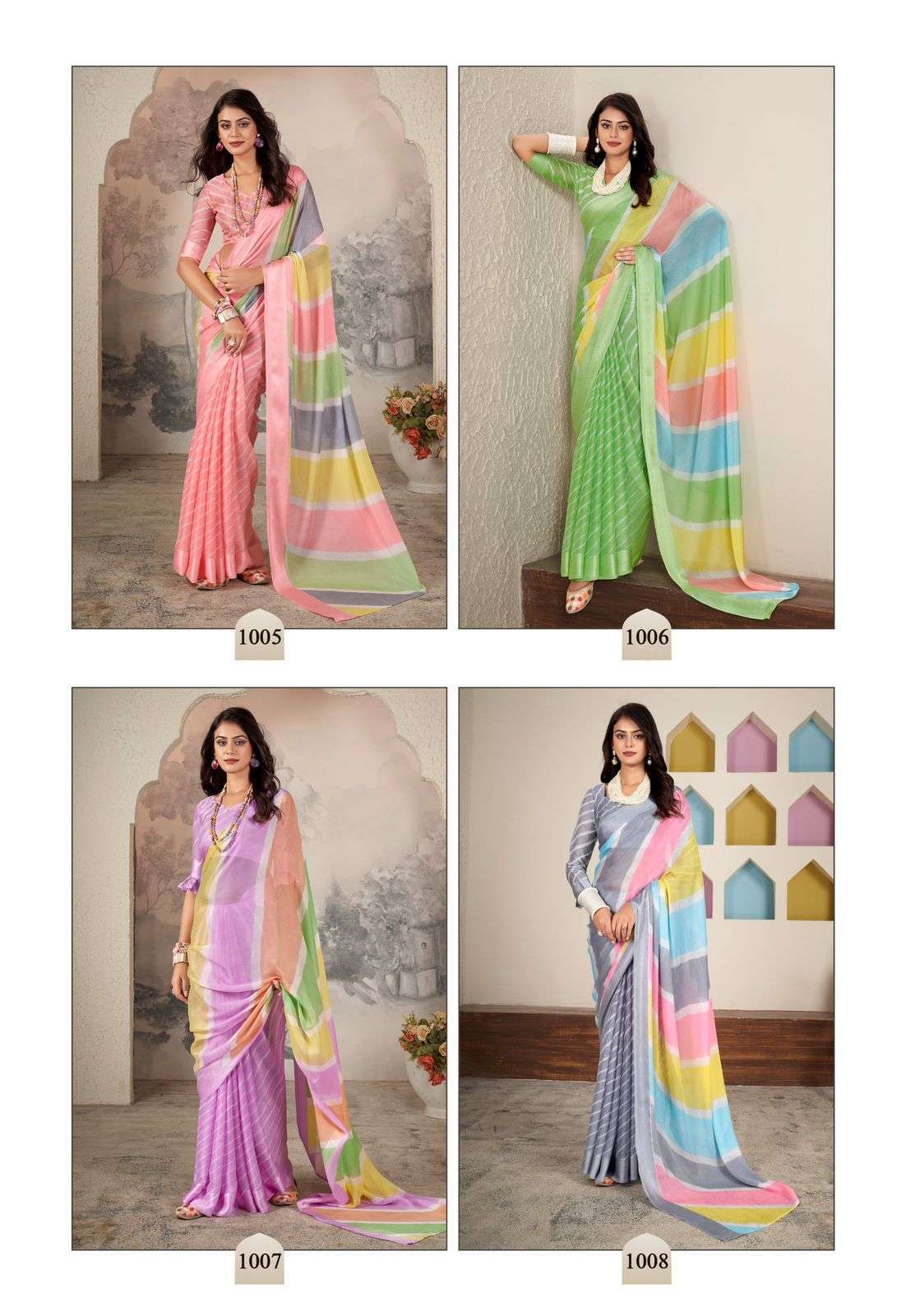
<p>Before confirming a bulk order, compare designs according to fabric appearance, border, zari work, pallu, colour combination, blouse piece and expected retail price. A balanced collection is generally more useful than purchasing a large quantity of nearly identical products.</p>
<img src="https://kapdawholesale.com/images/product/2026/05/krishnavi-banarasi-surat-saree-wholesale-market-2026-05-12_14_25_40.jpeg" />
<h2><strong>How to Build a Profitable Banarasi Saree Inventory</strong></h2>
<p>Profitability depends on more than the wholesale buying rate. Retailers need to consider how quickly products can move, the margin available at the expected selling price and whether the collection matches their customers' preferences. A well-planned <strong>Banarasi Saree Wholesale Supplier in India</strong> relationship can make repeat inventory sourcing easier as the business grows.</p>
<h3><strong>Maintain Different Price Segments</strong></h3>
<p>Customers rarely shop within one universal budget. Maintaining affordable, mid-range and premium sarees gives retailers more flexibility during the sales process. A customer who initially asks for an economical product may upgrade after seeing a richer design, while another buyer may need to remain within a strict budget.</p>
<p>This range also helps retailers avoid positioning the entire store within a single price bracket. Boutiques can keep selected premium designs while maintaining commercially accessible options for regular festive buyers.</p>
<h3><strong>Keep Best Sellers Alongside New Arrivals</strong></h3>
<p>New designs help generate interest, but proven sellers should not automatically be removed from the inventory plan. A practical strategy is to combine reliable colour families and design styles with selected new arrivals.</p>
<p>Retailers can observe customer inquiries, conversions and repeat demand to identify which designs deserve reordering. Over time, this creates a purchasing strategy based on actual sales rather than assumptions.</p>
<h3><strong>Avoid Over-Investing in One Design</strong></h3>
<p>Even an attractive catalogue can have unpredictable market response. Smaller businesses in particular should avoid putting too much working capital into one design before testing customer demand.</p>
<p>Purchasing a wider assortment can help resellers identify fast-moving styles. Once demand becomes clear, larger quantities can be considered according to stock availability.</p>
<h2><strong>Why Wholesale Buyers Choose Surat for Repeat Sourcing</strong></h2>
<p>Repeat sourcing is essential in fashion retail because customers expect new products regularly. Surat's extensive textile ecosystem makes it possible to source sarees alongside other women's ethnic-wear categories through one major commercial centre.</p>
<p>Businesses connected with the <strong>Surat textile market</strong> can benefit from access to changing catalogues, multiple price levels and a large network of textile suppliers. Ring Road and Sahara Darwaza remain important commercial areas within this ecosystem, while digital wholesale sourcing allows buyers outside Surat to participate without repeated physical visits.</p>
<h3><strong>Access to Multiple Women's Wear Categories</strong></h3>
<p>Retailers can diversify beyond sarees according to customer demand. Kurtis, kurti sets, dress materials, salwar suits and other women's wear can complement a saree-focused business and provide additional selling opportunities.</p>
<p>Multi-category purchasing can be particularly useful for boutiques and showrooms where customers expect variety. The objective, however, should be strategic diversification rather than purchasing every available category.</p>
<h3><strong>Regular New Collections for Retail Growth</strong></h3>
<p>Customers who visit the same shop repeatedly expect something new. Regular new arrivals give retailers a reason to contact existing customers, update social-media pages and refresh physical displays.</p>
<p>Through <strong>kapdawholesale.com</strong>, buyers can explore available wholesale products according to their business requirements and current stock availability.</p>
<h2><strong>How to Place a Banarasi Saree Wholesale Order</strong></h2>
<p>A structured buying process can save time for both the buyer and supplier. Instead of requesting every available catalogue, retailers should communicate their requirements clearly so that suitable products can be identified faster.</p>
<h3><strong>Step 1: Select Your Required Category</strong></h3>
<p>Specify that you require Banarasi sarees and mention whether you prefer affordable, mid-range, premium, wedding or festive designs. This helps narrow the initial selection.</p>
<h3><strong>Step 2: Share Your Target Wholesale Price</strong></h3>
<p>Providing a target buying range is important. A home-based reseller and a premium wedding showroom may both want Banarasi sarees, but their required price segments can be completely different.</p>
<h3><strong>Step 3: Mention Approximate Quantity</strong></h3>
<p>Share the expected order quantity so that suitable wholesale options can be discussed. Larger wholesale buyers may have different purchasing requirements from smaller resellers.</p>
<h3><strong>Step 4: Review and Select Designs</strong></h3>
<p>Compare the available designs carefully. Consider colours, patterns, borders, pallu, zari detailing and expected resale value rather than choosing solely according to the catalogue's first impression.</p>
<h3><strong>Step 5: Confirm Current Availability</strong></h3>
<p>Wholesale stock can change quickly. Popular collections may move faster during wedding and festival seasons, so availability should be confirmed when the order is finalised.</p>
<h3><strong>Step 6: Complete Payment and Dispatch Coordination</strong></h3>
<p>Once the selection is confirmed, buyers can complete the applicable payment and shipping process. Delivery arrangements can vary according to location, quantity and order terms. International buyers should also confirm applicable export and logistics requirements.</p>
<h2><strong>Wholesale Saree Buying Tips for Better Business Margins</strong></h2>
<p>A strong margin begins with smart inventory selection. Buying cheaply is not enough if the product remains unsold. Retailers should consider the relationship between wholesale cost, customer demand, presentation and realistic selling price.</p>
<h3><strong>Know Your Average Customer Budget</strong></h3>
<p>Retailers should know which price segments generate the most inquiries and actual sales. This information can guide how much of the purchasing budget should be allocated to affordable, mid-range and premium products.</p>
<h3><strong>Use Customer Feedback for Repeat Orders</strong></h3>
<p>Customers provide useful signals through the designs they ask for, colours they reject and price ranges they accept. Retailers can use this information to improve subsequent wholesale purchases.</p>
<h3><strong>Promote New Stock Quickly</strong></h3>
<p>Once stock arrives, retailers should begin marketing it instead of allowing it to remain unnoticed. Physical stores can refresh displays, while online sellers can create photographs, videos, WhatsApp updates and social-media posts.</p>
<h3><strong>Calculate the Complete Cost</strong></h3>
<p>Wholesale buyers should calculate applicable product, packing and shipping costs before deciding the final retail price. Export buyers should pay particular attention to the landed cost because international logistics can significantly affect the required selling margin.</p>
<h2><strong>Customer FAQs</strong></h2>
<h3><strong>1. Where can I buy Banarasi sarees wholesale in India?</strong></h3>
<p>Retailers, boutiques, resellers, showroom owners and wholesale buyers can source Banarasi sarees through Surat's textile wholesale ecosystem. kapdawholesale.com provides access to wholesale sourcing options for businesses looking for current women's ethnic-wear collections.</p>
<h3><strong>2. What is the Banarasi saree wholesale price in 2026?</strong></h3>
<p>The wholesale price varies according to fabric, zari work, border, weaving style, pallu, blouse piece, finishing and collection. Buyers should share their approximate budget and quantity to explore suitable currently available options.</p>
<h3><strong>3. Can home-based sellers purchase Banarasi sarees wholesale?</strong></h3>
<p>Yes. Home-based sellers can source suitable wholesale products according to applicable order requirements. Starting with selected commercially attractive designs can help manage investment while testing customer response.</p>
<h3><strong>4. Can boutique owners buy premium Banarasi silk sarees?</strong></h3>
<p>Yes. Boutique owners can select richer designs according to their target customer and retail positioning. Premium borders, attractive zari detailing and distinctive colour combinations can work particularly well for wedding and festive customers.</p>
<h3><strong>5. Are bulk saree orders available for showroom owners?</strong></h3>
<p>Showroom and wholesale buyers can discuss bulk purchasing according to required quantities, designs and current availability. Larger businesses can create assortments across multiple price segments rather than concentrating only on one range.</p>
<h3><strong>6. Can I buy wholesale sarees online without visiting Surat?</strong></h3>
<p>Yes. Buyers can review available collections remotely and coordinate their order online. This is useful for retailers located outside Gujarat as well as international wholesale customers.</p>
<h3><strong>7. Are Banarasi sarees available for export?</strong></h3>
<p>International wholesale requirements can be discussed according to destination and order details. Packing, shipping and applicable export arrangements depend on the destination country, quantity and logistics requirements.</p>
<h3><strong>8. What should I check before ordering Banarasi sarees in bulk?</strong></h3>
<p>Check fabric appearance, zari work, border, pallu, blouse piece, colour combination, finishing, wholesale rate and likely resale value. Current stock availability and dispatch terms should also be confirmed before finalising the purchase.</p>
<h3><strong>9. Can I source other women's wear together with sarees?</strong></h3>
<p>Yes. Buyers can explore additional ethnic-wear categories according to current availability. A multi-category inventory can help boutiques, retailers and showrooms serve a broader customer base.</p>
<h3><strong>10. Why should wholesale buyers source from Surat?</strong></h3>
<p>Surat combines textile trading, processing, manufacturing, wholesale distribution, packing and logistics within a large ecosystem. This provides buyers access to extensive product variety and makes the city an important sourcing destination for textile businesses.</p>
<h2><strong>Internal Linking Section</strong></h2>
<p>Wholesale buyers can explore additional collections on kapdawholesale.com when planning their next stock purchase. Retailers can combine sarees with complementary women's ethnic-wear categories according to local customer demand, available budget and expected inventory movement.</p>
<p>A planned purchasing strategy can be more effective than adding products randomly. Analyse your strongest-selling categories, identify the price levels customers prefer and use that information to decide which products deserve a larger share of the next wholesale order.</p>
<h2><strong>Order Banarasi Sarees Wholesale from India</strong></h2>
<p>If you are looking for a dependable <strong>Banarasi Saree Wholesale Supplier in India</strong>, you can source 2026 collections according to your business requirements through kapdawholesale.com. The platform is suitable for home-based sellers, shop owners, boutique owners, showroom owners, resellers and larger wholesale buyers seeking women's ethnic-wear sourcing from Surat.</p>
<p>Backed by Vastralife's wholesale and export experience since 2017, textile-industry expertise and an emphasis on premium product quality, the focus is on helping business buyers select commercially relevant products rather than simply increasing inventory quantity.</p>
<h3><strong>What You Get with Kapdawholesale.com</strong></h3>
<ul>
<li><strong>Latest Collections</strong> for wedding, festive and regular retail demand</li>
<li><strong>Wholesale Pricing</strong> for business purchasing and resale</li>
<li><strong>Trendy Ethnic Wear</strong> for boutiques, shops, showrooms and resellers</li>
<li><strong>Fast Shipping</strong> with order-based dispatch coordination</li>
<li><strong>COD Support</strong> subject to applicable order terms and availability</li>
<li><strong>Bulk Order Deals</strong> for eligible wholesale purchases</li>
<li><strong>Quality Products Starting From ₹299</strong> across applicable collections</li>
</ul>
<p>Whether you are beginning a home-based reselling business, refreshing your boutique inventory, preparing a showroom for wedding season or sourcing products for wholesale distribution, choosing the right designs and price segments can improve your selling opportunities.</p>
<p>Share your required category, approximate quantity, preferred price range and delivery destination to explore suitable current collections.</p>
<p><strong>Contact Number:</strong> +91 9712582172</p>
<p><strong>Website:</strong> kapdawholesale.com</p>
<p>Build your 2026 saree inventory with fresh wholesale collections, competitive sourcing options, Surat textile expertise and dependable support for domestic and export requirements.</p>